
Women at the Forefront of Climate Resilience in NTT
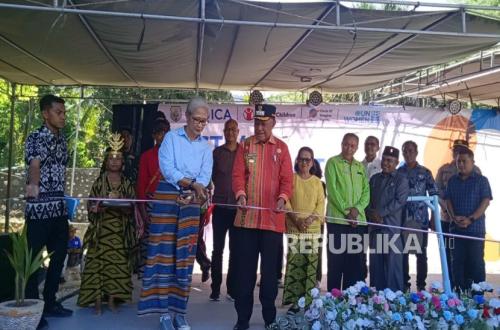
Empowerment of women is increasingly viewed as a key to addressing the impacts of climate change and strengthening community resilience at the local level. This was evident at the South Coast Festival 2026 held at Kolbano Beach, South Central Timor Regency (TTS), East Nusa Tenggara, from 27 to 29 March.
The festival, involving government, civil society organisations, and communities, spotlighted the strategic role of women in building sustainable peace while enhancing preparedness for increasingly intense disasters due to climate change.
The theme ‘Empowered Women for Sustainable Peace’ underscores that women are not merely vulnerable groups to climate crises but essential actors in solutions. Empowering women is seen to strengthen social cohesion, accelerate adaptation, and promote community-based economic transformation.
South Central Timor Regent, Eduard Markus Lioe, emphasised that women’s empowerment must be positioned as a cross-sectoral development strategy. According to him, empowered women mean having access, opportunities, and capacity to actively participate in decision-making, including on environmental and disaster issues.
‘Women’s empowerment is not just a gender issue, but concerns social, economic, cultural, and environmental development,’ he stated, as quoted from a UN Women press release on Friday (27/3/2026).
This festival is part of the WE NEXUS Programme initiated by UN Women with support from KOICA, and implemented together with CIS Timor and Save the Children. The programme focuses on conflict prevention, climate risk mitigation, and strengthening village community resilience, particularly for women and girls.
In East Nusa Tenggara, the programme has reached seven villages and driven tangible changes, both in policy and on-the-ground practices. One key achievement is the birth of NTT Governor’s Regulation Number 9 of 2025 on Social Conflict Prevention, which strengthens the framework for community protection, including women and children.
Additionally, seven village task forces have been formed to enhance social cohesion, improve disaster preparedness, and prevent violence against women and children. In South Central Timor Regency, women and young people from several villages such as Spaha, Oetuke, and Tuapakas are now actively involved in village development planning.
This involvement is crucial in the context of climate change, especially in coastal areas vulnerable to disasters like drought, storms, and environmental degradation. Women, who often play roles in managing household resources and food, possess vital local knowledge for adaptation strategies.
UN Women Indonesia representative, Ulziisuren Jamsran, stressed that women make significant contributions to maintaining social stability while enhancing community resilience to crises. According to her, efforts to strengthen women’s leadership will directly impact society’s ability to face climate change.
‘Women help communities remain resilient against disasters and climate change. Supporting them means building a fairer and more sustainable future,’ she said.
CIS Timor echoed this, assessing that change can start at the community level, including through enhancing village women’s capacities. Providing broader participation spaces for women is believed to yield more inclusive and sustainable decisions.
Meanwhile, Save the Children Indonesia highlighted the importance of involving women and young people in peace initiatives and strengthening social cohesion. Active participation of these groups is seen as the main foundation in building community preparedness against disaster risks and climate change impacts.
The festival’s series of activities, such as multi-stakeholder dialogues, cultural actions, and environmental initiatives, served as shared learning spaces. More than that, the festival functions as a platform to disseminate best practices and strengthen collaboration among parties in building coastal area resilience.
With an approach integrating gender, peace, and climate change issues, the South Coast Festival 2026 affirms that women are not just recipients of impacts but leaders of change. Efforts to strengthen women’s roles at the local level are hoped to serve as a model for other regions in facing increasingly complex climate crisis challenges.