
Without Waste Sorting, Target to End Open Dumping Will Be Hard to Achieve
REPUBLIKA.CO.ID, DENPASAR — The government has stressed that stopping open dumping practices will be difficult to implement without waste sorting from the source. Changes in public behaviour are a determining factor in achieving the national waste management target for 2026.
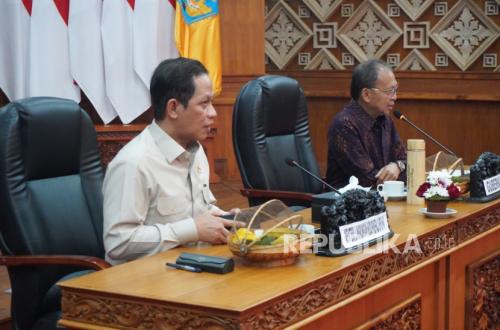
The Ministry of Environment, together with the Bali Provincial Government, is strengthening this commitment through a declaration to end open dumping landfills in Bali. Environment Minister Hanif Faisol Nurofiq stated that the old pattern of collect-transport-dump must be abandoned. “This target can only be achieved if open dumping practices are stopped and the public sorts waste. Waste can no longer be handled through the collect-transport-dump pattern, but must be managed from the source,” Hanif said during a meeting with Bali Governor Wayan Koster in Denpasar this weekend.
The government is targeting the cessation of all open dumping practices in Indonesia by no later than 2026, with acceleration up to August 2026. This target aligns with the national waste management goal of 63.4 percent.
However, by the end of 2025, only around 30 percent of the 485 final disposal sites will have stopped open dumping. This means hundreds of landfills still need to transform in a short time.
In Bali, waste sorting is beginning to show results. In Denpasar and Badung, more than 60 percent of the public has sorted waste from the source. “I see very rapid changes in Bali. More than 60 percent of the public has sorted waste. This is a very good achievement that needs to be maintained through consistent rule enforcement,” Hanif said.
The government views this achievement as an example that behavioural changes can be made in a relatively short time if supported by policies and supervision.
To ensure readiness, the government inspected several facilities such as TPST Kertalangu, TPS3R Sesetan, and TPA Suwung. The focus is on operational readiness and controlling the quality of incoming waste.
Strengthening processing facilities is also being promoted, including increasing the capacity of TPST and TPS3R. This step is important to ensure that processed waste is sorted according to needs.
In addition, sorting is the main requirement for developing future energy-based waste processing technology. Without sorting, the waste quality will not meet the standards of that technology.
The government emphasised that law enforcement will be carried out to ensure compliance. This step is expected to accelerate the shift from dumping to more responsible waste management.