
With Fuel Stocks for 45 Days, Why Did the Philippines Declare a National Energy Emergency?
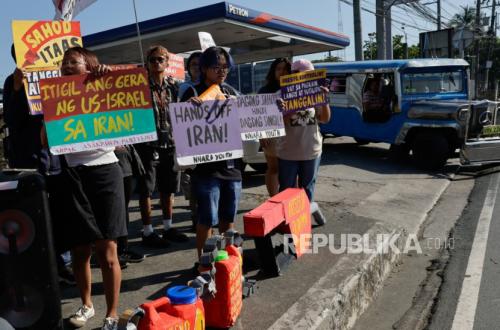
Philippine President Ferdinand Marcos Jr has declared a national energy emergency following the United States and Israel’s war against Iran and threats to the country’s energy supplies. The national energy emergency declaration was announced on Tuesday (24 March 2026), amid plans for a two-day strike action starting Thursday (26 March 2026) by transport workers, passengers, and consumer groups. The action is a form of protest against rising fuel prices and the government’s perceived slow response to the situation.
“The declaration of national energy emergency status will enable the government to implement responsive and coordinated measures under applicable laws to address risks of global energy supply disruptions and the domestic economy,” Marcos Jr stated, quoted from Al Jazeera on Wednesday (25 March 2026).
As part of the emergency response, the government has formed a committee to ensure the smooth movement, supply, distribution, and availability of fuel, food, medicines, agricultural products, and other essential goods. This emergency status will apply for one year. The policy also grants the government authority to procure fuel and petroleum products to guarantee sufficient and timely supplies, including the possibility of partial upfront payments for contracts.
The government is also authorised to take action against hoarding practices, excessive profiteering, and manipulation of petroleum product supplies.
Previously, Philippine Energy Minister Sharon Garin stated that the country still has fuel reserves of around 45 days based on current consumption levels. Garin added that the government is working to secure supplies of about one million barrels of oil from countries both within and outside Southeast Asia to strengthen buffer reserves, although there is uncertainty in achieving this.
As part of mitigation measures, the government is providing free bus transport access for students and workers in several cities. Additionally, the government has begun distributing subsidies of 5,000 pesos (Rp 1.4 million) to motorcycle taxi drivers and public transport workers nationwide to help them cope with the surge in petrol and diesel prices.
Supply Assurance
Reported by the BBC on Wednesday (25 March 2026), Marcos said he is working to secure new oil sources after declaring the country in a state of national energy emergency in response to the war in Iran. In a television broadcast speech, Marcos told Filipinos that the government will purchase one million barrels of oil to add to existing stocks, which are sufficient for 45 days.
“We will have an oil flow. Not just one shipment, not two shipments, but a flow of petroleum products,” he said.
The Philippines, which imports 98 per cent of its oil from Gulf countries, has become the first nation to declare a state of energy emergency after local diesel and petrol prices more than doubled in the country since the war broke out on 28 February 2026.