
'Wit Kawit' Wins Ogoh-Ogoh Grand Prize at Kasanga Festival 2026
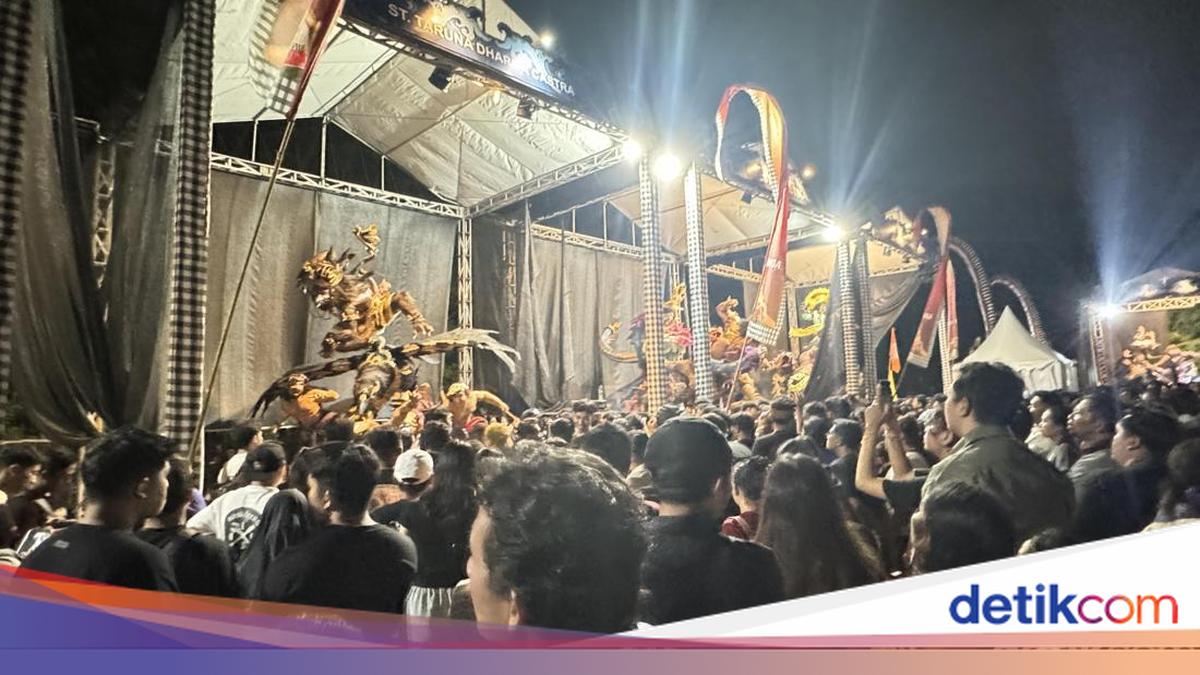
‘Wit Kawit’, the grand prize-winning ogoh-ogoh sculpture at the Kasanga Festival 2026 competition, drew crowds to its exhibition tent immediately after the results were announced. Created by Sekaa Teruna (ST) Taruna Dharma Castra Banjar Tengah Sidakarya, the work features an unusual ogoh-ogoh character in the form of Burung Gaga, a mythical bird.
The sculpture generated significant attention from festival visitors eager to photograph its distinctive details. The unique form and character of ‘Wit Kawit’ established it as one of the most eye-catching works throughout the exhibition.
Drawing inspiration from the legend of ‘Kutukan Cukumanik’ (the Cukumanik Curse), Burung Gaga is depicted as the bearer of this curse. According to Ketua Sekaa Teruna Dharma Castra Putu Ade Cahya Mahardika Putra, who spoke to detikBali following the competition results announcement on Sunday, 9 March 2026: “Whoever enters the water will be struck by the Cukumanik curse and will be transformed into a monkey.”
Putra explained that ‘Wit Kawit’ possessed several advantages. Beyond its mechanical construction featuring a rotating motorised mechanism, the ST Taruna Dharma Castra Banjar Tengah Sidakarya presentation also included captivating performances that drew spectator attention.
He expressed hope that the Kasanga Festival would continue to be held annually to provide ongoing opportunities for young cultural groups to showcase their creativity.
“For my own ST, we remain committed to producing maximum-quality creative works. I hope this event can be held every year. Perhaps next year’s Kasanga Festival could expand its categories, given the sheer volume of exceptional ogoh-ogoh creations in Denpasar,” Putra added.
Kasanga Festival 2026 competition organiser Yogi Pramana explained that judging was conducted in two stages. The first stage involved on-site evaluation to assess the physical characteristics of the ogoh-ogoh sculptures.
“First, there is on-the-spot assessment to evaluate the ogoh-ogoh’s physical form. This includes evaluating their ideoplastic and physioplastic qualities,” Pramana explained.
The second stage of judging occurred after competitors advanced to the semi-final round of 16. At this stage, judges also considered the concept and quality of the performance presented.
“The second stage, after advancing to the round of 16, involves evaluating the performance quality. This examines how they executed a performance concept derived from the ogoh-ogoh’s idea,” Pramana clarified.
The winners of the Grand Ogoh-Ogoh Competition at Kasanga Festival 2026 were: first place ST Taruna Dharma Castra Banjar Tengah, second place ST Sukarela Banjar Kepisah, third place ST Swadharmita Banjar Ceramcam, first reserve ST Satya Dharma Banjar Pekandelan, second reserve ST Swastika Banjar Pekambingan, and third reserve ST Mekar Sari Banjar Kesambi.
The Audience Favourite award was presented to ST Cantika Banjar Sedana Mertha.
In addition to the grand ogoh-ogoh category, organisers also announced winners in several other competitions that formed part of the Kasanga Festival 2026 programme.
Pramana assessed the 2026 Kasanga Festival as having proceeded smoothly and festively. However, the organising committee noted several matters for evaluation regarding future editions.
“The festival proceeded excellently, smoothly, and extraordinarily. Of course, there are many improvements to be made in future years. But this year was outstanding and remarkable,” Pramana stated following the festival’s closing night on Sunday.
He added that evaluations particularly concerned weather contingency planning, given that the Kasanga month frequently experiences heavy rainfall.
“Regarding systems, layout, and preparations, the Kasanga month is often marked by rain. Consequently, we used higher specifications for tents and installed flooring in the form of pathways to anticipate mud and manage drainage,” Pramana explained.