
Wise Filtering of Information in the Post-Truth Era
REPUBLIKA.CO.ID, BANDUNG – The post-truth era is a condition in which public opinion is more influenced by emotions, personal beliefs, and perceptions than by objective facts. In this situation, truth often becomes blurred because the circulating information does not undergo a verification process.
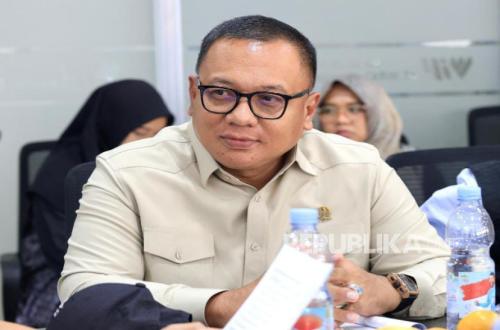
Member of Commission I of the West Java Provincial DPRD, Pradi Supriatna, reminds of the importance of a wise attitude in filtering information amid the current torrent of information. He emphasises that the public cannot merely be recipients of information; they must also have the ability to sort and test its truthfulness.
As a member of Commission I, which covers government affairs including the information and communication sector, Pradi assesses that the development of digital technology brings significant changes in the pattern of public information consumption.
One of the main challenges is the role of social media algorithms that present content quickly and massively, but not always accompanied by data accuracy.
“Social media algorithms make the flow of information so intense. However, not all of that information has undergone a proper verification and validation process,” said Pradi to Republika on Wednesday (25/6/2026).
According to Pradi, this condition becomes even more complex in the post-truth era, when information is often easily accepted if it aligns with emotions or beliefs, even if it is not necessarily true. As a result, many people swallow information raw without a critical thinking process.
“This is a serious challenge. Information is often immediately believed without considering whether it is right or wrong,” he said.
He emphasises that digital literacy is the key to facing this situation. The public needs to get into the habit of checking and double-checking every piece of information, understanding its source, and not being easily provoked by sensational headlines or narratives.
Furthermore, Pradi stresses the importance of the role of local government (pemda) in maintaining the quality of information in public spaces.
Local government, according to him, has the responsibility to straighten out erroneous information and ensure that the public receives information that is correct, accurate, and trustworthy. “The role of local government is to correct the circulating information,” he stated.
In addition, he encourages collaboration between government, media, and society in building a healthy information ecosystem. With synergy, the spread of hoaxes and disinformation is hoped to be curbed, while strengthening public trust in accurate information.
Pradi also invites the people of West Java to be wiser in using social media. “Let us get into the habit of filtering before sharing. That way, we can keep public spaces healthy and not easily divided by information that is not necessarily true,” he concluded.