
Win Together or Fail Completely: The Realistic Path to Iran-US Peace
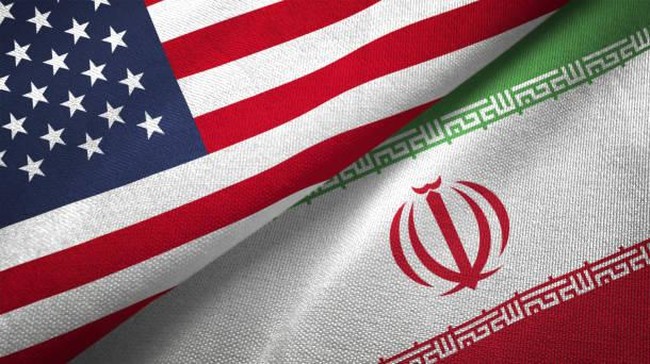
After more than 40 days of open war and over a month of fragile ceasefire, the indirect Iran-US negotiations mediated by Pakistan reveal one important reality: this conflict cannot be resolved by assuming Iran will surrender completely. The US position, also influenced by Israel’s security interests, still relies on maximalist demands: the full dismantling of Iran’s nuclear facilities and significant weakening of its missile capabilities.
For Tehran, such demands are not merely technical nuclear issues, but concern sovereignty, regime legitimacy, and strategic deterrence guarantees. Therefore, Iran rejects proposals it deems equivalent to surrender. Instead, Iran pushes for talks to begin with ending the war, opening shipping lanes, and sanctions relief, before moving to restrictions on uranium enrichment.
Thus, the framework for future negotiations must employ a realistic approach that separates issues into three categories: those that can be immediately agreed upon, those that can still be negotiated, and those that are almost certainly rejected.
A feasible Iran-US peace agreement is not one of Iranian surrender, but one of verification: Iran is prevented from acquiring nuclear weapons, while the US provides space for de-escalation, sanctions relief, and regional stabilisation.
This approach can also serve as a compromise between two extremes: the US strategy insisting on limiting initial discussions only to uranium enrichment restrictions, and the Iranian strategy of placing that issue at the end after other matters are addressed. This three-category approach combines various key issues into one section but prioritises them based on the probability of achievable resolution.
Package one: immediately agreeable (doable)
The first part is the most likely to be approved by Iran, namely the restoration of full access to the International Atomic Energy Agency (IAEA). Iran is expected to agree to:
• immediate IAEA inspections;
• verification of enriched uranium stocks;
• monitoring of major nuclear facilities;
• commitment not to develop nuclear weapons;
• periodic reporting mechanisms.
However, in return, Iran will demand that the US provide:
• gradual sanctions relief;
• opening of humanitarian and limited trade transaction channels;
• release of some frozen Iranian assets;
• assurances that inspections will not automatically become the basis for new attacks.
This is the most reasonable meeting point. The US gains assurance that Iran is not moving towards nuclear weapons. In return, Iran obtains economic incentives without appearing to surrender. The negotiation process must begin with verification, not political humiliation of one party.
Package two: still negotiable (negotiable)
The second part is more difficult than the first, but still negotiable, although the level of difficulty is much higher. Iran could be bargained into:
• surrendering, exporting, or reprocessing about 440 kg of 60% enriched uranium;
• further limiting uranium enrichment levels;
• accepting international storage or oversight mechanisms;
• extending IAEA verification access.
In return, Iran could request:
• larger asset releases;
• economic recovery packages, civil reconstruction aid, or humanitarian financing through international mechanisms;
• assistance in reconstructing civilian facilities;
• limited security guarantees;
• gradual normalisation of energy exports.
For managing the Strait of Hormuz, careful formulation is needed to avoid violating UNCLOS or conflicting with principles of international freedom of navigation. A more realistic option is an international mechanism under relevant multilateral organisations to handle maritime security, risk insurance, patrol cost recovery, and shipping stabilisation. In this way, Iran still receives recognition of its strategic role in Hormuz.
This package is structured with the understanding that uranium is Iran’s main bargaining chip. The Strait of Hormuz is Iran’s geopolitical card. But both must be packaged as part of stabilisation, not extortion. In the “possible” package, Iran does not sell its sovereignty, but trades nuclear risks and Hormuz risks for economic compensation and security recognition.
Package three: almost certainly rejected (non-starter)
The third part is the boundary almost certainly rejected by Iran:
• full dismantling of all nuclear facilities;
• permanent cessation of all uranium enrichment capacity;
• complete disarmament of the ballistic missile programme.
For Iran, the missile programme is not just a military tool, but a guarantee of regime survival and deterrence against Israel, the US, and regional rivals. Asking Iran to surrender missiles is equivalent to asking Iran to lose its strategic protection. Likewise, full dismantling of nuclear facilities would be seen as surrender, not a peace agreement.
No government that has just fought a war, and not lost, will accept an agreement that causes it to lose all deterrence tools and appear to surrender before its own people.
The Realistic Path
Ultimately, Iran-US peace will not be born from the illusion that one side can be forced to its knees. Realistic peace must make war no longer a rational choice for both parties.
Therefore, the three-package framework—immediate verification, gradual compensation, and recognition of sovereignty limits—becomes the most sensible path: Iran does not become a nuclear-armed state, the US can still claim strategic success, and the world regains energy and geopolitical stability.
In a conflict of this magnitude, saving face is not a weakness of diplomacy. Rather, it is the condition for an agreement to be acceptable and maintained.