
Will the Iran War Trigger a Nuclear Arms Race in the Middle East?
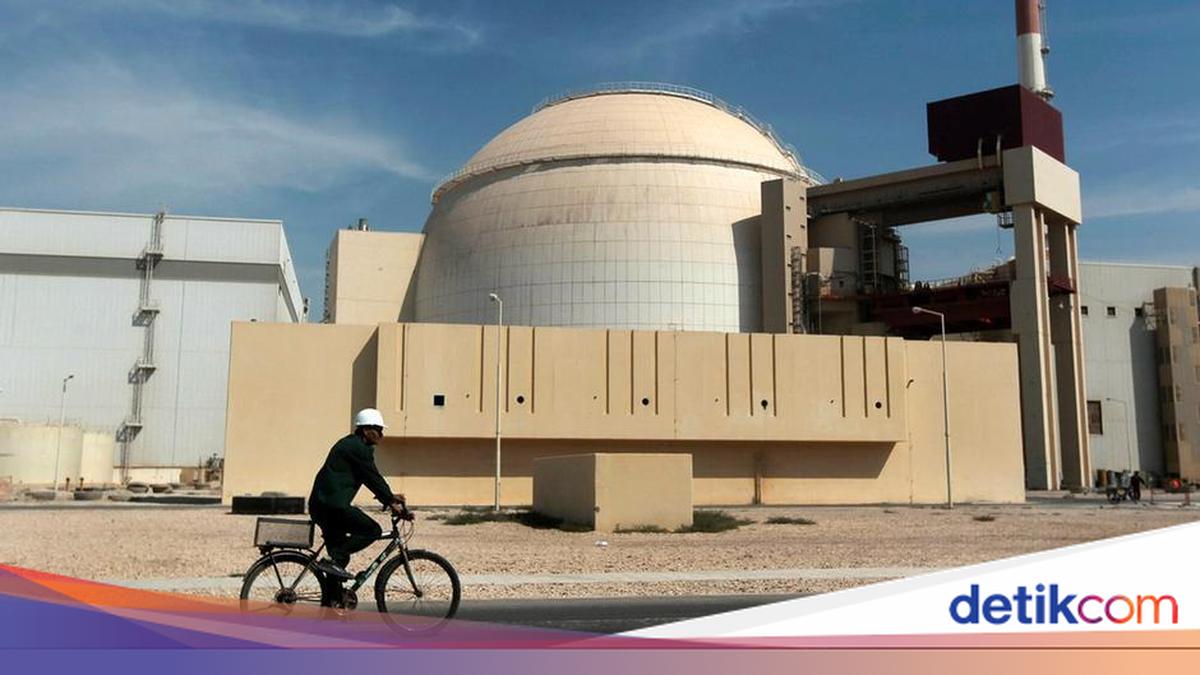
There is little doubt that nuclear threats in the Middle East are escalating amid the ongoing conflict.
In the war that began in late February, when the United States (US) and Israel launched attacks on Iran, nuclear facilities in both Iran and Israel became targets.
US President Donald Trump stated that the war against Iran was launched to prevent Iran from acquiring nuclear weapons. However, experts assess that this move could backfire.
Nuclear possession has long been regarded as a deterrent tool. The logic is that a country with nuclear weapons would be harder to attack due to the excessive risk to the adversary.
Observers often cite the case of North Korea. That country has developed nuclear weapons, which, according to some, makes its regime untouchable.
Conversely, Ukraine serves as a contrasting example. In 1994, Ukraine agreed to relinquish its nuclear arsenal, which was then the world’s third largest, in exchange for security guarantees from Russia, the US, and the UK. Now, there is a view that if Ukraine had retained those weapons, Russia would likely not have dared to invade.
Capability to produce nuclear weapons alone is not enough
Iran has long been considered to be in a state of “nuclear latency.” This means Iran already possesses the technical capability to build a nuclear bomb but has not yet fully produced one.
“For years, Iran has maintained strategic ambiguity, staying just below the threshold for bomb-making to avoid the attack that has now occurred,” wrote Rupal Mehta, a professor of political science in the US, in her commentary for the London School of Economics in early March. “Tehran’s new leadership faces a grim calculation: pursuing nuclear weapons is indeed dangerous, but having an incomplete bomb has proven to be a fatal mistake.”
This week, Iranian politicians stated that the country might withdraw from a key agreement aimed at preventing the spread of nuclear weapons. That agreement is the Treaty on the Non-Proliferation of Nuclear Weapons (NPT), signed in 1968 and now followed by 191 countries.
The changes in regional security relations due to the Iran war could also push other countries to consider acquiring nuclear weapons.
“There are a number of factors that will drive Gulf states closer to nuclear weapons,” said Kelsey Davenport, Director of Non-Proliferation Policy at the Arms Control Association based in Washington.
Gulf states are in a difficult position, caught between Iran’s power ambitions and Israel, while also beginning to doubt how far the United States can guarantee their security.
“Nevertheless, it is unlikely that these countries will immediately race to build bombs. The technical and political barriers are enormous,” Davenport continued.
Leaders of Gulf states also tend to wait for the conflict to end to see the state of Iran’s regime and its nuclear programme. “However, it is clear that this conflict will spur thinking about the need for nuclear weapons for security.”
Who wants nuclear weapons?
Saudi Arabia began taking initial steps towards possible nuclear latency last year. Crown Prince Mohammed bin Salman previously stated that if Iran builds a nuclear bomb, Saudi Arabia must have one too. After his visit to the US in November, he is said to have brought home a cooperation agreement that opens opportunities for Saudi Arabia to enrich uranium.
Such agreements must first receive US Congress approval, said Nour Eid, an independent researcher based in Paris who studies Middle East nuclear ambitions.
Almost all of the 26 nuclear cooperation agreements held by the US, covering around 155 countries including in Europe, require an “additional protocol” with the International Atomic Energy Agency (IAEA), which allows stricter oversight of a country’s nuclear activities. Although not yet officially confirmed, the 123 agreement with Saudi Arabia will likely only require a bilateral safeguards agreement, Eid told DW.
“This deviates from all precedents,” said Robert Kelley, former IAEA director, to Bloomberg this week. “The idea that the government is willing to give Saudi Arabia the same capabilities that justified bombing Iran looks hypocritical.”
Nevertheless, according to Eid, Saudi Arabia needs about 10 to 20 years to develop nuclear energy, let alone weapons. Additionally, Saudi Arabia still faces constraints such as a shortage of experts in the field. Currently, Saudi Arabia’s nuclear project is more viewed as a domestic energy source.
The United Arab Emirates already has a nuclear power plant in Barakah. When signing the agreement with the US in 2009, they agreed to the additional protocol and not to conduct uranium enrichment and reprocessing.
For the UAE, this programme is more about prestige as the first Arab country to develop nuclear energy, not military ambitions, said Eid. “However, there is an oral clause in that agreement that essentially opens room for the UAE to renegotiate if neighbouring countries get looser deals,” he explained.
Eid assesses that the leniency in the Saudi nuclear agreement in 2025 is likely also influenced by US competition with China and Russia as global nuclear technology suppliers. So far, nuclear cooperation with Russia or China is known to have looser conditions and more attractive financing schemes compared to the US.
Other Middle Eastern countries with potential to move towards nuclear latency include Egypt and Turkey, according to Davenport.
Egypt, in cooperation with Russia, is building a nuclear reactor on the Mediterranean coast. However, observers assess that Egypt’s difficult financial condition makes it unlikely to develop a weapons programme.
Turkey is also developing a nuclear energy programme with Russia and may cooperate with China. “However, I do not see reasons for