
Will ASN WFH Continue? Purbaya: Wait for Oil Price Developments
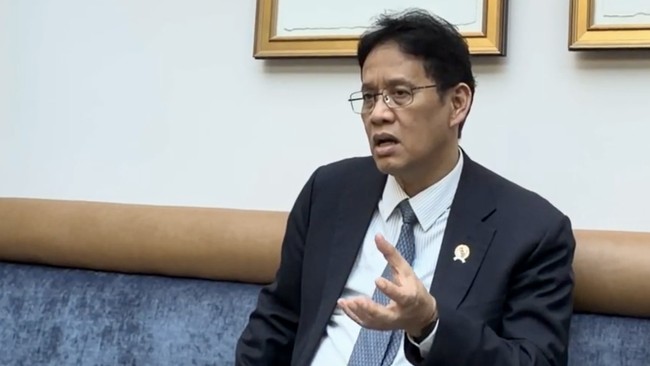
Jakarta, CNBC Indonesia - Finance Minister Purbaya Yudhi Sadewa revealed that the work-from-home (WFH) policy, which has been in place for a month, is still under evaluation. This is being done to assess the impact of the policy.
As is known, this WFH policy is intended to save fuel consumption due to the surge in global oil prices. Therefore, Purbaya explained that the sustainability of the policy still heavily depends on the current global uncertainties, particularly the movement of world oil prices.
“We’ll see first what the developments in the world oil market are like. And we’ll see if we still need to save a bit or not. But if it improves, then that’s it,” Purbaya told reporters, quoted on Tuesday (5/5/2026).
Purbaya explained that the WFH policy so far has had a neutral to positive impact on the economy.
“The impact is probably neutral or positive on the economy, yes,” he said.
Nevertheless, Purbaya assessed that there are several other factors also affecting the economic slowdown. However, he emphasised that the government will address these issues in the near future.
“There are other factors slowing down the economy, but we’ll fix them soon; tomorrow’s economic growth data is said to be good,” he said.
The government officially implemented the WFH policy for ASN every Friday, effective from 1 April 2026 across Indonesia. The policy is aimed at budget efficiency, accelerating bureaucratic digitalisation, and energy efficiency. In practice, WFH does not apply to vital public service sectors.
“The implementation of work-from-home (WFH) for ASN, civil servants, in central and regional agencies, carried out for one working day per week, namely every Friday, regulated through a circular from the Minister of State Apparatus Empowerment and Bureaucratic Reform (MenpanRB) and a circular from the Minister of Home Affairs (Mendagri),” said Coordinating Minister for the Economy Airlangga Hartarto in a press conference on Tuesday (31/3/2026).
This policy also covers digital-based government governance transformation, mobility efficiency, including limiting the use of official vehicles by 50%, except for operational and electric vehicles, and encouraging the use of public transport, thereby reducing official vehicles and maximising the use of public transport as much as possible.
Furthermore, the government is implementing efficiency in domestic travel by up to 50%, and international travel by up to 70%.
“Specifically for regions, there is a recommendation to increase the number of days, times, and coverage of roads in car-free days, according to each region’s characteristics, and this will be regulated by a circular from the Minister of Home Affairs,” Airlangga emphasised.