
WIKA Records 25.2% Progress on Jenelata Dam Construction
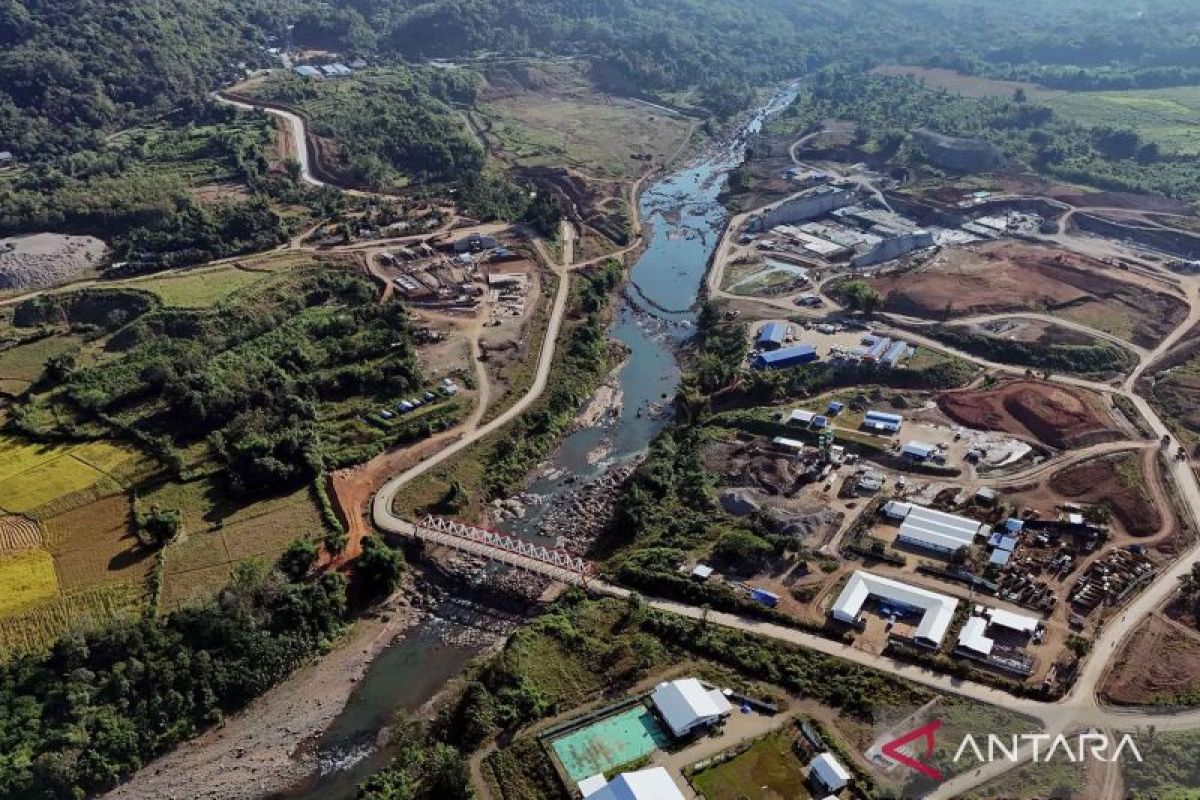
PT Wijaya Karya (Persero) Tbk (WIKA) has reported that progress on the construction of the Jenelata Dam in Gowa Regency, South Sulawesi, has reached 25.2% as of the first quarter of 2026. In this phase, work is focused on excavating soil and rock in the spillway (overflow structure) and abutment (dam abutment) areas, as well as implementing the main dam foundation. In a statement in Jakarta on Thursday, WIKA’s President Director Agung Budi Waskito explained that several crucial tasks, such as foundation excavation, slope protection, and access road construction, are being accelerated, with the main dam area prepared for the embankment stage. The Jenelata Dam project forms part of WIKA’s contribution to supporting the national development agenda, particularly in realising Asta Cita, with emphasis on strengthening food security, water resilience, and sustainable and equitable infrastructure development. Agung stated that the dam’s construction not only focuses on completing the build but also on creating long-term benefits for the community. “The construction of the Jenelata Dam is part of WIKA’s commitment to supporting the Asta Cita agenda through the provision of infrastructure that strengthens water resilience, supports agricultural productivity, and improves community welfare. We are optimistic that this project will bring significant benefits to the South Sulawesi region,” said Agung BW. In its implementation, the project adopts modern construction technology such as the Concrete Face Rockfill Dam (CFRD) method and the application of 5D Building Information Modeling (BIM) to enhance efficiency, accuracy, and integrated project control. With a storage capacity of 223.6 million m³, the Jenelata Dam is designed to provide various strategic benefits, including flood control in the Jeneberang River Basin, irrigation water supply for approximately 25,783 hectares of agricultural land, and raw water sources for communities in the Makassar, Gowa, Maros, and Takalar regions. Additionally, the dam has the potential to support the development of new renewable energy through a 7 megawatt (MW) Hydropower Plant (PLTA), thereby contributing to national energy transition efforts. The project is targeted for completion on 17 June 2028 and is expected to become one of the strategic infrastructures that provides sustainable economic, social, and environmental impacts.