
Wihaji: Child protection in digital spaces determined by family role
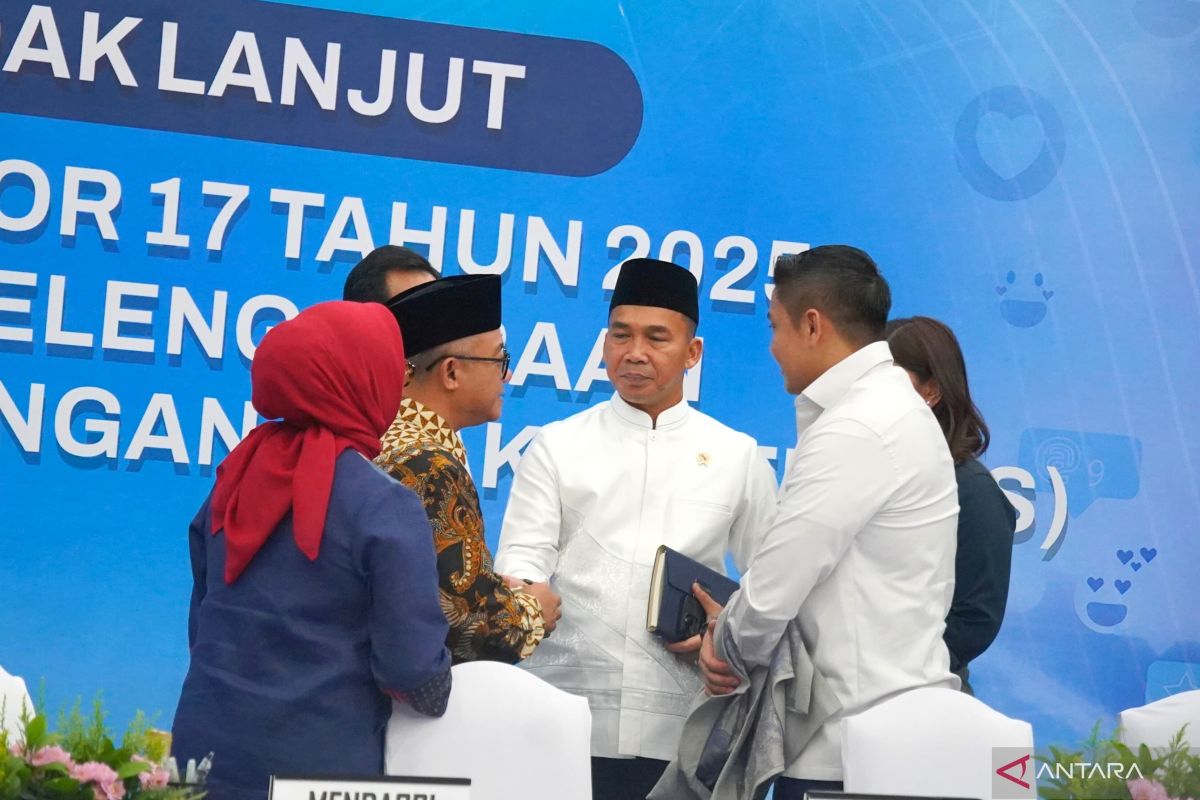
Jakarta — Indonesia’s Minister of Population and Family Development (Mendukbangga) and head of the National Family Planning Coordinating Board (BKKBN) Wihaji has stated that efforts to protect children when accessing digital spaces are heavily dependent on the role of families.
Wihaji observed the experiences of several countries, including Australia, which show that age restriction regulations for accessing social media represent an important step. However, in practice, such regulations can still be circumvented by children, for example by borrowing their parents’ devices or using adult identities.
“For this reason, the Ministry of Population and Family Development/BKKBN believes that the success of this policy is not determined solely by regulation or technology, but is heavily dependent on the role of families,” Wihaji stated in a statement received in Jakarta on Tuesday.
According to him, the government does not want family resilience to be disrupted by various negative content circulating on digital platforms. Therefore, through implementing regulations derived from PP Tunas issued by the Ministry of Communication and Digital, all digital platforms are now required to provide parental consent mechanisms and control features for children.
Nevertheless, Wihaji emphasised that the existence of such technology will not be effective without active involvement from parents in accompanying children during digital activities.
“Ultimately, the strongest bulwark for protecting children in the digital era is not just technology, but family,” Wihaji said.
It is known that Communication and Digital Minister Meutya Hafid affirmed that Government Regulation Number 17 of 2025 concerning the Governance of Electronic System Operations in Child Protection (PP Tunas) provides protection for children from high-risk digital platforms.
The implementation of PP Tunas is important, in her view, given the reality that the number of children active on the internet in Indonesia is very large. Such a substantial number of child users in digital spaces certainly also faces various serious risks in digital spaces.