
Why Uranium Has Become a Target for the United States Amid Iran Conflict
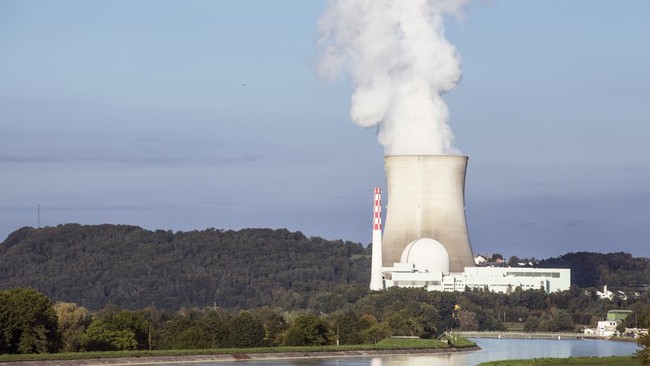
Iran’s uranium reserves have returned to global attention amid escalating regional conflict. A recent report from the International Atomic Energy Agency (IAEA) has revealed that the country possesses uranium enriched to 60% purity. The United States has been reported to be considering high-risk military operations to secure Iran’s highly enriched uranium supplies.
President Donald Trump is reportedly evaluating options to deploy special forces to seize Iranian uranium that is approaching weapons-grade levels, amid growing concerns among officials that the supplies may have been relocated. Three diplomatic officials familiar with the discussions shared this information on condition of anonymity, as the matter involves restricted policy considerations.
The United States and Israel previously struck Iran’s major nuclear facilities during a 12-day conflict in June.
Uncertainty regarding Iran’s highly enriched uranium has intensified because nearly nine months have elapsed since United Nations atomic inspectors last verified the location of these uranium supplies, according to the officials.
Why Has Uranium Become a Focus of International Attention?
Uranium with concentrations of approximately 90% is typically classified as weapons-grade uranium. Consequently, uranium enriched to 60% is considered to be at a technically very sensitive level.
Uranium is also the primary fuel in nuclear energy technology. It is utilised in nuclear reactors to generate electricity through nuclear fission processes, which can produce energy in substantial quantities.
Nuclear energy is employed by various nations because it can generate electricity on a large scale with relatively low carbon emissions compared to fossil fuel sources.
Uranium Mining Production
Data from the World Nuclear Association indicates that global uranium mining production originates primarily from Kazakhstan, which produces the largest share of uranium from mines at 39% of world supply, followed by Canada at 24% and Namibia at 12%.
These countries provide the majority of global uranium supply used by nuclear power plants worldwide.
United States Response to Iranian Uranium
American officials have also stated that 60% enriched uranium can be further enriched to weapons-grade levels in a relatively short timeframe, making such stockpiles a primary concern in United States security policy.
The United States is still considering the possibility of special operations to secure Iran’s highly enriched uranium. Options under discussion include the deployment of special forces to confiscate the material. However, Reuters notes that reports regarding these plans have not been independently verified and remain at the stage of internal US government deliberations.
What Are the Uses of Uranium?
Uranium is a radioactive metal element with a strategic role across various sectors, ranging from energy and defence to scientific research. This mineral is one of the world’s important commodities because of its ability to generate energy in very large quantities.
The following are the principal uses of uranium:
- Fuel for Nuclear Power Plants
The primary use of uranium is as fuel for nuclear reactors to generate electricity. In this process, uranium is enriched to increase the content of uranium-235, the isotope capable of undergoing nuclear fission reactions. When uranium atoms split, large quantities of heat energy are released.
This heat is used to warm water to generate steam, which subsequently rotates turbines in electricity generators. By way of illustration, a single uranium pellet the size of a fingertip can produce energy equivalent to approximately one tonne of coal.
Many countries, including the United States, France, China and South Korea, rely on uranium-based nuclear energy to supply national electricity.
- Raw Material for Nuclear Weapons
In addition to energy production, uranium is also used in the manufacture of nuclear weapons. The type used is highly enriched uranium (HEU), namely uranium enriched to approximately 90% uranium-235 content.
This material was previously used in the atomic bomb dropped on Hiroshima in 1945. Because of its destructive potential, the trade and enrichment of uranium are closely monitored by international bodies such as the International Atomic Energy Agency (IAEA).
- Energy Source for Submarines and Nuclear Aircraft Carriers
Uranium also serves as fuel for nuclear reactors on military vessels, such as nuclear submarines and aircraft carriers.
This technology enables vessels to operate for extended periods without needing to refuel, even for months at sea.
This advantage provides significantly longer operational range compared to conventionally fuelled vessels.
- Research, Medical and Industrial Applications
Beyond the energy and defence sectors, uranium is also used in various research and industrial fields.
Some of these include fuel for research reactors for scientific experiments, production of medical isotopes for diagnosis and treatment of diseases such as cancer, and industrial radiography for detecting cracks in metals.