
Why the Strait of Hormuz off Iran's Coast Is So Crucial
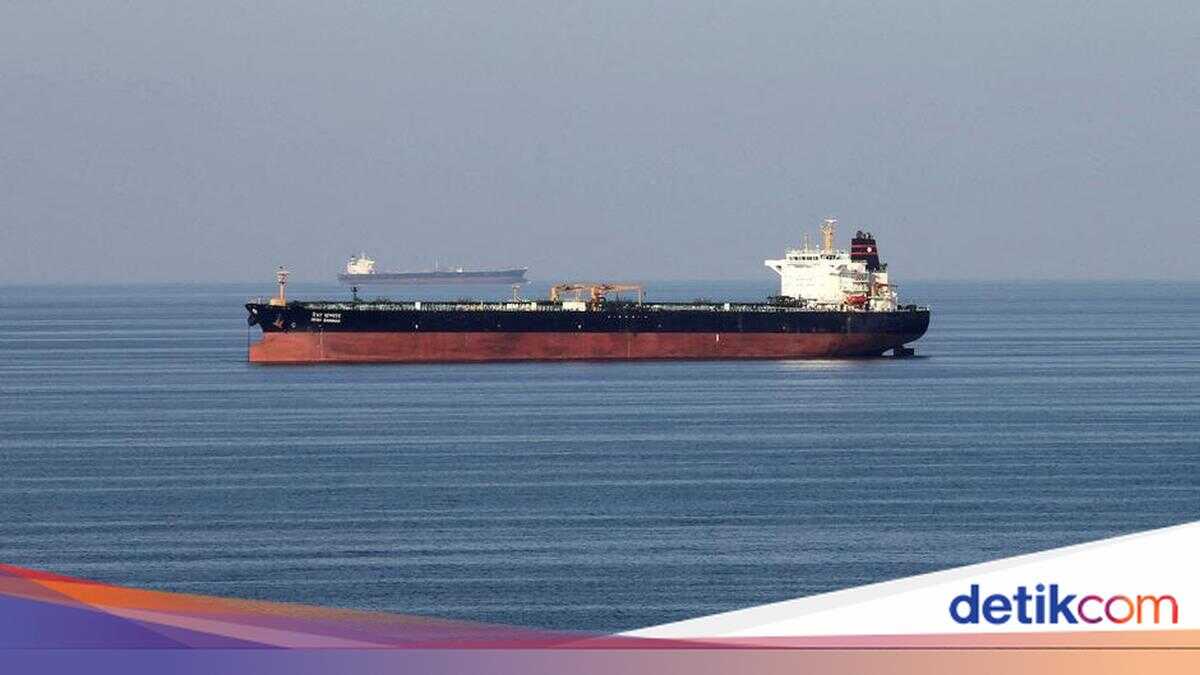
Iran on Tuesday (17 February) announced it would partially close the Strait of Hormuz at the mouth of the Persian Gulf, a vital shipping lane for global oil trade.
Iranian state television described the closure as a “security” measure related to Revolutionary Guard military exercises that had begun a day earlier.
It remains unclear how long the partial closure will last. The Associated Press reported the restrictions were expected to last only a few hours.
Iran has repeatedly threatened to close the strait as a signal that it is capable of disrupting the strategic maritime route through which approximately one-fifth of the world’s oil supply flows.
The move comes as Iranian and United States negotiators held a second round of talks on Tehran’s nuclear programme in Geneva on Tuesday (17 February).
In recent weeks, the US has increased its military presence in the Middle East to pressure the Islamic Republic over its nuclear ambitions and its bloody crackdown on anti-government protests.
What is the current situation at the Strait of Hormuz?
The Strait of Hormuz is a vital waterway situated between Oman and Iran, connecting the Persian Gulf with the Gulf of Oman and the Arabian Sea.
The US Energy Information Administration (EIA) calls it “the world’s most important oil transit chokepoint.”
At its narrowest point, the strait is only approximately 33 kilometres wide, with shipping lanes of roughly 3 kilometres in each direction, making traffic dense and high-risk.
The vast volumes of crude oil produced by OPEC nations such as Saudi Arabia, the United Arab Emirates, Kuwait and Iraq from oilfields in the Persian Gulf region, consumed globally, flow through this strait.
Approximately 20 million barrels of crude oil, condensate and fuel are estimated to pass through the route daily, according to data from Vortexa, an energy and shipping market consultancy.
Qatar, one of the world’s largest producers of liquefied natural gas (LNG), also relies heavily on the strait to export its LNG.
Ship owners increasingly vigilant
Last year’s Israel-Iran conflict once again highlighted security concerns in these waters.
In the past, Iran has threatened to close the Strait of Hormuz in retaliation for Western pressure.
However, during the 12-day war last June, no major attacks on commercial shipping occurred in the area.
Nevertheless, ship owners remained vigilant. A number of vessels increased their security measures, whilst others cancelled routes to the region during the conflict, the Associated Press reported.
Electronic jamming of commercial vessel navigation systems also surged around the strait and the broader Gulf area during last year’s confrontation, according to naval sources speaking to Reuters.
A prolonged blockade or disruption to oil flows could trigger a sharp spike in crude oil prices and severely impact energy-importing nations, particularly in Asia.
Who would be most affected if supply were disrupted?
The EIA estimates that approximately 82 per cent of crude oil and other fuel shipments passing through the strait are destined for consumers in Asia.
China, India, Japan and South Korea are the primary destinations. These four countries collectively account for nearly 70 per cent of total crude oil and condensate flows through the Strait of Hormuz.
These markets would likely be the most affected in the event of a supply disruption.
Impact on Iran and Gulf states
Were Iran to fully close the strait, the move could potentially trigger US military intervention.
A prolonged closure could also damage Tehran’s relations with Arab Gulf states such as Saudi Arabia and the United Arab Emirates, which in recent years have sought to improve ties with Iran.
Moreover, Iran itself depends on the Strait of Hormuz to export oil to its trading partners, making a closure counterproductive.
“Iran’s economy is heavily dependent on the smooth flow of goods and vessels through this sea lane, as all of its oil exports are sea-based,” wrote JP Morgan analysts Natasha Kaneva, Prateek Kedia and Lyuba Savinova, as quoted by Reuters during the conflict.
“Closing the Strait of Hormuz would be a move that would damage Iran’s relationship with its sole oil buyer, China.”
Are there alternative routes?
Arab Gulf states such as Saudi Arabia and the United Arab Emirates have in recent years developed alternative routes to bypass the Strait of Hormuz.
Both countries have built infrastructure to channel a portion of their crude oil through other routes.
Saudi Arabia operates the East-West Crude Oil Pipeline with a capacity of 5 million barrels per day. Meanwhile, the United Arab Emirates has a pipeline connecting its onshore oilfields to the Fujairah export terminal on the Gulf of Oman.
The EIA estimates that approximately 2.6 million barrels of crude oil per day could be diverted to avoid the Strait of Hormuz in the event of disruption to the route.