
Why Spain Does Not Have Nuclear Weapons? Explanation by PM Pedro Sánchez
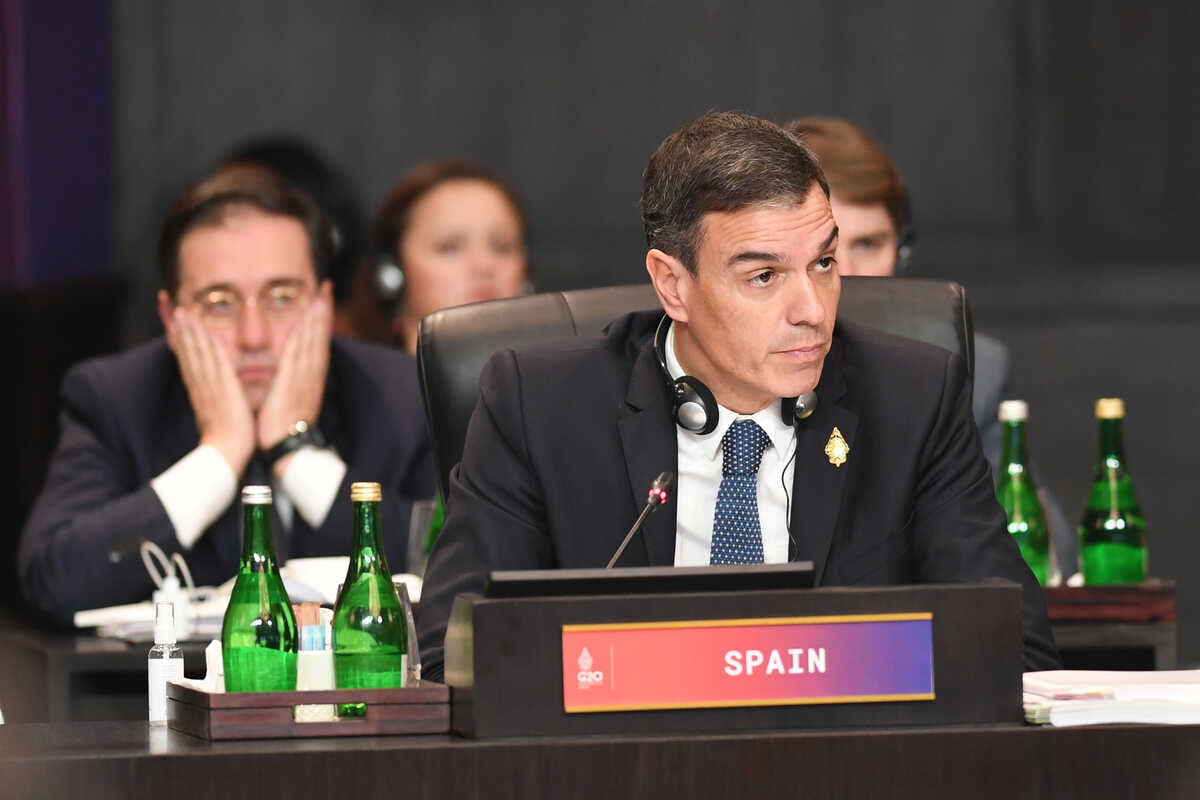
In the increasingly tense dynamics of global politics in 2026, Spanish Prime Minister Pedro Sánchez’s remarks again drew worldwide attention. Speaking before world leaders at the Munich Security Conference in February 2026, Sánchez asserted that Spain is a non-nuclear state that has chosen a path of a ‘moral arsenal’ rather than a race for atomic weapons.
This is not mere rhetoric. Previously, in September 2025, Sánchez had sparked diplomatic tensions with Israel by noting that Spain’s military constraints—including the absence of nuclear bombs and an aircraft carrier—meant Madrid could not stop a Gaza attack alone. Behind that admission lies a long history and strategic choices explaining why one of Europe’s economic powers opted to remain ‘clean’ of weapons of mass destruction.
Few realise that Spain nearly became a nuclear-armed state under the Franco dictatorship. Through a secret programme known as Project Islero in the 1960s, Spain sought to develop its own atomic bomb to bolster its standing internationally.
The programme was halted during the democratic transition of the 1980s. Under the Socialist Felipe González government, Spain formally signed the Nuclear Non-Proliferation Treaty (NPT) in 1987. The decision was taken because Spain preferred full integration into the European community and NATO, which provided security guarantees without the burden of the cost and political risk of possessing its own nuclear weapons.
Spain carries a trauma with nuclear weapons. In 1966, a U.S. B-52 bomber collided over the village of Palomares, Spain, dropping four hydrogen bombs. Although they did not detonate, the incident caused extensive plutonium contamination and reinforced anti-nuclear sentiment in Spanish society to the present day.
In 2026, Sánchez used Spain’s status as a non-nuclear state to promote peace. He described the current nuclear arms race as a ‘historic error’, particularly with the threat of integrating Artificial Intelligence into nuclear-armed systems, which he warned is extremely risky.
Even without nuclear weapons, Spain continues to strengthen its conventional defence. Under Sánchez, Spain’s defence budget has risen substantially, and the number of troops in NATO missions has doubled. Spain has chosen to remain under the ‘nuclear umbrella’ of NATO while remaining outspoken in calling for global disarmament.
He also touched on the broader international nuclear landscape, noting that Tehran is reported to have enriched uranium to 60% purity—far above civilian energy needs.
North Korean leader Kim Jong Un has said he would be willing to establish good relations with the United States if his country’s nuclear status were recognised, but he closed the door on talks with South Korea. The Korean People’s Labour Party opened a congress, as reported by its official state media, signalling the next phase of the party’s weapons programme.
The security framework governing the post‑Cold War era—reaching back to the 2010 agreement between the United States and Russia under Presidents Obama and Medvedev—took effect in February 2011.