
Why Russia and China Are Not Directly Helping Iran Under Attack by the US and Israel
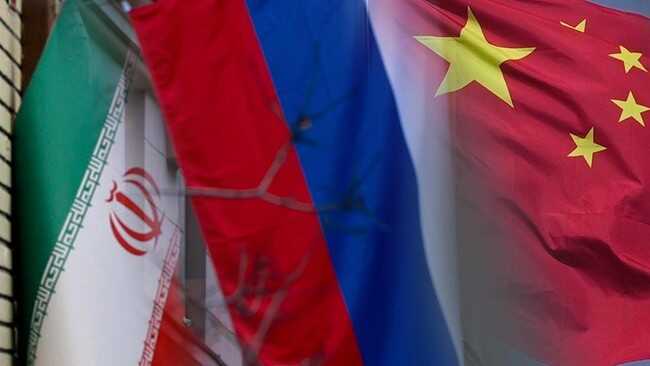
Jakarta, CNBC Indonesia - Strong reactions emerged from Iran’s two main diplomatic allies after the war involving the United States and Israel against Tehran killed more than 1,000 people. Russia and China openly condemned the military operation, calling it a violation of international law, although both had not shown signs of directly engaging militarily to assist Iran.
President Vladimir Putin of Russia directly condemned the killing of Iran’s supreme leader, Ayatollah Ali Khamenei, who died on Saturday (28/2/2026). He called the act a serious violation of the norms of humanity.
Putin said the killing was a “cynical violation of all moral norms of humanity”.
Meanwhile, Chinese Foreign Minister Wang Yi delivered a stern message to Israeli Foreign Minister Gideon Saar. He asserted that military force would not be a solution for the ongoing conflict.
“The use of force does not really resolve the problem,” Wang Yi said, while urging all sides to exercise restraint and avoid further escalation.
As part of the diplomatic response, Russia and China jointly called for an emergency meeting of the United Nations Security Council.
The move reflects the closeness of ties between Iran, Russia, and China. In recent years, Moscow and Beijing have expanded cooperation with Tehran through various bilateral agreements, including joint naval exercises.
The three countries also frequently present a united stance against the international order they perceive as led by the United States and designed to isolate them.
Although the rhetoric has been very strong, neither Russia nor China have signalled any intention to intervene militarily directly to support Iran.
Strategic Partners, Not Military Allies
According to Al Jazeera, Thursday (5/3/2026), the relationship between Russia and Iran has indeed grown closer in recent years. In January 2025, the two countries signed a comprehensive strategic partnership agreement covering various areas of cooperation, ranging from trade, the military, to science, culture, and education.
The agreement deepened defence and intelligence coordination between them. It also supports large infrastructure projects, including the construction of a transport corridor linking Russia to the Gulf region through Iranian territory.
In fact, at the end of February, about a week before the US and Israel attacked Iran, the two countries were still conducting joint military exercises in the Indian Ocean.
Yet when the war actually broke out, Moscow did not have a legal obligation to provide a military response. This is because the agreement did not include a mutual defence clause, thus not forming a formal military alliance.
Russian international affairs expert Andrey Kortunov, who has served as director-general of the Russian International Affairs Council and is a member of the Valdai Discussion Club, explained that the mutual defence treaty Russia had with North Korea, signed in 2024, is a far more binding example.
He said that under that agreement, Russia would be obliged to assist militarily if Pyongyang were involved in a conflict.
According to him, “by that agreement, Russia would be obliged to join North Korea in any conflict that might involve the country.”
Conversely, in its relationship with Iran, the existing agreement is far more limited.
“In the agreement with Iran it is only stated that both sides agree to refrain from hostilities if one party is involved in a conflict,” Kortunov said.
He also assessed that the possibility of Russia taking direct military action to assist Iran is very low due to the high risks.
Additionally, he noted that Moscow appears to be prioritising American mediation efforts in the conflict between Russia and Ukraine.
Kortunov also noted that Russia previously took a similar approach when criticising US actions in Venezuela after Washington’s operation which led to the arrest of its president, Nicolas Maduro, in January.
Although the Russia–Iran agreement clearly states Moscow is not obliged to intervene militarily, Kortunov said some of his contacts in Tehran expressed disappointment at Moscow’s attitude.
He said there was a “certain level of frustration” among Iranian officials because there was an expectation that Russia should do something more than merely diplomatic steps at the UN Security Council or other multilateral forums.
China–Iran relations and their limits
China also has fairly close ties with Iran, particularly in economics and energy. In 2021, the two countries signed a 25-year cooperation agreement aimed at expanding economic ties while incorporating Iran into China’s Belt and Road Initiative projects.
Jodie Wen, a security researcher at the Centre for International Security and Strategy at Tsinghua University, says Beijing–Tehran relations are generally viewed as pragmatic and stable.
“From a political perspective, we have routine exchanges,” she said by phone from Beijing.
She added that the economic cooperation between the two countries is also very extensive.
“From an economic standpoint, the cooperation is deep; many companies have investments in Iran,” she said.
Nevertheless, Wen emphasised that Beijing has long set clear boundaries in its partnership with Iran, particularly regarding military involvement.
“The Chinese government has always adhered to the principle of not interfering in the affairs of other countries. I