
Why New Currency Exchange Services Are Always in Demand Before Eid al-Fitr?
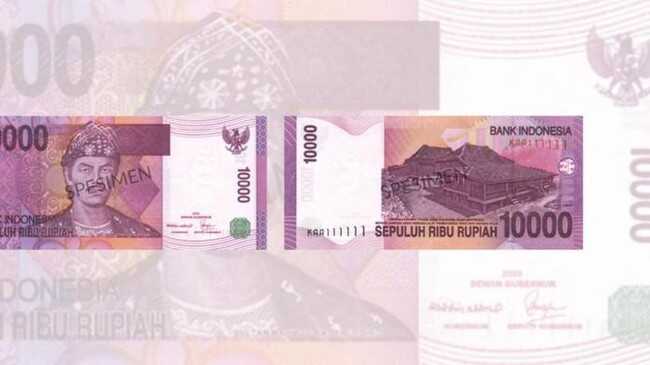
Jakarta, CNBC Indonesia - As Eid al-Fitr approaches, the phenomenon of seeking new banknotes invariably resurges. Long queues at banks, mobile cash services, and the proliferation of informal money exchange services at roadsides have become an almost annual sight.
For many people, exchanging money for new notes has become an essential part of Eid preparations, comparable in importance to buying new clothes or preparing gift hampers.
However, what exactly drives the rush for new currency exchange services ahead of Eid al-Fitr? Several reasons lie behind this seasonal phenomenon.
The Tradition of Sharing During Eid
Eid al-Fitr is synonymous with family visits and sharing joy. One of the most eagerly anticipated traditions, especially among children, is receiving cash from parents, relatives, or neighbours.
The custom of giving money during Eid is often referred to as a family version of holiday bonuses. Typically, money is given to nephews, grandchildren, or children who visit during the holiday.
Since the number of recipients can be quite substantial in a single day, people tend to need small denominations such as 2,000 rupiah, 5,000 rupiah, 10,000 rupiah, and 20,000 rupiah notes.
This is why demand for small denomination notes increases sharply approaching Eid al-Fitr.
Beyond being a form of sharing blessings, this tradition also symbolises gratitude and strengthens family bonds.
Why New Money?
Many people specifically seek notes in pristine condition rather than merely small denominations. In Indonesian culture, new banknotes are considered neater, cleaner, and more appropriate to give as gifts.
Giving crisp, unused notes is regarded as a form of respect to the recipient. Conversely, wrinkled or worn notes that have circulated for some time are often deemed inappropriate for distribution on special occasions such as Eid al-Fitr.
Moreover, new notes create a more festive and special impression. For many people, the experience of distributing envelopes containing fresh banknotes becomes part of the emotional experience that reinforces the Eid atmosphere.
Sharp Increase in Cash Demand
The phenomenon of seeking new notes does not occur solely at household level but also impacts the national financial system.
From Ramadan until Eid al-Fitr, cash demand typically increases significantly. Public consumption activity rises, ranging from purchasing essentials, financing homecoming travel, to distributing holiday bonuses.
To anticipate such surges, Bank Indonesia annually prepares substantial additional amounts of physical currency. New note exchange services are provided through commercial banks and mobile cash services in various regions.
This increased circulation of physical currency serves as one indicator of heightened economic activity among the public during the Eid period.
Psychological and Social Behavioural Factors
Behind this tradition lies a considerable psychological factor. Many people feel more satisfied and confident when distributing new notes to family and relatives.
For some, this habit is influenced by nostalgia from childhood when they received new notes during Eid. This experience is then passed on to subsequent generations.
Additionally, there is a social dimension. In certain social circles, giving money with denominations or conditions deemed inappropriate can create discomfort or concern about being perceived as stingy. Consequently, people tend to follow established social standards.
Practical for Managing Holiday Budget
From a personal finance perspective, preparing small denomination notes actually assists in budgeting.
By exchanging money beforehand, one can:
Determine the total funds to be distributed
Set specific amounts for each recipient
Avoid spontaneous spending during family visits
Without planning, distributing money during Eid has the potential to inflate spending due to impulsive decisions.
Therefore, preparing small denominations in advance can be a simple strategy to ensure the sharing tradition proceeds without disrupting one’s financial condition after Eid.
Informal Exchange Services
The high demand for new notes has also spawned another phenomenon: roadside currency exchange services. Typically, these exchangers offer various denomination packages in exchange for additional fees or certain charges.
Whilst appearing convenient, informal exchange channels carry several risks, such as substantial discounts in value and other security concerns.
Therefore, the public is advised to exchange money through official bank services or facilities provided by Bank Indonesia.
Remain Prudent in Sharing
Although sharing is part of the Eid spirit, people should still adjust it to their individual financial capacity.
Some simple tips that can be followed include:
Determining a holiday bonus budget early on
Adjusting amounts based on the number of recipients
Avoiding additional unplanned expenditures
Exchanging money through official channels
With proper planning, the tradition of sharing can continue to bring happiness without creating financial burden after Eid al-Fitr.