
Why is Trump Softening on Peace with Iran? Has the US Run Out of Steam?
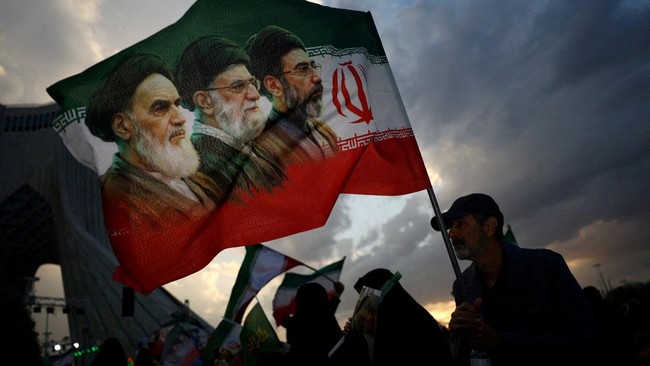
Tensions in the Middle East seem likely to ease. The US website Axios reports on how a 14-point memorandum of understanding (MOU) is set to be finalised between Washington and Iran.
So, is the US softening because it has run out of energy in confronting Iran?
In fact, the US-Iran conflict, according to observers, serves as an important lesson for superpower nations amid shifting global geopolitical landscapes. In an increasingly unstable world, major powers are said to no longer be able to recklessly squander resources to maintain political or military prestige.
Valdai Club Programme Director Timofey Bordachev assesses that global politics today no longer resemble a mere competition to demonstrate dominance. In his view, the world is now moving towards an arena of a “survival race” that demands efficient resource use.
“It is not the most brilliant countries that will survive, but those that know how to allocate resources wisely,” writes Bordachev, as quoted by RT on Thursday (7/5/2026).
He states that large expenditures on military operations in peripheral regions now signal strategic decline. This is because the costs of maintaining domestic stability continue to rise while global economic growth slows.
In that context, the US’s prolonged war and pressure on Iran is cited as a real example of the limitations of modern superpowers. Despite years of economic and military pressure on Tehran by Washington, the results achieved are deemed minimal.
“For the United States, Iran has proven to be an apt case. Despite sustained pressure and direct confrontation alongside its allies, Washington has only achieved modest results,” says Bordachev.
He assesses that Iran has remained resilient, while the US has had to expend vast resources for disproportionate outcomes. This situation, in his view, has eroded the United States’ global credibility and weakened the trust of its allies.
Bordachev emphasises that in the modern era, even small defeats are immediately exposed to the public and amplified by media and political opponents. The impact is not only on a country’s international position but also on domestic public confidence.
“In an era of constant scrutiny, there are no small defeats,” he says.
He then references the history of rivalries between great powers, from the “Great Game” between Russia and Britain in Central Asia in the 19th century to proxy conflicts during the Cold War. In his opinion, such patterns of competition in peripheral regions were once a primary strategy for major powers to avoid direct war.
However, this approach is now deemed increasingly irrelevant. Especially since the costs and risks are too high.
Bordachev also views the Soviet Union’s experience as a real example of the dangers of excessive expansion. In the 1980s, Moscow is said to have spent too many resources maintaining global influence, ultimately burdening its own domestic resilience.
“The costs kept increasing, while the benefits remained abstract,” he writes.
On the other hand, China is assessed as taking a different approach. Beijing is said to focus more on core interests such as Taiwan and the South China Sea, but tends to restrain itself from broader global military engagements.
This approach, according to Bordachev, demonstrates that the foundation of modern national power no longer lies in the ability to be present in every world conflict, but in domestic economic strength and social cohesion. He notes that the US continues to expend resources in many regions to maintain global dominance, even when it does not always have clear strategic needs.
“The result is a gradual erosion of both its capabilities and authority,” says Bordachev.
In his view, major powers are now beginning to learn that survival is not determined by the breadth of their geopolitical ambitions. Rather, it is by how disciplined they are in setting national priorities.