
Why is the Kaaba Shaped Like a Cube?
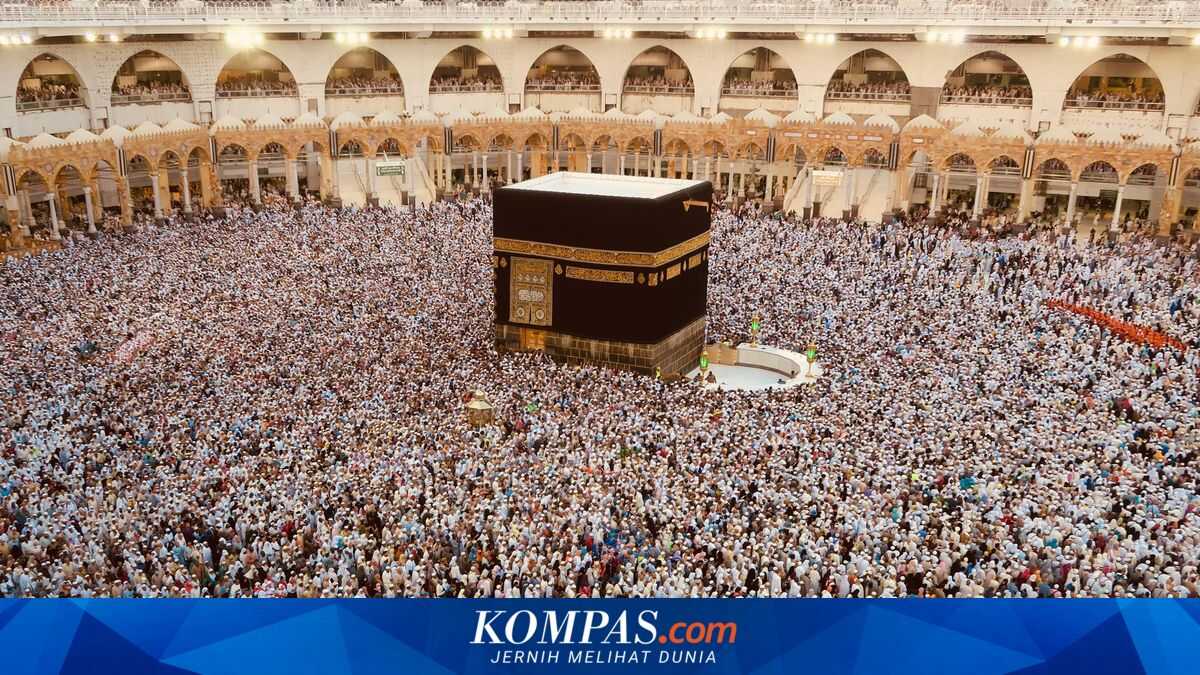
The Kaaba is a building regarded as one of the holiest places for Muslims. It is a stone structure in a rectangular shape that approaches a cube and is draped with a black cloth known as the kiswah.
The box-like shape of the Kaaba that we see today is not without history. That form is the result of a long process of reconstruction from the pre-Islamic era to the early development of Islam.
Summarised from ResearchGate, in Islamic tradition the initial foundation of the Kaaba was built by the Prophet Ibrahim and his son Ismail. The original structure was described as rectangular and not roofed.
The building became a symbol of tawhid, as the “House of Allah” (Al-Bait), a place for humans to worship the One God. From the outset, its shape was designed simply, without ornaments or symbols of idol worship.
When rebuilt, the size of the building was reduced from the original design. Some areas of the old foundation were not rebuilt and were left outside the main structure.
This area is later known as Hatim or Hijr Ismail, marked by a semicircular wall on the side of the Kaaba.
To this day, many pilgrims strive to pray in that area because it is believed to be part of the original foundation of the Kaaba.
Because of the size reduction, the building resulting from Quraysh’s reconstruction is nearly cube-shaped, a square with a relatively balanced height. This design has since become the form widely known to this day.
Symbolically, the cube shape reflects simplicity and the purity of tawhid. The Kaaba was not built to display architectural grandeur but as the focal point of worship.
For Muslims, the Kaaba serves as the qibla, the direction of prayer that unites millions of Muslims worldwide at a single point in the city of Mecca.
The cube form signifies simplicity and purity. It emphasises that Muslims do not worship the Kaaba, but merely orient themselves towards the qibla.