
Why Is Ramadhan the Best Madrasah?
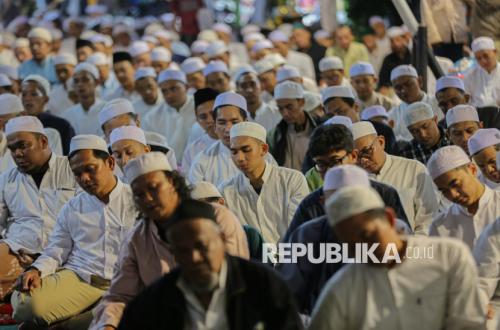
Ramadhan is the best madrasah provided for believers to achieve the level of piety, gratitude and truth (QS. Al-Baqarah [2]: 183-186). Why is Ramadhan called the best madrasah? Because all components of education and training involved within it are the best for building spirituality (ruhaniyah), intellectuality (’ilmiyah), collective sociality (ijtima’iyah) and physicality (jasadiyah). There are at least six best components within this Ramadhan Madrasah:
First, the Best Supreme Teacher, namely the Creator and architect of educational principles is Allah SWT, the Most Good, and the model to be emulated is Prophet Muhammad SAW, the Best Teacher who is protected from sin (ma’shum) and possesses the best conduct (QS. Al-Qalam [68]: 5). Allah SWT commands His faithful servants to fast during the day and perform night prayers, whilst the Prophet SAW serves as the model for his followers. Whoever performs these with sincerity and according to His guidance, then Allah SWT Himself will grant them special rewards (HR. Bukhari).
Second, the Best Curriculum, an educational concept directly designed by the Best Supreme Teacher and systematically implemented by the Best Teacher in the form of speech, action and feeling (of the heart). From the pre-dawn meal through to the next pre-dawn meal, a curriculum has been arranged to educate and train students to improve their quality of life. Fasting during the day by abandoning all things that break the fast and seeking the reward of fasting, five daily prayers, supplementary prayers and voluntary prayers, charity, Quranic recitation, remembrance of Allah and work become the best curriculum found only in this month.
Third, the Best Students, namely the chosen servants in whose hearts faith has grown (QS. Al-Baqarah [2]: 183). They are the finest individuals who are not merely Muslim, but believers who observe the five pillars of Islam and uphold the six pillars of faith. Because the students are chosen people, they will quickly and easily understand the curriculum presented, and will therefore experience significant positive impact in their lives after graduating from the Ramadhan Madrasah.
Fourth, the Best Supervisors, the Angels Raqib and ’Atid who continuously guard and supervise every word and action of the students at all times. These Supervisors never sleep or become drowsy and have no interest other than carefully recording everything to report to Allah SWT (QS. Al-Infithar [82]: 10-12). Therefore, all students are extremely cautious and will not violate the established rules, as the supervisors and external quality assurers are always on duty 24 hours. Throughout their education, each student truly guards their speech, gaze, hearing, actions and even the whispers of their heart to meet the expected targets.
Fifth, the Best Timing, from the pre-dawn meal until sunset, although this varies by region. Some areas have longer daytime periods and others shorter. For equatorial regions, the average duration is 12-14 hours. The educational programme lasts for one month, spanning 29 or 30 days. A time period more than sufficient to develop good character. Various research findings show that less than 30 days is needed to establish a habit and build a person’s character. Therefore, one month is the best period to instil and cultivate the character of a complete believer.
Sixth, the Best Consumption, food that is lawful (halal), not forbidden, and of quality—that is, highly nutritious (toyyiban)—which does not cause illness or damage health. During their education, students must not consume even a small amount of unlawful and questionable food and drink, as it will damage the quality of their worship. Therefore, whatever is eaten and drunk must be lawful and good, whilst avoiding excess (QS. Al-A’raf [7]: 31) and wastefulness (QS. Al-Isra`: 26-27).
Following one month of training in this best madrasah, do the alumni maintain and implement it in their daily lives? If they can only fulfil the curriculum during Ramadhan, they are called Servants of Ramadhan (ramadhaniyyun). This means they only become obedient during the Ramadhan Madrasah and afterwards return to their former bad habits. However, if they remain consistent in maintaining all or some of it, they have become Servants of Allah (rabbaniyyun). Wise scholars offer piercing advice: “Kun rabbaniyyan wa la takun ramadhaniyyan” (be servants of Allah and do not be servants of Ramadhan).
It is this consistency (istiqomah) that creates deep and unforgettable impressions, so that the Ramadhan curriculum continues to be practised as much as possible and has a positive impact on life. The meaning of istiqomah in Surat Fushshilat verse 30 is explained by Prof. Buya Hamka in his Tafsir Al-Azhar with aesthetic eloquence: “Firmness of conviction is standing upright, standing firm in that conviction. Not shifting, not budging. Cannot be tilted left or right. Cannot be moved backwards or forwards, in the sense of departing from that standing position. Whatever happens, this conviction is not released. Istiqomah!”
Finally, undergoing education and training for one month is not futile work, but rather the best investment for a believer’s eternity.