
Why is Padang Arafah the Most Sacred Site During Hajj?
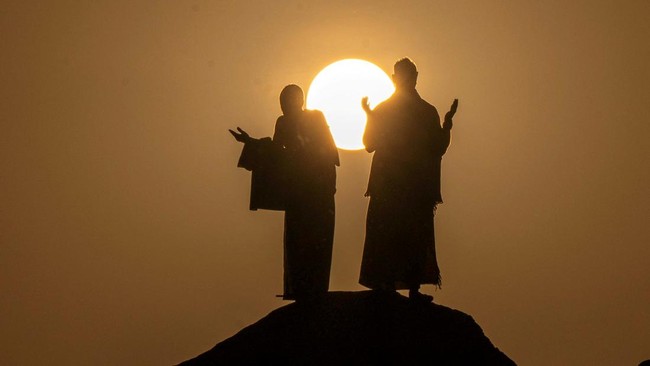
Padang Arafah is the most critical site in Hajj as it is where millions of pilgrims perform wukuf, the ritual considered the climax of the entire Hajj journey. Its importance is such that the saying ‘Hajj is Arafah’ exists, meaning Hajj is invalid without wukuf at Arafah.
Every 9th of Zulhijjah, millions of pilgrims from around the world gather at Padang Arafah from midday until just before dawn the next day. Amid the desert expanse, they engage in prayers, remembrance of God, and seek forgiveness.
The wukuf at Arafah is often described as the most emotional moment of Hajj. All pilgrims wear identical ihram garments, disregarding rank, wealth, or social status. Thus, Arafah is not merely a religious site but a symbol of equality, forgiveness, and spiritual reflection for Muslims worldwide.
As Hajj approaches, millions converge on a single point in the Arabian desert, clad in white ihram, enduring temperatures nearing 47 degrees Celsius, before assembling on the open plains devoid of tall structures. Here, officials, businessmen, and farmers stand under the same sun, spending hours in simple acts of prayer and contemplation at Padang Arafah. This event, known as wukuf, is the Hajj’s peak and one of the largest human gatherings annually.
This year, the Arafah wukuf takes place on Tuesday, 26 May 2026.
The Core of Hajj Lies in Arafah
Padang Arafah is located approximately 21 kilometres from Mecca, spanning about eight square kilometres. It is where the essence of Hajj occurs each 9th of Dhu al-Hijjah, starting from midday until just before dawn on Eid al-Adha. In Islamic tradition, wukuf at Arafah is the most crucial part of Hajj, encapsulated by the well-known phrase ‘Al-hajju Arafah’ or ‘Hajj is Arafah.’
Despite lasting only a few hours, millions willingly wait years in queue and travel great distances to be there at least once in their lifetime. The Day of Arafah also holds significance for Muslims not performing Hajj, with many observing the Arafah fast on 9 Dhu al-Hijjah, believed to carry great spiritual merit.
The Desert Crowded with Millions
The scale of human movement towards Arafah transforms Hajj into a massive logistical operation. Ahead of the 2026 Hajj, Saudi authorities reported completing transport preparations, sacred area metro systems, pilgrim movement management, and upgrades to cooling and security systems in Mina’s tent areas.
Kidana Development Co. replaced and enhanced cooling and security networks across 565 tents, totalling 339,000 metres of infrastructure. Concurrently, Saudi health authorities inspected over 187 tonnes of medical supplies from 20 countries to support healthcare during Hajj.
Temperatures are no joke. Daytime temperatures at Arafah typically range between 38 and 42 degrees Celsius, sometimes approaching 47 degrees during certain Hajj seasons.
A Site Rich in History
For many Muslims, Arafah is significant not just as the wukuf location. It is also associated with Prophet Muhammad’s Farewell Sermon near the end of his life, where he spoke about brotherhood, justice, and respect for fellow humans. Thus, Padang Arafah is viewed not only as a gathering point for millions but also as a symbol of reflection and equality.
In the area, almost all pilgrims wear simple white ihram without social status indicators. ‘At Arafah, everyone comes as a human,’ said an Indonesian pilgrim several years ago.
Amid a Busy World
In today’s fast-paced world, millions still travel to Padang Arafah to do something profoundly simple: pause. Many pilgrims spend their time in silence, prayer, or gazing at the surrounding desert. This contrast makes Arafah deeply impactful for many. While daily life becomes increasingly hectic and noisy, those few hours there are filled with profound stillness.
Padang Arafah may just be an open desert plain outside Mecca, but for millions of Muslims, those few hours there become one of the most significant moments in their lives. Under the same sun, countless individuals bring their prayers, hopes, regrets, and personal stories.