
Why Is Indonesia Sending Thousands of Troops to Gaza?
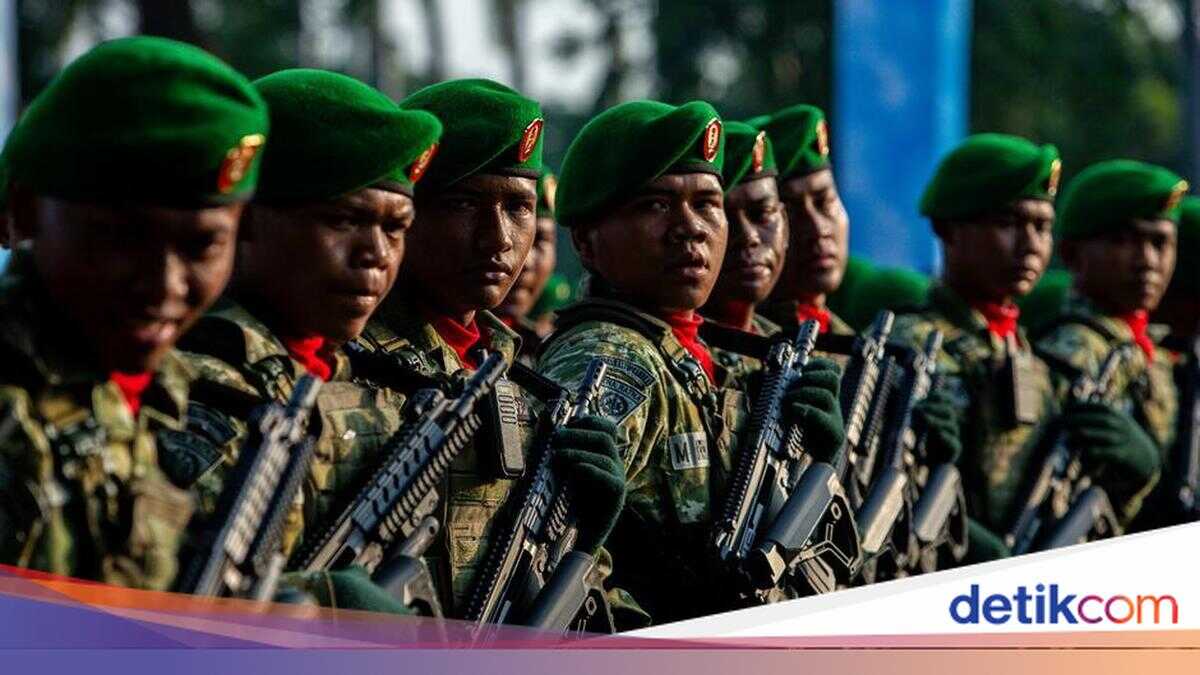
Several days before President Prabowo Subianto was scheduled to travel to Washington, D.C. for the inaugural meeting of the Board of Peace — a council established and chaired by US President Donald Trump — a TNI spokesperson made a controversial announcement.
Army Information Service Chief Brigadier General Donny Pramono stated that Indonesia was prepared to deploy up to 1,000 soldiers to Gaza in April, with the number potentially increasing to 8,000 by the end of June this year.
Previously, the Trump administration had indicated that several countries had pledged to contribute troops to the International Stabilisation Force in Gaza. The force, together with the Board of Peace initiative, forms part of a US-backed Gaza peace plan endorsed by the UN Security Council in November 2025.
Indonesia became the first country to openly declare its willingness to send troops. If realised, the commitment would represent one of the largest contributions to a peacekeeping mission in the world. However, the deployment still awaits final approval from President Prabowo.
“The departure schedule is entirely dependent on the state’s political decisions and applicable international mechanisms,” Brigadier General Donny Pramono told Reuters.
A risky move
Indonesian society is not wholly supportive of the plan to send soldiers to Gaza, explained Hikmahanto Juwana, a professor of international law at the University of Indonesia.
“At the grassroots level, there is suspicion that the Board of Peace is merely an extension of Netanyahu’s plans through President Trump,” Juwana said.
Indonesia has long fully supported the establishment of a Palestinian state, and owing to its geographical distance from the Middle East, it could be regarded as a more neutral party.
“Indonesia is indeed far from Gaza, but it is accepted by all parties, including Israel. So far, Israel has not made any comment regarding Indonesia’s statement,” said Mohamad Kawas, a UK-based journalist and political commentator on Arabic-language television.
The same cannot be said for Turkey’s proposed involvement. “Israel does not accept Turkey’s presence in Gaza, even though Ankara recognises Tel Aviv, maintains relations with it, and is a NATO member,” Kawas said. “Israel may be able to accept Indonesia despite the absence of diplomatic relations and its active support for Palestine.”
Kawas added that Indonesia is one of the world’s most populous Muslim-majority nations. “Trump wants his plan to gain broad support from the Islamic world, so this may be an additional reason.”
Foreign Policy magazine also noted that Indonesia has experience deploying troops for similar missions, including in the Middle East. Indonesia first sent troops to Egypt in 1956 following the Suez Crisis, and currently some 1,000 Indonesian troops are stationed along the Israel-Lebanon border.
Troops without a combat role
Part of the Gaza peace plan requires Hamas to lay down its arms. “There are concerns that the International Stabilisation Force may attempt to disarm Hamas,” Juwana said. “Such action could be viewed negatively by the Indonesian public.”
The Indonesian government has affirmed that deployed troops will remain under Indonesian command, with humanitarian rather than combat duties. They will not be involved in actions that could place them in direct confrontation, and will only act in self-defence.
The Ministry of Foreign Affairs also stated that the troop deployment should not be interpreted as a step towards normalisation of relations with Israel.
The government reiterated its support for a Palestinian state and its opposition to “forced displacement or demographic changes detrimental to the Palestinian people.” Indonesian troops would be withdrawn and Indonesia would exit the Board of Peace should the mission change significantly or the council fail to champion Palestinian rights.
The success of the force depends heavily on how the mission is designed, said Tahani Mustafa of the European Council on Foreign Relations.
“It depends on the mandate and institutional framework underpinning the troops’ entry,” she said. “If the troops do not receive Palestinian consent, they will be viewed and treated as a hostile entity — an extension of the Israeli occupation.”
Moreover, there are numerous other challenges facing international forces unfamiliar with the context and terrain. “Hamas is not the only armed group there,” she stressed.