
Why Iran's Supreme Leader Khamenei Is Constantly Pursued by Israel and the United States
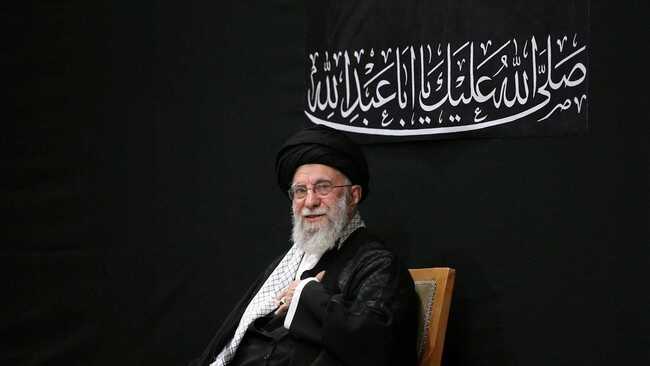
Ayatollah Khamenei has again become one of the most sought-after figures following attacks by the United States and Israel on Iran on Saturday, 28 February 2026.
Several Israeli media outlets reported that Iran’s Supreme Leader Ayatollah Ali Khamenei died in an Israeli strike on Iranian territory on Saturday, 28 February. However, no official confirmation regarding these reports has been issued to date.
Israeli media, citing local official sources, stated that Khamenei has been reported to be cut off from communications since the attack occurred. The fate of Iran’s Supreme Leader remains uncertain.
Israeli media outlet Walla reported that several Israeli officials have been unable to contact Khamenei following the strikes. Meanwhile, Channel 12 Israel claimed that belief in Khamenei’s death is strengthening among Israeli officials.
Citing Israeli government sources, Channel 12 also stated that Khamenei has at least been wounded in an attack by Tel Aviv on a building believed to be his residence.
Nevertheless, to date there has been no official statement from Israel or the United States regarding Khamenei’s condition or the results of the attacks on Tehran.
Who is Khamenei?
With the full name Sayyid Ali Hosseini Khamenei, he has served as Supreme Leader of Iran (Supreme Leader of Iran) since 1989 to the present day.
Born in Mashhad, Iran on 17 July 1939, Khamenei is one of only two Ayatollahs ever to be born in Iran. The title of Ayatollah, which represents the highest spiritual authority in Shiite hierarchy, was previously bestowed only upon Ayatollah Imam Sayyid Ruhollah Musavi Khomeini, who led the Islamic Revolution in Iran.
Khamenei has led Iran since 1989, succeeding Khomeini.
Within Iran’s leadership hierarchy, the Supreme Leader of Iran holds far greater power than the president. He is the highest religious, political, and military leader, the principal decision-maker in foreign policy, military affairs, and strategic matters.
Khamenei’s Background
The position of Supreme Leader of Iran has only existed since the nation ended its monarchical system and transitioned to a republic in 1979.
At the apex of this structure is Ayatollah Ali Khamenei. He comes from a clerical background and has a long history in Iranian politics, both before and after the 1979 Revolution. Following the Revolution, Ali entered the circles of power and gradually ascended the political ladder to increasingly strategic positions.
His political career became prominent when he served as President of Iran during the 1980s, meaning he held the highest executive position selected through the nation’s political mechanisms.
However, Iranian history took a turn in 1989 when the revolutionary leader Ayatollah Ruhollah Khomeini passed away. At that moment, Iran had to determine who would occupy the nation’s highest position as Supreme Leader.
Khamenei was subsequently selected as Supreme Leader by the Assembly of Experts (Majlis-e Khobregan), the body constitutionally mandated to make this selection. From that point on, Khamenei’s position transformed from a powerful president into a Supreme Leader wielding far broader control, not merely over governmental affairs, but also over the nation’s political direction, strategic policy, and the institutional focal points determining regime stability.
His power rests not only on constitutional text but also on how the system functions in daily practice.
When control is centred at the highest position, whilst many important institutions move in alignment with the central policy direction, the Supreme Leader’s power becomes overwhelmingly dominant. Consequently, Khamenei’s name frequently appears in protest slogans that have transformed from economic grievances into systemic opposition.
Khamenei’s Policies
In late 1996, Ayatollah Khamenei issued a fatwa that music education for children under 16 years of age in public facilities was considered morally corrupting and misleading, resulting in the closure of many music schools.
Khamenei was the first leader to issue a fatwa in 1999 permitting third-party gamete donation (sperm and ova) for infertile couples, including the use of donated gametes even after the donor’s death.
Differences Between the Roles of Iran’s President and Supreme Leader
According to the Iranian Islamic Republic’s constitution, the President of Iran is the head of the executive branch selected through direct popular vote by the Iranian people. The Supreme Leader of Iran is the highest-ranking political and religious leader of the Islamic Republic.
In their selection, the Supreme Leader of Iran, also known as the Supreme Guide, is chosen by a body of experts. This differs from the President, who is elected by the people.
Therefore, in hierarchical terms, Iran’s President is subordinate to Iran’s Supreme Leader.
Functions of Iran’s President and Supreme Leader
The President of Iran is responsible for signing treaties and agreements with other nations, international organisations, and others. He has the authority to appoint ministers, ambassadors, and governors following parliamentary approval.
Iran’s President is the Head of Cabinet and Government, Head of the National Security Council, Selects all Vice Presidents, sends and receives foreign ambassadors, and is the Head of the Council of Cultural Revolution.
Whilst the Supreme Leader has the authority to appoint heads of important posts such as the commander of the armed forces, heads of major religious foundations, the director of the national radio and television network, prayer leaders in major mosques, chief judge, members of the National Security Council, and handles foreign affairs and defence matters, the chief prosecutor, and 12 judges of the Guardians Council.
The Supreme Leader of Iran designs Iran’s general policy, oversees implementation of systemic policy.