
Why Indonesia Is Not Yet a Global Halal Economy Giant
Indonesia is often referred to as a ‘sleeping giant’ in the global halal economy, a label rooted in its extraordinary demographic capital as the country with the world’s largest Muslim population. On paper, the combination of its population, natural resources, cultural wealth, and geopolitical position should be sufficient to make Indonesia the primary leader. Yet, the reality is that Indonesia has not truly become a global giant.
The latest State of the Global Islamic Economy (SGIE) Report 2025/2026 indicates that Indonesia is still in fourth place on the Global Islamic Economy Indicator (GIEI), below Malaysia, the United Arab Emirates, and Saudi Arabia. This year’s position has slipped from last year’s third-place ranking, even though Indonesia’s Muslim population is far larger than those three countries.
The SGIE 2025/2026 also notes that the global Islamic economy is entering a new phase called halal economy sovereignty, where nations no longer merely consume halal products but begin building sovereign halal supply chains, digital trust infrastructure, and integrated sharia financial systems. The question remains: why has Indonesia, which possesses all these basic prerequisites, not yet been able to become the main leader?
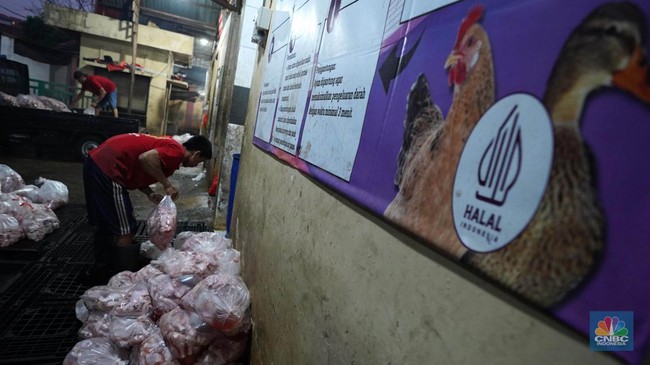
The biggest paradox of Indonesia’s halal economy is its very strong position as a consumer, but not yet as a producer. While consumption of halal food, Muslim fashion, halal cosmetics, and Muslim-friendly tourism is massive, most of the added value from this economic chain is still enjoyed by other countries. This condition is clearly visible in the halal food sector; Indonesia has a large food and beverage industry, yet many raw materials, processing technologies, and global halal brands still originate from abroad.
Meanwhile, the global Islamic economy across six consumption sectors reached approximately US$2.6 trillion in 2024 and is projected to rise to US$3.56 trillion by 2029. Ironically, many non-Muslim countries have successfully become major players. Brazil is the world’s largest halal meat exporter, China supplies various manufactured halal products, and South Korea and Japan are aggressively developing Muslim-friendly tourism. Indonesia, however, is still grappling with fundamental issues such as industrial productivity, SME halal certification, and supply chain connectivity.
Success is often measured by the number of halal certificates issued, but certification is merely an entry point, not the final goal. Countries dominating the global halal industry do not just build certification systems; they also master industry, technology, logistics, research, and international trade networks. Malaysia’s JAKIM-accredited system and its integrated halal industrial ecosystem explain its consistent top ranking. Indonesia has increased its certification numbers significantly, but the next challenge is transforming certification into export competitiveness, product innovation, and improved industrial productivity.
One important finding of the SGIE 2025/2026 is the increased global attention on building halal supply chains. OIC member countries recorded halal product imports worth US$421.5 billion, highlighting the vast trade opportunities. The problem is Indonesia is not yet a dominant player in this chain. The country possesses vast agricultural resources but low productivity, a large food industry dependent on imported strategic raw materials, and suboptimal logistics.
In the current global context, halal competition has shifted to seizing control of the global supply chain. Therefore, Indonesia needs to shift its focus from merely increasing halal certificates to developing halal industrial zones, logistics hubs, halal ports, and international trade networks. Another glaring weakness is the sharia finance sector, which the SGIE report identifies as the sector with the largest asset value and the main driver of global Islamic economic development.