
Why Gulf States Are More Angered at Iran Than the US Which Sparked War
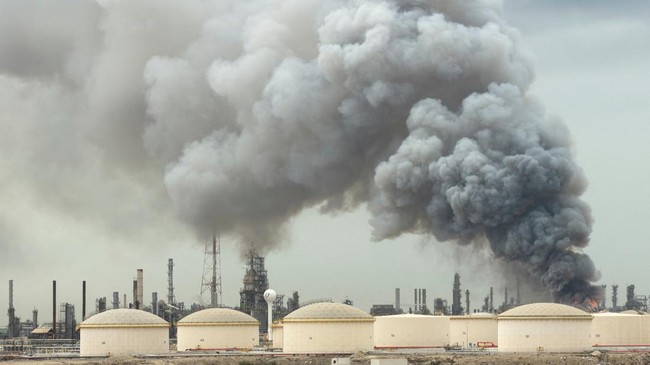
Almost two weeks since the outbreak of war between the United States and Israel against Iran, political dynamics in Gulf states have shown a fairly clear direction. Although the initial military operations were triggered by Washington alongside Tel Aviv, anger from officials in the region has been directed much more towards Tehran.
For Gulf states, Iran’s decision to attack their territories is regarded as a serious violation of the diplomatic efforts they have built to maintain regional stability.
In recent years, Arab Gulf states have actually sought to improve relations with Iran following a prolonged period of geopolitical tension. Several governments in the region had even given assurances to Tehran that their territories would not be used as bases to launch attacks against Iran.
However, those hopes collapsed when Iran launched attacks on Gulf state territories from the early stages of the conflict.
For many Gulf officials, Iran’s action is viewed as a betrayal of efforts to defuse the conflict that they previously promoted through diplomacy. The Prime Minister of Qatar even described Iran’s action as a “betrayal,” as it occurred despite Gulf states providing assurances of neutrality. He stated that Doha had previously sought to maintain a “peaceful regional environment” and facilitate diplomacy between the United States and Iran. However, according to him, Iran’s miscalculation ultimately “destroyed everything.”
Interestingly, public anger towards Washington has been relatively limited in the Gulf region, despite those countries bearing significant consequences from the regional war they previously tried to prevent. With few exceptions, senior officials in Gulf states have avoided openly blaming the US for its decision to confront Iran.
Instead, many capitals in the region have reserved the language of “betrayal” for Tehran, not Washington. One exception came from prominent Emirati businessman Khalaf Al Habtoor, who briefly criticised US President Donald Trump for allegedly “dragging” the region into war. However, that comment was later withdrawn.
Several sources in the Gulf region stated that the incident reflected strong underlying discomfort, but which was kept from developing into open criticism of Washington.
Amin Nasser, chief executive of Saudi energy giant Saudi Aramco, was also cautious in conveying criticism. He did not directly blame the United States, but warned that the disruptions that have occurred have triggered “serious cascading reactions” with the potential to bring “catastrophic” consequences for the global oil market.
Security Dependence on the US
Despite disappointment with the evolving situation, Gulf states have affirmed that their security relationship with Washington remains important. Qatar’s government spokesman Majed Al Ansari said the security partnership with the United States “need not be questioned.” He added that the current situation actually strengthens the rationale for deepening security cooperation with the US military and European countries.
However, this conflict has also brought an important lesson to Gulf states: dependence on a single security guarantor can make the region vulnerable. In recent days, European countries have actually appeared to play an important role in strengthening regional defence. French Dassault Rafale fighter jets were reported to be patrolling airspace over the United Arab Emirates, whilst British Eurofighter Typhoon aircraft helped intercept threats in Qatar’s skies.
Gulf States Begin Diversifying Security
A Gulf official told Reuters that countries in the region are now beginning to consider major changes in their defence strategy. He said Gulf states expect there will be major changes in their security and defence position. Not by abandoning the US, but by diversifying partnerships.
According to him, some countries may move closer to China, others to Israel, whilst others could strengthen relations with Europe, Turkey, Pakistan, or India. In other words, Gulf states are not severing ties with Washington. They are simply beginning to anticipate the possibility of major changes in the region’s security order in the future.