
Why Gold Prices Haven't Risen During the Iran Conflict: Here's Why
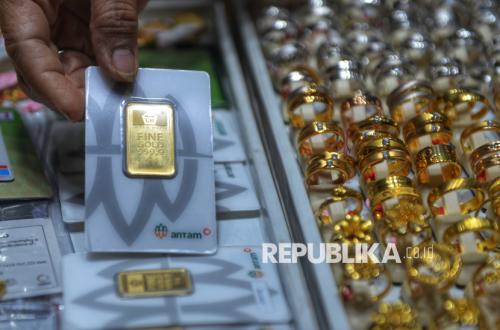
As the conflict with Iran enters its 18th day, gold prices, typically regarded as a safe-haven asset during periods of uncertainty, have remained unexpectedly stable. Since the United States and Israel first launched strikes against Iran on 28 February 2026, the conflict has intensified across the region, triggering concerns about potential ripple effects on the global economy.
On 2 March 2026, Ebrahim Jabari, senior adviser to the commander of Iran’s Islamic Revolutionary Guard Corps (IRGC), announced that the Strait of Hormuz, which serves as the conduit for approximately 20 per cent of global oil and gas shipments, had been closed. This action drove oil prices above $100 per barrel. Share prices also declined over the past two weeks amid uncertainty surrounding the Iran conflict.
So why haven’t gold prices surged?
According to Al Jazeera, gold prices have generally remained stable in the region of $5,000 per ounce in recent days. On Tuesday, 17 March 2026, spot gold prices were virtually unchanged at $5,001.36 per ounce at 11:00 GMT. Spot gold represents the purchase and sale price of physical gold for immediate delivery. Meanwhile, US gold futures contracts for April delivery rose marginally by 0.1 per cent to $5,005.20.
This minimal movement is surprising, given that gold prices typically surge during economic crises when investors seek safe assets to protect their funds, particularly during periods of global conflict.
For example, when Russia launched its large-scale invasion of Ukraine, gold prices climbed sharply, according to Remi Bourgeot, economist at the French Institute for International and Strategic Affairs in Paris and author of the Epistelem analysis platform, speaking to Al Jazeera.
Western sanctions subsequently imposed on Russia created a wave of panic among central banks and entirely altered gold price dynamics. Countries such as China undertook massive purchases to reduce their dependence on the US dollar.
However, in the US-Israel conflict with Iran, the market response has been different.
Market participants anticipate that the US Federal Reserve will halt interest rate cuts and may even raise rates in response to rising inflation, according to James Meadway, former economic adviser to the UK shadow chancellor and current member of the Progressive Economy Forum board.
“This situation makes dollar-based assets more attractive and gold, which yields no interest, less desirable,” said Meadway.
He added that investors had previously anticipated US interest rate reductions. Another factor is gold’s already strong performance since the beginning of this year.
“Gold prices have already risen so high previously that they are now responding less to the conflict,” he stated.
Rebecca Christie, senior researcher at the Bruegel think tank, expressed similar views. She noted that gold prices this year have been well above historical levels.
There is another contributing factor. The strengthening of the US dollar, whilst gold is traded in dollars, makes it more difficult for investors to drive gold prices higher.
“Moreover, the dollar’s strengthening also serves as an alternative safe asset, and rising oil prices are likely to trigger higher inflation, which further increases the attractiveness of the dollar,” said Christie.