
Why Does the Date of Chinese New Year Change Every Year?
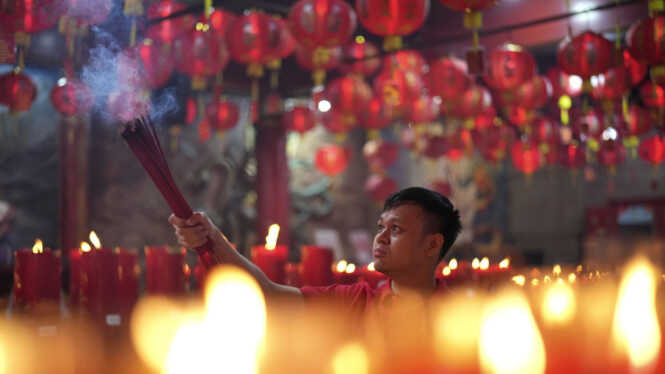
Chinese New Year, or Imlek, falls today, Tuesday 17 February 2026. Behind the annual celebration lies a wealth of fascinating history, particularly regarding how the date of Imlek is determined.
So how is the date of Imlek established, and what are the origins of the celebration? According to RD.com, the Chinese New Year celebration is based on the Chinese lunar calendar, which has been in use since the 14th century BC during the Shang Dynasty. Unlike the Western calendar, this calendar was readjusted each time a new emperor ascended to the throne. Because its calculations follow the movements of the moon and the solar solstice, the date of Chinese New Year shifts every year.
Generally, Chinese New Year begins with the appearance of the new moon, which typically occurs between late January and late February. The celebrations continue until the Lantern Festival, when the full moon appears. The total duration is approximately 15 days, giving people ample time to celebrate.
Imlek Traditions
One of the most distinctive traditions of the celebration is the giving of red envelopes containing money. The origins of this custom have several versions. According to the University of California, Irvine, one popular legend dates back to the Sung Dynasty. The story tells of an orphan who managed to defeat a great demon terrorising the village of Chain-Chieu.
As a mark of gratitude, the village elders gave him red envelopes filled with money. Regardless of the story’s origins, red envelopes remain an integral part of Chinese New Year celebrations to this day.
In addition to red envelopes, firecrackers are also synonymous with Imlek. A writer named ShaoLan Hsueh once shared the legend behind this tradition. In the story, a fairy disguised as an old man saved a town from a fearsome monster by throwing bamboo sticks into a fire.
The crackling sound of the burning bamboo frightened the monster away. From this arose the belief that lighting firecrackers during Imlek can ward off evil spirits.
Traditional Imlek Foods
Chinese New Year celebrations are also closely associated with traditional foods. The two most famous are dumplings and nian gao (sticky rice cake). The tradition of eating dumplings originates from northern China. Their crescent or round shape is thought to resemble ancient Chinese coins, and they are therefore believed to bring good fortune into the home, as explained by NPR.