
Why Do So Many Shops Display Waving Cat Statues? What It Means in Feng Shui
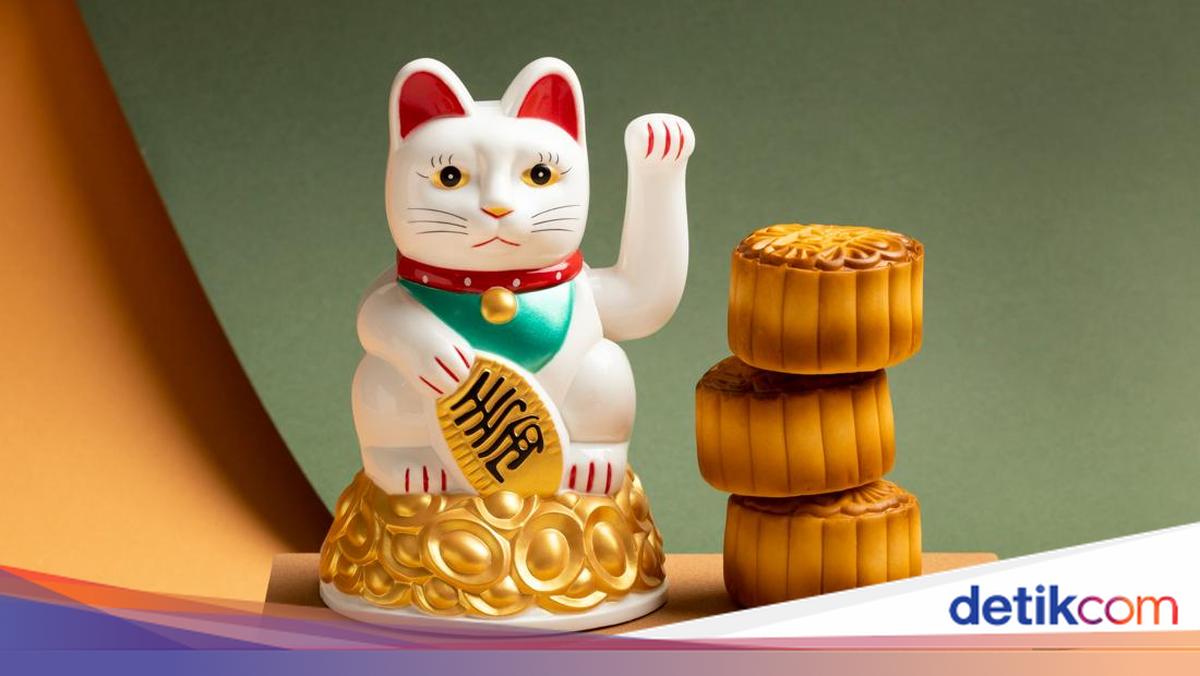
Have detikers ever visited a shop and seen a small cat statue that appears to wave? The statue is often placed in shop windows, restaurants, or near the till. Usually the cat statue wears a collar with a bell and gold coins.
In Feng Shui belief, the cat statue is known as a symbol of good fortune. Yet, many people think this statue originates from China. In fact, this cat statue originates from another country.
So, what is the origin of the waving cat that brings luck? Read the following explanation for full information.
Origin of the Waving Cat Statue
The waving-cat statue is often thought to originate from China. In fact, the statue originates from Japan and has the name Maneki Neko. The term Maneki Neko comes from ‘maneki’ meaning ‘to call or invite’, while ‘neko’ means ‘cat’.
Quoted from a study titled Komodifikasi Budaya dalam Industri Pariwisata Kota Seto by Regita Nisrina Cahyanie, the emergence of Maneki Neko is believed to originate from the Ukiyo-e print by Hiroshige in 1852, titled Jouri Machi Hanka no Zu. In the painting, there is a shop selling Marushime Neko, one variation of Maneki Neko sold at Senso Temple, Tokyo. In that painting, the cat depicted wears a bell around its neck as a symbol of good fortune for its owner.
During the Edo period, cats were kept to protect silkworms belonging to breeders from rat attacks. That is why cats were valued. Since the Edo period, the Maneki Neko statue began to be popular in Japan and its presence was reinforced by various legends that developed in society.
One of the most famous legends comes from Gotokuji Temple. It is told that the ruler of the Hikone clan, Naotaka Li, survived a lightning strike after following a cat that seemed to beckon him to enter the temple. Soon after, the tree where he sheltered was struck by lightning. However, Naotaka survived because he had already gone to the temple. Since then, cats have been regarded as symbols of good luck. To commemorate the incident, a cat statue was made that would later be known as Maneki Neko.
Relation of Maneki Neko with Feng Shui
From its history and origins, Maneki Neko originates from Japan and is not from Chinese community tradition. However, in its development, this cat statue is considered to have the same principle as feng shui, i.e., attracting good fortune, sustenance, and prosperity. Quoting the study titled Keberadaan Patung Kucing Keberuntungan Pada Tiga Toko Hio Bekasi by Ayudhya Try Cantykamentari, Maneki Neko or the lucky cat is often referred to as Zhao Cai Mao in Mandarin. Just like Maneki Neko, Zhao Cai Mao is always placed near the shop entrance.
In feng shui belief, some objects are believed to influence the flow of energy or chi. Maneki Neko has several elements that align with that concept, one of which is the waving hand gesture that symbolises inviting fortune. Additionally, the gold coin often carried by the cat also symbolizes wealth.
Placement of this statue is usually at the entrance or cashier. That position is believed to help smooth the flow of positive energy. The Maneki Neko statue is also usually placed facing the entrance, as if welcoming customers. That is why Maneki Neko was ultimately ‘adopted’ into Chinese community culture, especially in the business world.
Thus, the presence of the cat statue is not merely decoration, but also a symbol of luck and prosperity in running a business. That is the explanation of why many shops place cat statues in their premises. Hope it is useful.
This article was written by Ikfina Kamalia Rizki, participant in the MagangHub Certified Internship Programme from Kemnaker at detikcom
(sto/apl)