
Why Do Many Seasonal Beggars in Bogor Emerge Only During Ramadan?
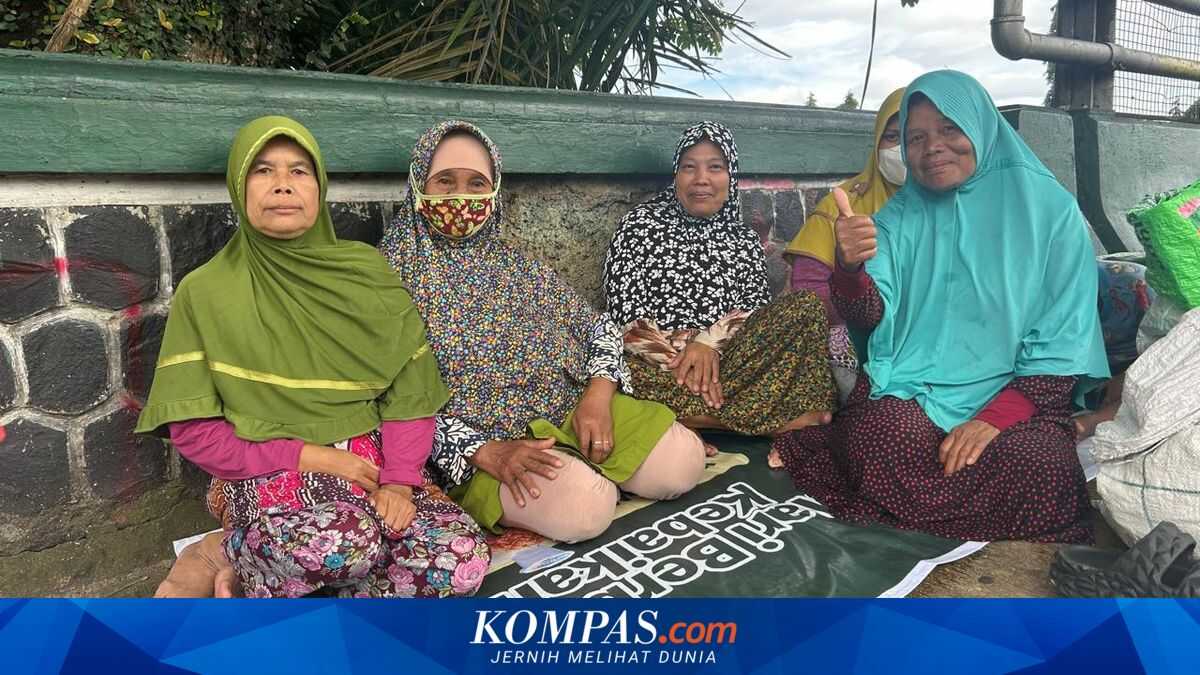
Bogor, Kompas.com - Shortly before noon in the area of the Pakuan Flyover, Bogor City, five middle-aged women sit in a row along the roadside, directly on a spread of used banners laid as a surface. The dark green banner reads “Berbagi Kebaikan” (Sharing Kindness), seemingly aligning with the theme. The banner cloth is spread on a slightly sloping concrete pavement, becoming their shelter. They sit cross-legged and some fold their legs to the side. Their backs rest against the green-painted barrier wall at the top. All five wear colourful headscarves. One of them even still wears a patterned cloth mask, partially covering her face. OccasionalIy they glance toward the road, watching vehicles pass in front of them. Beside them is a large green plastic sack placed in the corner of the pavement. Simple sandals lie scattered around the banner’s base. While chatting lightly among themselves, the five women continue to face the road, awaiting attention or alms from passing drivers. One of the group is Emi, 70, a resident of Ciheleut. They normally are not there all year round; they usually stay there only during Ramadan. “Only during Ramadan, on ordinary days not,” Emi said when met by Kompas.com at the site, Wednesday (4/3/2026). For Emi, coming to the flyover is not only about hoping for alms from passersby. She says the sense of gathering with friends is another reason to come. At home, daily life feels quieter. Sitting alone makes time seem longer than being on the street with friends. “Sometimes at home at this hour you have to sleep. Better to be here, gathering. At home you just sit there; here you chat,” she said. She usually arrives late in the morning and stays until iftar. While there, they simply sit, chat, and wait for someone to give them food or money. “Only just now (10:00) until sunset, until Maghrib,” she said. Sometimes they return home with little food or nothing at all. There are times when someone gives food, but the amount is not enough for everyone gathered. “Sometimes there are. Sometimes empty, at most someone gives food just to one,” she said. In addition, street alms distribution often leads to competition among those around the location. “But sometimes those downstairs tend to scramble. Not everyone gets a share,” Emi said. The gifts are usually in the form of food, takjil, or occasionally money slipped into envelopes. She says she has received envelopes containing money that was quite substantial for herself. “Sometimes there is. There is someone who gives an envelope containing Rp 100,000,” Emi said. For her, being on the street feels more pleasant than spending time alone at home. The atmosphere of talking with friends makes the time pass more quickly. They tell stories while waiting for the time to break the fast.