
Why Do Humans Only Panic When Nature Strikes Back?
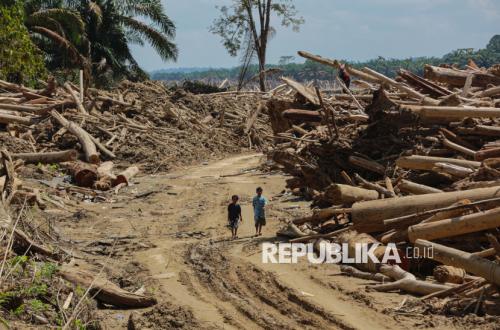
We often refer to floods, landslides, extreme heat, and food shortages as natural disasters. Yet, these disasters often originate long before the rain falls or temperatures soar. They begin when hillsides are excavated, protected areas are encroached upon, rivers are polluted, and forests are treated merely as expendable resources. In Merapi, illegal sand mining scars the national park area. In North Sumatra, protected zones must be cleared of illegal palm oil plantations. In East Kalimantan, coal mine pits from Samboja to Samarinda draw scrutiny. The pattern is the same: humans take from the earth without respite, then tremble when the earth returns the consequences.
Earth Day, commemorated on 22 April 2026 with the theme Our Power, Our Planet, should not remain merely an annual green slogan. It poses an uncomfortable question: why are humans so eager to destroy, yet so slow to repair?
Environmental psychology teaches the opposite: humans tend to protect what they feel close to and love. The concept of place attachment explains that an emotional bond with a place—with one’s village, river, rice fields, forest, and living spaces—can foster a sense of responsibility to care for it. Those who see the earth only as a commodity easily exploit it. But those who feel the earth is their home are more willing to restrain themselves. Thus, the environmental crisis is truly also a crisis of relationships: humans lose their emotional closeness to nature, then treat it merely as an object of profit and loss.
What then is the fate of the earth ahead? If humans continue on the same path, the future will be hotter, more fragile, and more unjust. Extreme weather will occur more frequently, pressure on food and water will intensify, and vulnerable groups will bear an ever-heavier burden. The earth will not end tomorrow morning, but today’s greed is preparing a far harsher future for coming generations.
From an Islamic perspective, such attitudes have long been warned against. The Qur’an affirms that corruption on land and sea occurs due to the deeds of human hands, so that they may taste the consequences of their actions and return to the right path. The Qur’an also prohibits humans from causing corruption on earth after Allah has ordered it well. The Prophet reminded that this world is green and beautiful, and humans are placed in it to be observed in their actions. Therefore, environmental issues in Islam do not stop at governance but enter the heart of ethics: whether humans act as trustees or as cunning destroyers.
The problem is that modern humans are not lacking in knowledge. We know about emissions, pollution, deforestation, water crises, and plastic waste. Yet that knowledge often loses to habits and comfort. People can condemn environmental damage but still live with wasteful energy use, consumerism, and indifference to their own waste. We speak fluently of sustainability but continue living in a culture of depletion.
More dangerously, humans easily normalise destruction. Murky rivers are seen as normal. Hot city air is accepted as fate. Bare hills no longer shock. What once felt wrong becomes something deemed ordinary. At that point, ecological conscience begins to dull.
Yet the signs that the earth is ill are too clear to ignore. The WMO records the period 2015–2025 as the eleven warmest years in modern observation history. 2025 itself is one of the hottest, with global temperatures around 1.43 degrees Celsius above the pre-industrial average. This confirms that the earth is being pushed out of balance by humanity’s greedy lifestyle.
The consequences do not stop at scientific graphs. Extreme heat waves threaten the global food system, damaging crops, disrupting livestock and fisheries, weakening forests, reducing harvests, and exacerbating droughts. Yet the heaviest burden falls on those with the smallest role in damaging the earth: small farmers, fishermen, day labourers, children, and poor families.
Indonesia itself is still blessed with vast ecological wealth. However, extensive forests are not automatically safe if our worldview remains exploitative. Illegal mining in conservation areas, illegal palm oil in sanctuary zones, and various violations in forest areas show that threats to the earth are real, close, and often done deliberately.
Humans tend to protect what they feel close to and love. When the earth is seen only as a commodity, it is easily exploited. But when the earth is felt as a home, humans will be more willing to restrain themselves. Therefore, the environmental crisis is also a crisis of relationships: humans lose emotional closeness to nature, then treat it merely as an object of profit and loss.
If humans continue on the same path, the future will be hotter, more fragile, and more unjust. Extreme weather will occur more frequently, pressure on food and water will intensify, and vulnerable groups will bear an ever-heavier burden. The earth will not end tomorrow morning, but today’s greed is preparing a far harsher future for coming generations.
Therefore, after 22 April passes, what is needed is not additional ceremony, but ecological repentance. In Islam, protecting the earth is not an accessory to piety, but part of the trusteeship of caliphate. The opposite of destruction is not just not damaging, but ishlah: restoring, caring, restraining, and leaving the earth in a better state. The Prophet even taught that if the Day of Judgment comes while someone has a plant seedling in hand, if able, they are still urged to plant it.
Thus, the greatest question after Earth Day is not whether nature is angry, but