
Why Can't the Strait of Hormuz Set Tariffs Like Panama and Suez?
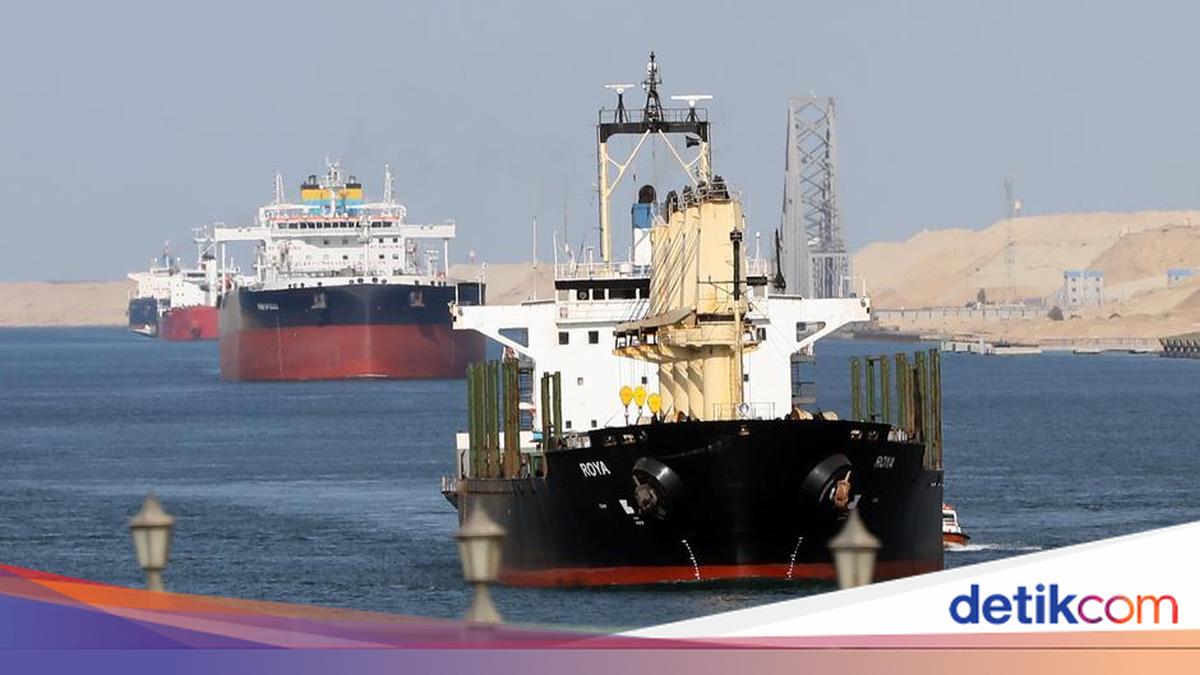
Iranian regime accused of extortion and threatening global energy security after reports that Tehran began charging up to US$2 million (Rp35.7 billion) per ship requesting a ‘safe passage’ through the Strait of Hormuz.
The strait is the world’s most vital energy corridor between Iran and Oman. Before Iran’s war broke out, one-fifth of global oil and gas consumption passed through this route.
Tehran justified the charges as war reparations for damage caused by attacks from the United States (US) and Israel against the Islamic Republic of Iran, as well as payments for ‘navigation services’, environmental protection, and enhanced security.
Iran also stated it is drafting a protocol with Oman requiring ships to obtain permission before passing through the strait.
Several Asian shipping companies and smaller operators are reportedly paying the fee in secret. However, major global shipping firms refuse to pay. The Institute for the Study of War (ISW) described the tariff as a ‘maritime extortion practice’.
In early May 2025, Reuters reported that the US and China have reportedly agreed to reject the fee. The information came from a statement by a US State Department official regarding the two countries’ joint stance.
Maritime experts believe Iran has strong reasons it cannot impose tolls at Hormuz, despite other strategic shipping locations like the Suez and Panama Canals being able to levy similar charges.
International rules for strait regulation
In international maritime law, natural straits used for shipping are governed by specific rules designed to protect global trade and freedom of navigation.
The United Nations Convention on the Law of the Sea (UNCLOS) grants all nations’ ships and aircraft the right of ‘transit passage’ through international straits connecting two parts of the high seas.
To qualify for transit passage, vessels must traverse the strait without delay and not anchor except in emergencies.
UNCLOS rules stipulate that transit must be allowed without interference from coastal states.
Coastal states may only impose limited service charges, such as pilotage and tug services.
Rules for imposing tolls
Canals such as Suez and Panama are man-made waterways constructed, owned, and maintained by sovereign states at significant cost.
Egypt earns approximately US$4 billion (Rp71.4 trillion) annually from vessel fees for the 193-kilometre Suez Canal.
The 1888 Constantinople Convention, signed by major world powers at the time, explicitly permits the Egyptian government to levy tolls to cover maintenance, operational, and facility improvement costs.
Meanwhile, the Panama Canal Authority, which manages the US-built canal on behalf of Panama, is permitted to charge fees under a separate agreement.
The Panama Canal, completed in 1914 to link the Pacific and Atlantic Oceans, requires ongoing major maintenance, including regular dredging to address sedimentation and landslides.
Both canal operators typically charge less than half the fee Iran is now demanding.
Are there exceptions?
However, grey areas persist in toll collection practices for straits and seas.
For example, Russia charges for icebreaker escorts, pilotage, and service fees along the Northern Sea Route (NSR) off its northern coast.
The NSR offers a much shorter route between Europe and Asia compared to the Suez Canal. It traverses the Arctic Ocean, connecting the Atlantic and Pacific via the Barents Sea and Bering Strait.
This route is typically used in summer when ice melts and is frequently used by ships from Russia, China, and South Korea.
Moscow considers much of the area as internal waters or ice-covered regions under UNCLOS Article 234.
Canada also claims sovereignty over the Northwest Passage, a sea route through Canadian Arctic Islands connecting the Atlantic and Pacific. The Ottawa government has occasionally considered tolls but consistently faces US opposition.
Another example is the Turkish Straits. The Bosphorus and Dardanelles, which connect the Black Sea to the Mediterranean via Turkey, are governed by the 1936 Montreux Convention.
Under the agreement, Turkey must grant free passage to commercial vessels and may only impose limited navigation aid and lighthouse fees, not full transit tolls.
How might the dispute develop?
The toll dispute at Hormuz remains a major obstacle in US-Iran peace talks aimed at reopening the route.
Washington insists the strait must be fully reopened as international waters so ships from all nations can pass without Tehran’s control, fees, or special permits.
‘The strait will be open to all. It is international waters,’ US President Donald Trump told reporters at a Cabinet meeting at the White House on Wednesday (27/05). ‘We will monitor it, but no one will control it.’
Trump also referred to alleged Omani involvement in Iran’s plan, saying, ‘Oman will behave like other nations or we will destroy them.’
Washington continues to urge shipping companies not to pay the fee and warns that those who do may face secondary US sanctions for doing business with Iran.
Amid the ongoing US naval blockade of Iranian shipping during negotiations, Washington and the United Nations