
Why Can't the Renaming of Inherited Land Certificates Be Postponed?
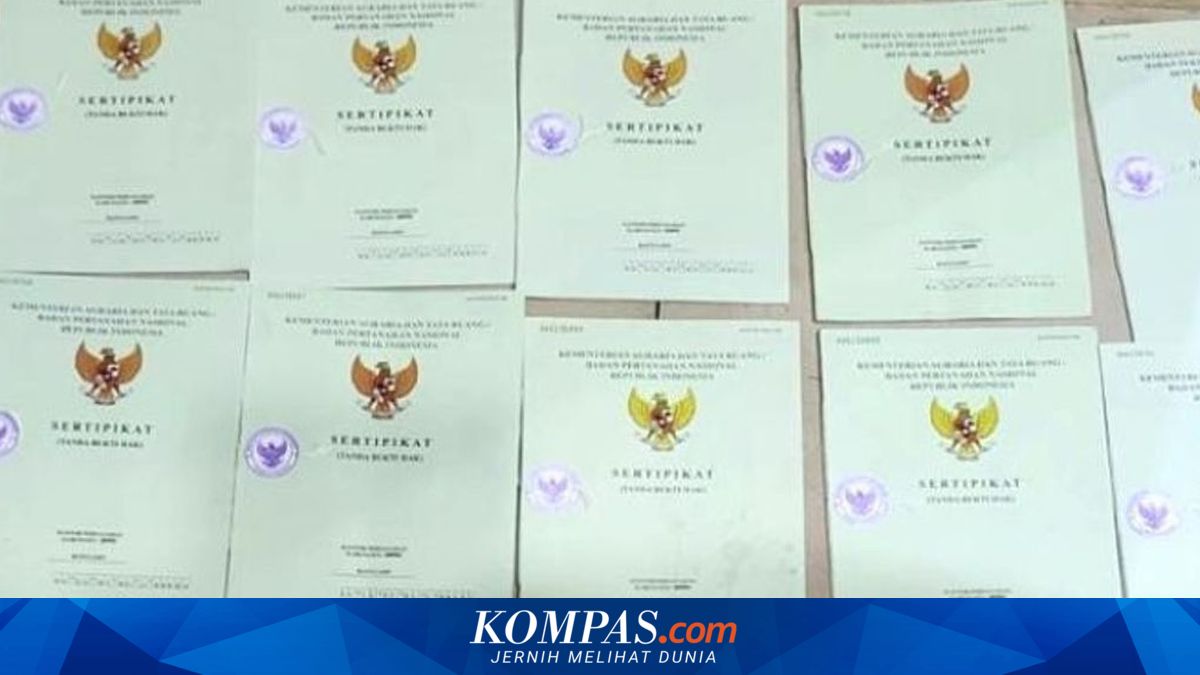
Allowing an inherited land certificate to remain in the name of a deceased parent is not just a matter of postponing administration but is accumulating fatal legal risks. Amid the current complexity of land affairs, legal certainty over land ownership is essential to avoid disputes among heirs and obstacles in financial transactions. Under regulations, Article 42 of Government Regulation No. 24 of 1997 on Land Registration requires the registration of ownership transfers due to inheritance. The Head of Public Relations and Protocol Bureau of the Ministry of Agrarian Affairs and Spatial Planning/National Land Agency (ATR/BPN), Shamy Ardian, emphasised the importance of this validation. “The Ministry of ATR/BPN provides easily accessible information on requirements to the public through the Sentuh Tanahku app so that this process is no longer considered burdensome,” he stated, as quoted by Kompas.com on Sunday (22/3/2026). There are at least four major losses if heirs are reluctant to carry out the renaming: 1. Transaction Stagnation Land Deed Officials (PPAT) are legally prohibited from issuing Deeds of Sale and Purchase (AJB) if the owner listed on the certificate has passed away. The land is “locked” administratively until the inheritance renaming process is completed. 2. Rejected Bank Collateral Banks apply strict prudential principles. Without a certificate in the name of the valid debtor, inherited land has no value as credit collateral. 3. Time Bomb of Disputes Based on Article 830 of the Civil Code, rights do transfer upon the death of the testator. However, without official recording, the division of portions among heirs becomes ambiguous, often leading to legal lawsuits or certificate blocking by other parties. 4. Vulnerability of Physical Possession Third parties or one of the heirs could claim physical possession unilaterally if the administrative status remains pending.