
Why BHR Is Only for Ride-hailing and Online Courier Drivers, Other Freelancers Don't Qualify
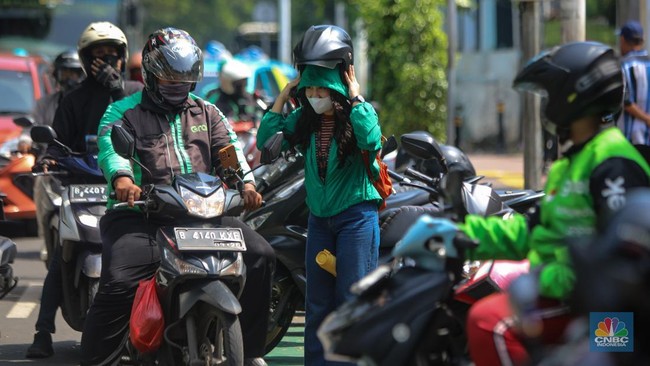
Jakarta — Over the past two years, a number of ride-hailing and online courier drivers have received Eid bonuses (BHR) from their respective platforms. The Ministry of Manpower has explained why these bonuses have only been provided to these two categories of workers.
Indah Anggoro Putri, Director General of Industrial Relations and Social Security for Workers at the Ministry of Manpower (Kemnaker), stated that one of the reasons is the lack of regulations governing gig workers in Indonesia. The government is currently in the process of formulating these regulations.
“We are moving in that direction. We are drafting the regulations, which will eventually be incorporated into a new labour law, and we have also proposed a platform workers law, which will comprehensively regulate everything in that legislation,” said Indah in an interview with CNBC Indonesia on Monday (16 March 2026).
Another reason is that some gig workers have already received bonuses, such as porters. However, she acknowledged that there are still those who have not received them, which remains a concern for the ministry.
“What this means is that there are still many worker partners who use digital platforms in their daily activities but are not covered by this circular, which remains an issue for us,” she explained.
This year, BHR was distributed to approximately 850,000 ride-hailing drivers. The total bonus reached Rp 220 billion, double the previous year’s Rp 110 billion.
At a press conference on 3 March, Coordinating Minister for Economic Affairs Airlangga Hartarto stated that the number of drivers receiving BHR for Gojek and Grab was 400,000 partners each, with an additional 51,000 partners from Maxim, compared to 1,000 partners the previous year.
Ride-hailing surges
The occasion also highlighted the large number of people choosing ride-hailing as employment. This is indeed happening, as ride-hailing has become a choice not only for primary income but also for supplementary income across various social groups.
Indah attributed this phenomenon to the flexibility of the work. As long as people can operate a vehicle, they can become ride-hailing drivers.
“So anyone can do it, as long as they can drive—whether a motorcycle or a car—anyone can do this work,” explained Indah.
“The facts prove that those who work as ride-hailing drivers don’t just do that. Many work in offices from morning to evening, then become ride-hailing drivers in the evening, or on weekends. Even university students become ride-hailing drivers. Even civil servants do this on weekends. Because it is flexible in nature, it is highly sought after,” she added.
Meanwhile, on the consumer side, there is demand for services to meet their needs. Many members of the public use this service.
Because delivery services for people, food, and goods make it easier for people in their daily lives.
Indah explained that people do not want to face traffic congestion or waste energy. One solution is to use online service facilities.
“From buying small snacks, full meals, household necessities, kitchen spices, clothes, and so on, it can all be done online. Without having to go to shops, go to malls, without having to pay for parking, and so on,” she said.