
Why Arab States Fear an Attack on Iran: Israel Would Run Rampant
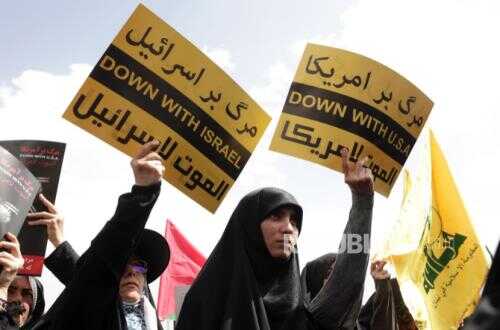
TEHRAN – The massive build-up of United States military forces in the Middle East has sparked fears of a strike on Iran. Analysts assess that the efforts by regional states to prevent such an attack are primarily driven by the concern that nothing would restrain Israel’s hegemonic ambitions should the Iranian regime fall.
In recent days, an American attack on Iran has appeared increasingly inevitable. The US military build-up in the region and at bases in Europe is the largest seen in decades.
Amid the growing likelihood of a strike, since January, Saudi Arabia, Qatar and Oman, together with Turkey and Egypt, have been engaged in intense diplomacy to pull Washington and Tehran back from the brink of conflict.
According to analyst Eldar Mamedov at Responsible Statecraft, this is not because they harbour sympathy for Tehran, but because they recognise they would be on the front line of Iranian retaliation, and are wary of what would follow the regime’s collapse.
“They may want to see Iran’s leadership weakened, but they are more worried about a scenario of chaos and uncertainty and the possibility of more radical elements coming to power there,” Anna Jacobs Khalaf, a Gulf analyst and non-resident fellow at the Arab Gulf States Institute, told Al Jazeera last month.
As regional analyst Galip Dalay has noted, beyond the potential economic and security destabilisation, there is the fact that as hegemony in the region grows, Israel stands to gain enormously from the regime’s collapse. “Iran’s regional power and ambitions have diminished, and the prospect of an Iran-centred order has receded,” he wrote for Chatham House this week.
“For Middle Eastern leaders, the threat has shifted: the greatest risk now is an expansionist and aggressive Israel, along with the chaos that could engulf the Iranian state.”
Bader al-Saif, an assistant professor of history at Kuwait University, expressed similar views to the New York Times. “Bombing Iran runs counter to the calculations and interests of the Arab Gulf states. Neutralising the current regime, whether through regime change or internal leadership reconfiguration, could potentially produce unchallenged Israeli hegemony, which would not benefit the Gulf states.”
Throughout more than two years of Israel’s genocide in the Gaza Strip, neighbouring states have largely appeared to stand idly by, confining themselves to condemnations at international forums and supplying humanitarian aid that Israel has frequently obstructed.
Meanwhile, Iran’s non-state allies took concrete action in attempting to halt the genocide. Just one day after Israel launched its aggression on Gaza on 7 October 2023, the Hezbollah group in southern Lebanon immediately fired rockets into northern Israel. The attacks opened a front with Israel until a ceasefire was eventually reached, alongside US pressure, last year.
The Houthi group, Ansar Allah, in Yemen imposed a blockade on Israel-bound vessels passing through the Red Sea. The closure of this vital shipping lane prompted intervention by the US and its allies, who conducted patrols and repeated strikes on Yemen. The significant American losses at that time precipitated a ceasefire agreement that was also reached last year.
Iran was also involved in direct exchanges of fire with Israel throughout June last year. Iranian missiles, greeted with jubilation in Gaza and the West Bank, inflicted significant damage on Tel Aviv. The US ultimately intervened by bombarding Iran, which then retaliated with strikes on a US military base in Qatar. The attack on Qatar prompted the US to announce a ceasefire.