
Why AGROFITRAH Becomes an Inevitability
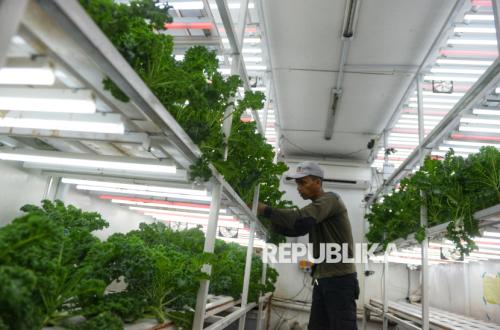
Behind every plate served on our dining tables today lies a vast system that we rarely question. We eat every day, but seldom ask: where does this food come from? Who produces it? And what kind of system do we support through our choices? Yet these questions are not merely philosophical. They determine the direction of civilisation.
However, before we discuss the modern food system, the Al-Qur’an has already invited humanity to reflect on the origins of food itself: “Then let man consider his food. Indeed, We have poured water abundantly from the sky, then We have split the earth [with furrows], then We caused to grow therein grain and grapes and vegetation, and olive and palm trees and gardens of dense foliage and fruit and grass—for your enjoyment and that of your grazing livestock.” (QS ’Abasa:24–32)
This verse presents a fundamental awareness: food is not an instant product, not a factory output, but part of a complex system of life—water, soil, and interconnected living beings. It is a sign (ayat), not merely a commodity. Yet it is here that the irony of modern civilisation begins.
From Agronomy to Agribusiness: When Meaning Shifts
In humanity’s long history, farming was not just a job, but a way of life. The land was treated as a friend, not an object. However, a major change occurred when the term “agribusiness” was introduced by John Davis and Ray Goldberg in 1957. This concept expanded agriculture into an integrated system: inputs, production, processing, distribution, marketing.
At first glance, it appears progressive. However, philosophically, a major shift occurred: from “farming as life” to “farming as business”. The land became a factor of production. Farmers became economic actors. Food became a commodity. And from this point, the direction of the system began to change.
Neoliberalism: Rubbish Ideology Piling Up on the Land
Robert Hunziker, a Swiss-American environmental journalist, once wrote an article with a firm tone: “Neoliberalism Belongs in the Trash Bin of History.” (Neoliberalism Should Be Thrown into the Dustbin of History). He described neoliberalism not only as a failure but as “rubbish ideology” that pollutes the earth, justifying everything in the name of efficiency and growth.
Neoliberalism positions land as a financial asset, not an ecological trust. Through deregulation, privatisation, and trade liberalisation, land is transformed into an “investment commodity”—traded by those who have never set foot in the rice paddy mud.
Global financial institutions like the World Bank and International Finance Corporation promote Public-Private Partnership (PPP) schemes in the agrarian and food sectors. On paper, PPP is called “agricultural modernisation”. But in the field, it often means centralisation of land ownership and displacement of indigenous communities.
Neoliberalism and Global Agribusiness
The transformation of agribusiness into a dominant system cannot be separated from global policies that promote economic liberalisation. Principles such as deregulation, privatisation, and free trade pave the way for integrating agriculture into the global market. As a result, countries often withdraw from their protective role towards farmers. Subsidies are reduced, markets are opened to imports, and regulations are relaxed. In this situation, small farmers must compete with cheap imported products and large companies with access to capital and technology.
Phenomena like land grabbing, seed patents, and dominance of distribution chains by a handful of companies become hallmarks of agribusiness within the neoliberal framework. This is where criticisms begin to emerge. Many academics and activists argue that this system is not only unfair but also ecologically unsustainable.
When the principles of the Washington Consensus—deregulation, privatisation, trade liberalisation, and reduction of the state’s role—are applied to the agricultural sector, agribusiness becomes neoliberal agribusiness (neolib). This Washington Consensus was formulated by John Williamson (1989).
The characteristics of agribusiness within the neolib framework and its transformations are as follows:
First, liberalisation of the food market, imports opened wide, local farmer protection reduced (World Trade Organization – Agreement on Agriculture - AoA, 1995).
Second, dominance of global corporations. Large companies control: seeds, fertilisers, distribution (ETC Group, 2017, “Who Will Feed Us?”; Clapp, J. (2016): Food.
Third, commercialisation of seeds (patents). Farmers cannot freely save seeds. Dependency on companies is made into a system (FAO reports on seed systems; Shiva, V. 2000: Stolen Harvest).
Fourth, financialisation of agriculture, where land becomes an investment asset, and food speculation occurs. Exemplified by the phenomenon of “land grabbing” (World Bank reports on land investment).
Fifth, industrialisation of agriculture, where monoculture, high chemical inputs, and large-scale operations occur (The Omnivore’s Dilemma, Michael Pollan, 2006).
In fact, in current global practice: much agribusiness operates within the neoliberal framework. Because it is controlled by the global market, dominated by corporations, the role of the state often retreats.
Key figures like Vandana Shiva have academically criticised neoliberal agribusiness, where Shiva states that agribusiness = new colonialism. This is found in her book “The Violence of the Green Revolution”, 1991.
The Green Revolution and the Beginning of Dependency
This transformation was reinforced by the Green Revolution. Production increased, but with conditions: seeds must be bought, chemical fertilisers must be added, chemical pesticides must be used. Farmers who were previously self-sufficient now depend on input markets. The cycle is clear: costs rise, yields are not always stable, debts sometimes increase. Meanwhile, the biggest profits flow to large corporations.
Criticism of this system is voiced by Vandana Shiva, who highlights seed control, and Philip McMichael through t