
Who Is Tarique Rahman, Bangladesh's New Prime Minister?
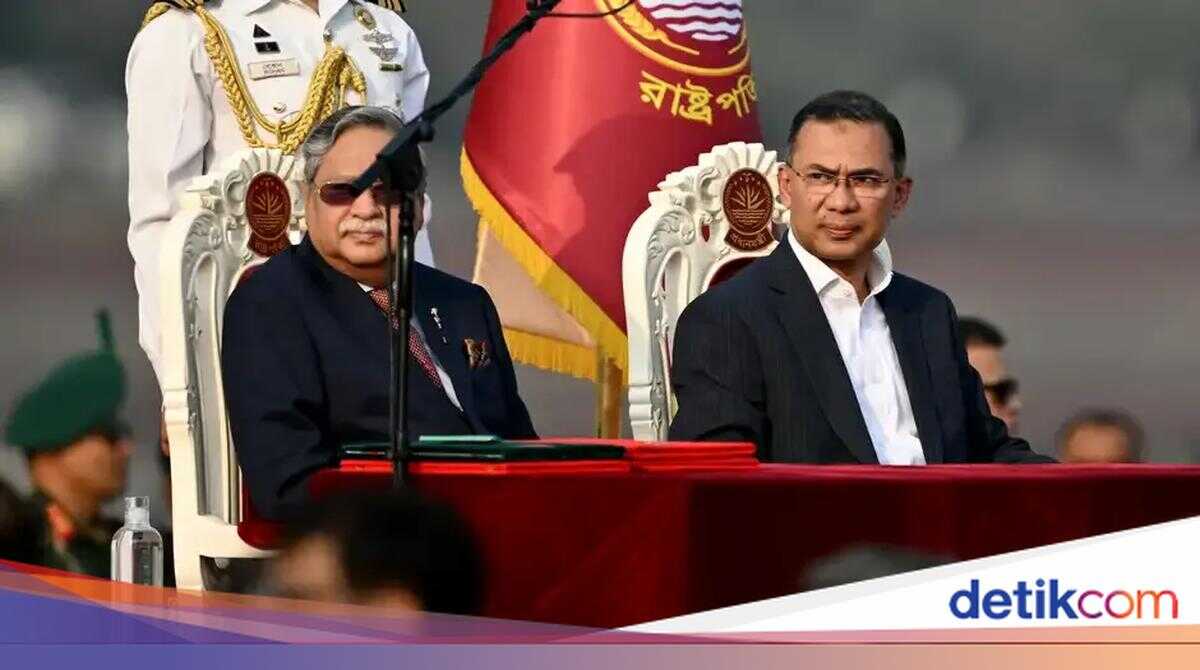
Tarique Rahman has been sworn in as Bangladesh’s new prime minister after his party won the parliamentary elections by a convincing margin. The 60-year-old is the son of former Prime Minister Khaleda Zia and assassinated President Ziaur Rahman. He will serve a five-year term.
President Mohammed Shahabuddin presided over the oath-taking ceremony. Dozens of cabinet members and new government officials were also sworn in.
“I will faithfully carry out my duties as Prime Minister in accordance with the law,” he said during the ceremony held outside the parliament building.
With his inauguration, PM Rahman replaces the interim government led by Muhammad Yunus. The Nobel Peace Prize laureate was tasked with overseeing elections that were relatively peaceful and widely accepted by international observers.
Previously, members of parliament who pledged allegiance to Bangladesh were sworn in by Election Commission Chairman AMM Nasir Uddin. BNP members then elected Rahman as their leader.
Major challenges for the new government
The greatest initial challenges facing Rahman’s government include restoring political stability, rebuilding investor confidence, and reviving key industries such as the garment sector following prolonged turmoil caused by the Gen Z-led uprising that toppled Sheikh Hasina’s government in 2024.
The BNP-led alliance won 212 of 350 parliamentary seats. Meanwhile, the 11-party coalition led by the country’s largest Islamic party, Jamaat-e-Islami, secured 77 seats and will form the opposition.
“This victory belongs to Bangladesh, to democracy,” Rahman said in his victory speech on Saturday (14 February). “This victory belongs to the people who aspired to and sacrificed for democracy.”
He also called on all parties to remain united amid years of sharp political polarisation.
“We will begin this journey in a fragile economic situation caused by the previous authoritarian regime, weakened constitutional and legal institutions, and deteriorating law and order conditions,” he said.
Jamaat leader Shafiqur Rahman, 67, said his party would be a “vigilant, principled, and peaceful opposition.”
Rahman’s main rival, the Bangladesh Awami League led by Hasina, was barred from contesting the elections. From her exile in India, Hasina declared the elections unfair to her party. Courts in Bangladesh sentenced her to death on charges of crimes against humanity related to hundreds of deaths during the Gen Z uprising.
Bangladesh’s general elections directly elect 300 members of parliament, whilst 50 additional seats are reserved for women and allocated proportionally.
Who is Tarique Rahman?
Rahman is the eldest son of former Prime Minister Khaleda Zia and former President Ziaur Rahman, the founder of the BNP.
Ziaur Rahman was assassinated during a military coup in 1981. Khaleda Zia entered politics after her husband’s death and first came to power in 1991.
Rahman has served as acting party chairman since his mother was imprisoned in 2018.
Rahman returned to Bangladesh in December after more than 17 years of voluntary exile following the mass protests in 2024 that toppled Hasina.
Rahman moved to London in 2008 for medical treatment and remained there whilst facing several criminal cases in his home country.
He was convicted in absentia on charges including a case related to an alleged plot to assassinate Hasina.
Those verdicts were overturned after Hasina was ousted from power in 2024, removing the legal obstacles to his return.
“Making many uneasy”
Rahman grew up in the political orbit of his mother, Khaleda Zia, who became Bangladesh’s first female prime minister. She alternated in power with Hasina in a long and bitter rivalry.
“In her constituency, I often came and campaigned,” Rahman said. “That is how, gradually, I became involved in politics.”
However, his career has never been free from shadows. Allegations of corruption and abuse of power have followed him. A 2006 US Embassy diplomatic cable described him as someone who “inspires few but makes many uneasy.” Another cable labelled him a “symbol of kleptocratic governance and violent politics,” even calling him “extraordinarily corrupt.”
Arrested on corruption charges in 2007, Rahman claims he was tortured in custody. A year later he departed for London, facing a number of cases in absentia. He denied all charges, calling them politically motivated.
Speaking to AFP, he also offered an apology. “If there were any unintended mistakes, we apologise,” he said.
He acknowledged that the task ahead is “enormous”: rebuilding a country that, in his words, had been “destroyed” by the previous government.