
Who is Mohammad Ghalibaf, Iran's Chief Negotiator with the US?
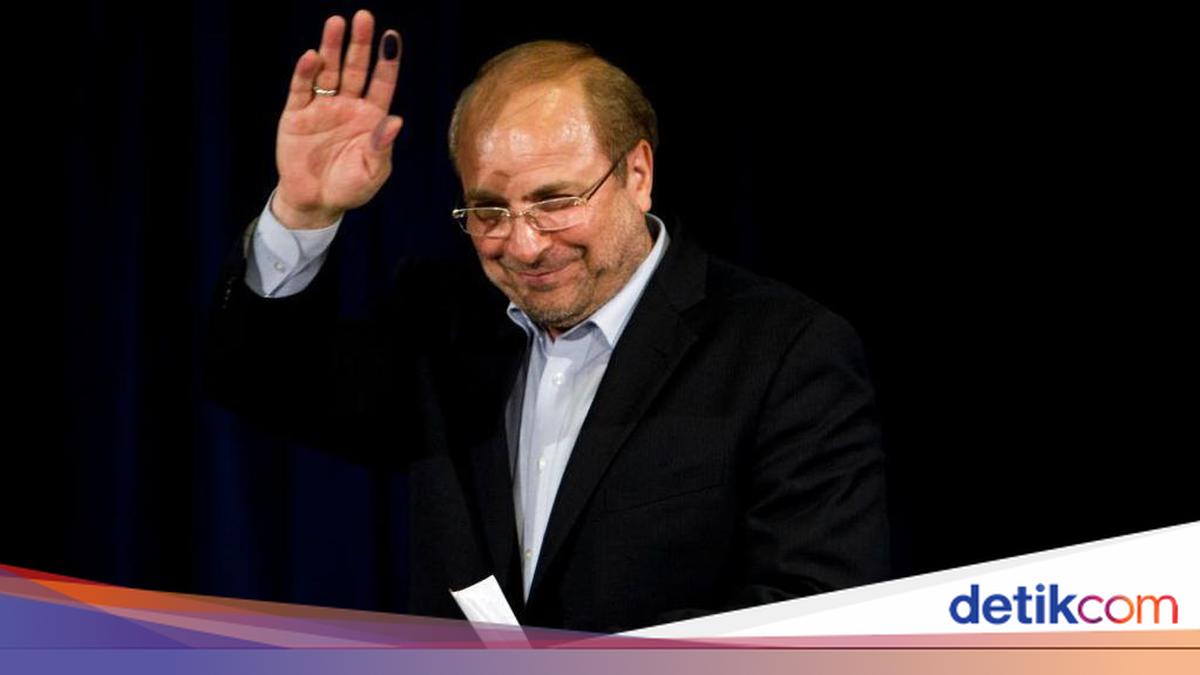
Iran’s Parliament Speaker, Mohammad Bagher Ghalibaf, is scheduled to lead negotiations with the United States, which will begin on Saturday (11/04). He will travel to Islamabad, Pakistan, to attend the talks, while US Vice President JD Vance will lead the American delegation. This was announced by Iran’s Deputy Foreign Minister, Saeed Khatibzadeh, to the BBC’s Today programme on Thursday (09/04). At the end of March, Reuters reported that along with Foreign Minister Abbas Araghchi, Ghalibaf had previously been removed from Israel’s target list for attacks. “Israel knew their coordinates and intended to eliminate them. We informed the US that if they were also eliminated, there would be no one left to negotiate with. Therefore, the US asked Israel to reconsider the action,” a Pakistani source told Reuters. Pakistan now emerges as the main mediator in efforts to negotiate between Iran and the US. After several failed presidential candidacies in the past, Ghalibaf is now entrusted with the sensitive task of negotiating with the US. With many senior Iranian leaders killed in US-Israeli attacks, the 64-year-old man has the potential to play an increasingly important role in the future due to his closeness to the elite Islamic Revolutionary Guard Corps (IRGC), his experience in various branches of government, and his image as a pragmatic hardliner. Mohammad Bagher Ghalibaf is considered part of the hardline group in Iran, but also tends to be pragmatic (NurPhoto via Getty Images) ‘Proud to use a stick’ Ghalibaf was born into a religious working-class family in the city of Torghabeh, in northeastern Iran, according to Al-Alam, an Arabic-language television channel owned by Iran’s state broadcaster, IRIB. His hometown is adjacent to Mashhad, known as the residence of several important figures of the Islamic Revolution. At the age of 16, he began attending religious teachings of revolutionary clerics, including Ali Khamenei, who later became Iran’s Supreme Leader, in major mosques in Mashhad. Shortly after the 1979 Islamic Revolution, Ghalibaf plunged into the war against Iraq and joined the Islamic Revolutionary Guard Corps (IRGC) at the age of 20. Two years later, he was appointed commander of one of the IRGC’s combat divisions, a position he held until the war ended in 1988. Ghalibaf is one of six presidential candidates in the 2024 presidential election, held after the death of Ebrahim Raisi. (AFP via Getty Images) Ghalibaf married in the same year he was appointed IRGC commander, and his wedding ceremony was led directly by Iran’s Supreme Leader at the time, Ruhollah Khomeini, according to Al-Alam. The couple has three children. After the war ended, Ghalibaf’s career continued to rise in the command structure, and in 1997 he was appointed commander of the IRGC Air Force. In July 1999, the Islamic Republic of Iran was rocked by a wave of student protests triggered by the closure of a reformist newspaper. The movement was harshly suppressed by security forces, resulting in several deaths, and it is believed that Ghalibaf was directly involved in quelling the demonstration. “Now there is a photo of me riding a 1,000 cc motorcycle while holding a stick. Wherever necessary to go to the streets and use a stick, we are among those who do it. And we are proud of it,” he said, as heard in a circulating audio recording. After the wave of protests, 24 IRGC commanders wrote a harshly toned letter to Mohammad Khatami, Iran’s reformist president at the time, containing threats of IRGC intervention. Ghalibaf said he was one of two commanders who drafted the letter and gathered signatures. Many view the letter as a firm statement on the IRGC’s influence in political affairs—an influence that has since continued to strengthen. From police chief to mayor of Tehran A year after the student protests, Ghalibaf was appointed Police Chief at the age of 39. During his five-year tenure, he established a national police emergency hotline service and simplified procedures for filing complaints against police officers. He also regarded the procurement of imported vehicles for the police as one of his most boasted achievements, although critics considered the cost too expensive. In 2005, Ghalibaf resigned from his position as police chief and ran in the presidential election. After losing that election, he was elected by the city council to serve as Mayor of Tehran. He held that position for 12 years, also recording the longest tenure as mayor of Iran’s capital. Ghalibaf is often praised for his role in expanding the metro network and improving transportation infrastructure, including the construction of the Sadr Toll Road, amid Tehran’s traffic congestion. (Pacific Press/LightRocket via Getty Images) Mohammad Bagher Ghalibaf ran for president four times, including in 2024. However, Ghalibaf’s reputation was tarnished after the “astronomical property” scandal in 2016, when the city council was accused of selling hundreds of properties to officials and security personnel at massive discounts of up to 50% below market price. A few months before Ghalibaf left his position, the Plasco building, which was 17 storeys tall,