
Which Countries Stand to Gain Most from Middle Eastern Conflict?
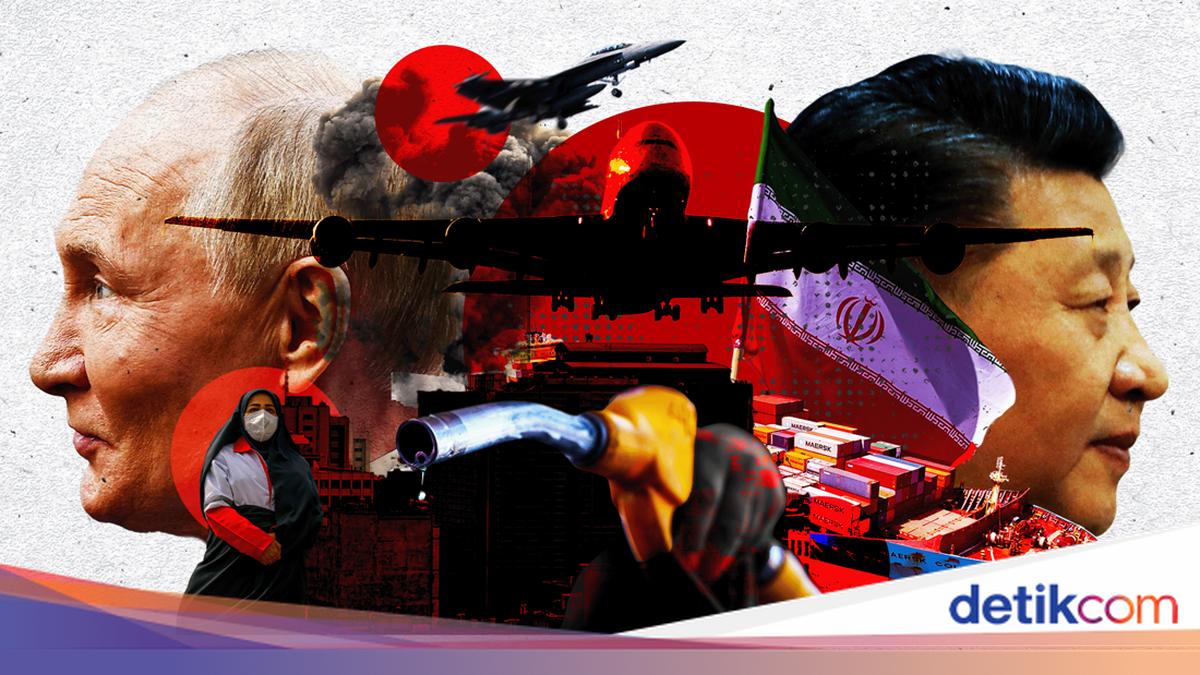
The US-Israel war against Iran has brought dramatic consequences for the Middle Eastern region and the world at large. Several countries now prepare to face severe economic consequences as global energy markets and supply chains face disruption. Surging oil prices and disruptions to maritime traffic in the Gulf, particularly within and around the Strait of Hormuz, are increasing costs for consumers and businesses alike. However, some nations may actually find new strategic opportunities amid the turmoil. Which countries stand to lose the most or potentially gain advantage during this upheaval?
Russia
Iran constitutes a principal ally and important military partner for Russia. When Supreme Leader Ayatollah Ali Khamenei passed away, Moscow suffered fresh diplomatic blows as Bashar al-Assad fell in Syria and Nicolas Maduro was detained by the United States in Venezuela.
Nevertheless, the Middle Eastern conflict has the potential to benefit Russia in the Ukraine war, as American military resources are diverted to attack Iran. “The reduction in Patriot missiles and their interceptors benefits Russia because it limits what Ukraine can obtain,” said Nicole Grajewski, professor at the Paris Institute of Political Studies Centre for International Studies, to BBC News Russian. However, analysts assess that Iran’s increased need for Shahed drones will not significantly impact Moscow’s military capability in Ukraine.
“Russia depended on Iran for defence cooperation during certain periods at the beginning of the Ukraine war, when Iran supplied Shahed drones and, more importantly, production technology and licenses in 2022-2023,” said Hanna Notte, Director of Eurasia at the Center for Nonproliferation Studies in the US, to BBC News. “Now we are at a stage of the war where Russia no longer needs Iran to continue its war in Ukraine. Russia can produce Shahed drones itself.”
Meanwhile, Iran’s closure of the Strait of Hormuz, which has impeded oil and gas shipments and triggered fuel price increases, can provide some financial relief for Russia, which has been under severe pressure due to the Ukraine war.
Russia’s federal budget depends on oil exports at $59 per barrel, but crude oil prices have now surged sharply, at times approaching $120 per barrel. When major Gulf oil producers cut production, Russia stands to export more to key markets such as China and India. “India was previously pressured to reduce purchases of Russian oil, but has now received something of an exemption from the US to resume buying Russian oil, at least for the coming month,” said David Fyfe, chief economist at Argus, a global energy and commodity market intelligence company, to BBC News. “And there are already discussions about the possibility of easing certain sanctions on Russian oil to reduce the impact of this situation.”
China
China has so far not experienced dramatic effects from the US-Israel war against Iran, but will nonetheless face pressure. Only around 12 per cent of China’s crude oil imports originate from Iran, according to the Center on Global Energy Policy. Additionally, China has accumulated sufficient oil reserves for several months and can easily switch to Russia if additional supplies are needed.
However, China’s export-oriented industrial sector will also be affected, said Fyfe. Exports, which account for approximately 20 per cent of the country’s gross domestic product—the total value of goods and services produced—have become the primary driver of China’s economy, which is facing pressure from declining property prices and weak domestic consumption.
Disruptions to maritime traffic within and around the Strait of Hormuz are not a major issue for China. Access to the Atlantic—critical for Chinese products shipped to Western countries—is what matters. The Bab el-Mandeb Strait, which connects Asia, Europe, and Africa, has also experienced attacks by the Houthi group based in Yemen, an armed militia backed by Iran.
“It is highly likely that traffic in the Red Sea will suffer severe disruptions again, with long-distance cargo ships from Asia seeking to enter the Atlantic region forced to be rerouted through southern Africa and Cape Hope,” said Fyfe to BBC News. “The costs are substantial,” said Neil Quilliam, Middle East expert at Chatham House, a research institute based in London. “That route adds 10 to 14 days to sailing time. And depending on the type of cargo, additional costs for ships average around $2 million.”
Nevertheless, war against Iran could open diplomatic opportunities for China, as it seeks to position itself as a “responsible counterbalance” to the United States, said Philip Shetler Jones from the Royal United Services Institute (RUSI) in the UK, to BBC News. Chinese President Xi Jinping will likely continue to project himself as a stable and predictable global leader, in sharp contrast to US President Donald Trump. This conflict could also be an opportunity for Beijing to “gain insights” into how Trump might react to flashpoint issues.