
When Workers Do Not Become a Chorus
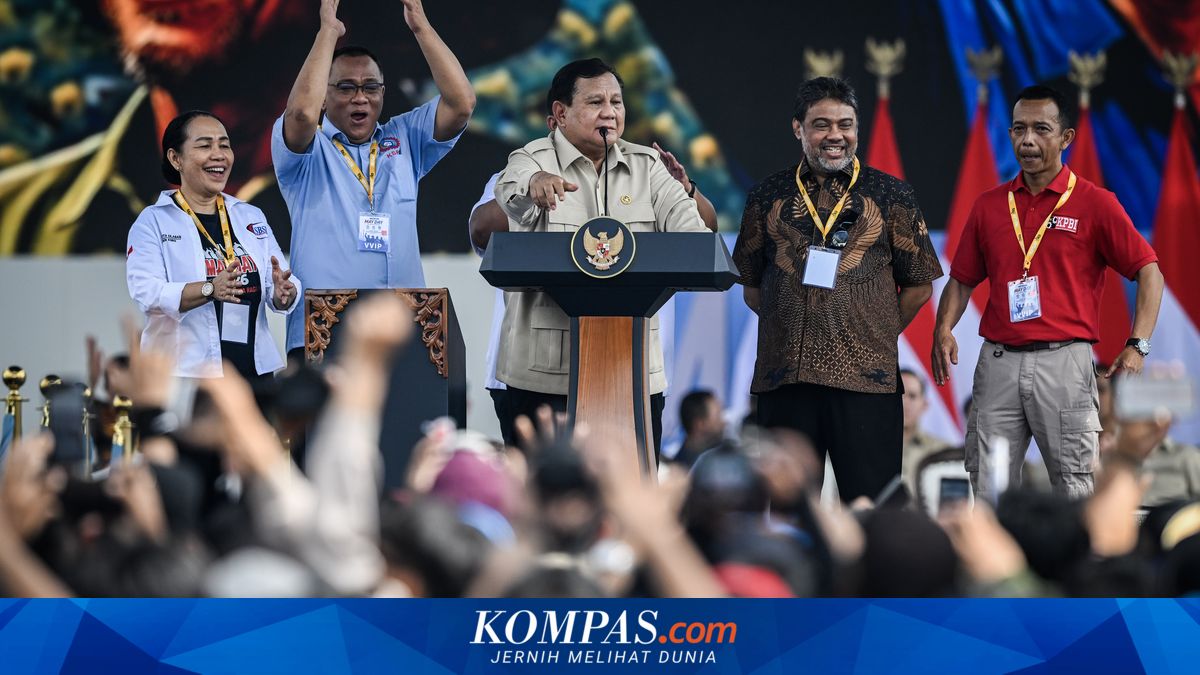
There are small moments that are sometimes more honest than a long speech script. They appear suddenly, not always neatly, but they are enough to shake the logic of power communication.
That is what was felt when President Prabowo Subianto, during the International Labour Day commemoration at Monas on 1 May 2026, asked the mass of workers about the Free Nutritious Meals programme: “Is MBG beneficial or not?”
The audience, the May Day commemoration participants, then responded in unison: “Nooo.”
In a usual speech space, a question like that is almost always meant as a rhetorical question.
Leaders ask not to obtain an open answer, but to invite agreement.
The audience is expected to answer “beneficial,” then the stage turns into a space of legitimation.
The problem is, Labour Day is not an ordinary space. It is not a bureaucratic hall, an internal party forum, or a one-way campaign stage. It is a political space filled with resistance, demands, and the anxieties of the working class.
Workers certainly understand the importance of children receiving proper nutrition.
What they reject is perhaps not the idea of nutritious meals, but the way the state shifts the stage of discussion from the concrete problems of workers to the government’s flagship programme.
Sometimes leaders are too confident that big programmes automatically produce big applause.
Yet, the public does not live inside policy brochures, but inside experience.
For workers, the benefits of the state are not just heard from social protection figures, but felt from sufficient wages, job certainty, guarantees against easy layoffs, the elimination of cheap outsourcing, and protection for workers’ families.
At this point, Jürgen Habermas’s theory of the public sphere is relevant.
In The Structural Transformation of the Public Sphere, published in 1962, Habermas positions the public sphere as an arena where citizens form opinions on common affairs, not merely watching representations of power.