
When Warnings Go Unheeded: Naughty Passengers in KRL Priority Seats
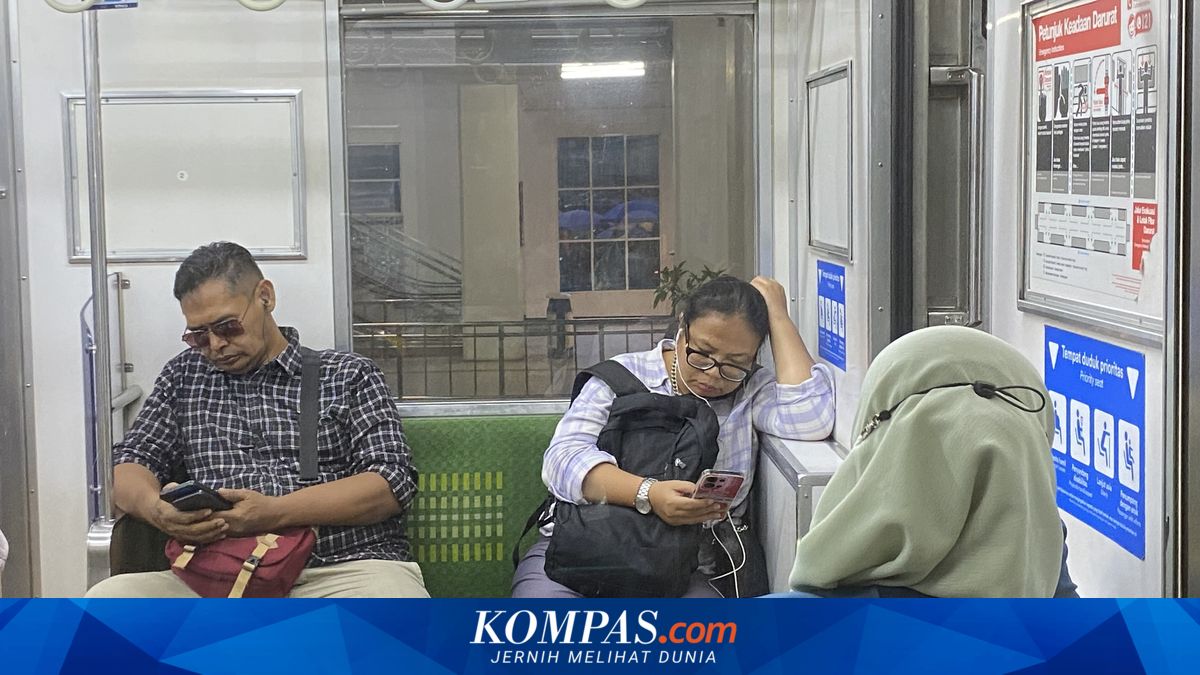
In the midst of urban dwellers’ daily routines, travelling on the KRL Commuter Line is no longer just about moving from one point to another. Inside the carriages, there are recurring dynamics, including the classic issue of priority seats that remains unresolved to this day. Although regulated and widely socialised, practices in the field show that priority seats often become a grey area, between rights, needs, and empathy that do not always align.
At Manggarai Station, one of the busiest KRL stations, this situation is a familiar sight for staff. Fahmi (not his real name), 30, a KRL staff member at Manggarai Station, described the on-the-ground situation as often challenging. He admitted that although reminders are continuously made, not all passengers comply with the rules.
“Actually, we have often reminded them through loudspeakers and routine socialisation. But there are still many who remain seated in priority seats, even when the elderly, pregnant women, or disabled passengers are standing in front of them,” said Fahmi when met at the platform area on Thursday (9/4/2026).
“Some pretend to be busy with their phones, pretend to sleep, or say ‘I’m tired too’. So they have to be reminded multiple times before some agree to stand,” he added.
Although they have the authority to reprimand, Fahmi acknowledged that regulatory boundaries prevent staff from taking further action.
“If passengers are stubborn, we can only politely reprimand them. There are no immediate sanctions on the spot if they refuse,” he said.
This situation, according to Fahmi, presents its own dilemma. On one hand, staff are responsible for maintaining order and assisting priority passengers. On the other hand, they lack the authority to force compliance.
VP Corporate Secretary of KAI Commuter, Karina Amanda, explained that the categories of priority passengers are clearly regulated, namely the elderly, disabled individuals, pregnant women, and passengers carrying children. She emphasised that according to SOP, staff are tasked with helping to find seats for priority passengers.
However, in practice, passenger awareness remains a challenge.
“Sosialisation through announcements inside the KRL has also been routinely provided, but nevertheless, there are still passengers who are not yet aware,” said Karina when contacted.
Karina also mentioned that in the last 1–2 years, there have been no official complaints regarding priority seats. As an additional effort, KAI Commuter provides pregnancy PINs and disability cards. Up to 2025, tens of thousands of applicants have utilised these facilities, with a trend that continues to increase each year.
Kompas.com observations on Wednesday (8/4/2026) showed how these rules operate in the field. In one KRL train with 12 carriages, each carriage is known to have four priority seats located at both ends. In total, the number of priority seats is sufficient to accommodate passengers with special needs. However, the reality is not entirely so.
During the journey from Manggarai to Jakarta Kota, the atmosphere inside the train was not too crowded. Nevertheless, all seats, both general and priority, were fully occupied. Some passengers appeared to sit relaxed while playing on their phones.