
When They Respond to PDIP's Concerns Over Free Nutritious Meals Budget
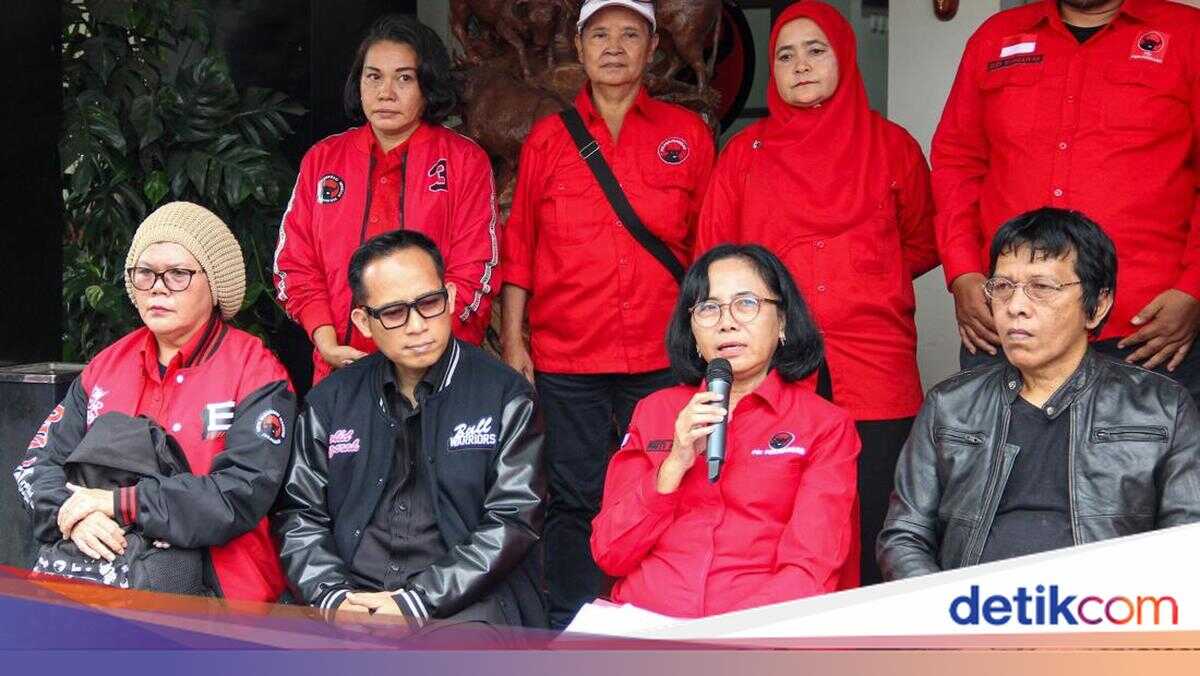
The Indonesian Democratic Party of Struggle (PDIP) has highlighted the use of funding for the Free Nutritious Meals (Makan Bergizi Gratis, MBG) programme for students, which is sourced from the national education budget. This issue has become contentious because it is viewed as potentially reducing efforts to improve education quality.
The party also sought to respond to statements from government officials claiming that MBG funding does not reduce the education budget allocation.
The education budget in question is contained in the Law on the 2026 State Budget (APBN). Parliament approved this in a plenary session in August of the previous year, after which the government conducted further deliberations.
In the 2026 APBN, the education budget is set at Rp 769 trillion, or 20 per cent of the total state budget (mandatory spending). Of this education budget, Rp 223.5 trillion is allocated for the MBG programme.
Following PDIP’s concerns, numerous parties have responded.
PDIP’s Statement
PDIP’s statement came following claims from several state officials that the MBG budget resulted from efficiency measures and did not reduce the education budget allocation. These statements prompted questions from PDIP’s regional and district leadership, as well as the wider public, regarding the actual facts.
“Our colleagues understand that the education budget of Rp 769 trillion represents mandatory spending of 20 per cent from the state and regional budgets that must be allocated purely for education,” said MY Esti Wijayati, Deputy Chair of Commission X of the House of Representatives from the PDIP faction, at a press conference at the PDIP headquarters’ Party School in Lenteng Agung, Jakarta, on Wednesday, 25 February 2026.
However, based on official state documents, funding for the MBG programme actually reduces the portion of the education budget.
“In the appendix to the state budget, which takes the form of a presidential regulation, it is explicitly stated that from the Rp 769 trillion education budget, Rp 223.5 trillion is used for MBG. This is officially recorded in the state budget appendix document,” she said.
Adian Napitupulu, a member of Commission X from the PDIP faction, reinforced this statement by citing the applicable legal basis. He quoted Article 22 of Law Number 17 of 2025 concerning the 2026 State Budget.
In that article, Adian explained, it is explicitly stated that funding for the operational costs of education provision already includes the Nutritious Meals programme at general and religious educational institutions.
“This explanation is further strengthened by Presidential Regulation Number 118 of 2024 on the detailed breakdown of the 2025 state budget, which specifies Rp 223,558,960,490 for the National Nutrition Agency. So that is Rp 223 trillion,” he explained.
Adian stated that PDIP’s step in releasing this data to the public was not merely criticism, but rather a form of respect for the constitution and transparent state governance.
“We are governed by law. Presenting information correctly in accordance with the law and presidential regulations is a form of respecting Parliament and the government as its makers. So we are clarifying that, indeed, it is taken from the education budget,” he added.
PDIP Raises Concerns About Education Situation
Beyond the funding issue, PDIP also raised concerns about fairness in education. Bonnie Triyana, a member of Commission X from the PDIP faction, expressed concerns regarding plans to promote State Civil Service Teachers (SPPG) to government employees with work agreements (PPPK).
“We are aware that there are many contract teachers who have served for decades but have not been appointed as PPPK. There are even cases in Gowa and Central Java where teachers are only appointed as PPPK just before retirement,” she said.
She also noted that the welfare of educators remains concerning, with approximately 40 per cent of lecturers, particularly at private universities, receiving salaries below Rp 3 million.
PDIP urged the government to optimise the education budget to address crucial sectors, including improving teacher and lecturer welfare, and revitalising damaged school infrastructure, particularly in remote, disadvantaged regions.
Golkar Reminds PDIP It Had Agreed in Plenary Session
Yahya Zaini, Deputy Chair of Commission IX of the House of Representatives from the Golkar faction, responded to PDIP’s concerns regarding the budget allocation. Yahya Zaini reminded the PDIP faction that it had agreed to the budget discussion during proceedings at the Parliamentary Budget Committee (Banggar) level and the House plenary session.
“Regarding the MBG budget, it has already been agreed upon between Parliament and the Government. All factions in Parliament agreed with the MBG budget that was agreed upon by Banggar and approved in the House plenary session, thereby becoming law through the State Budget Law,” said Yahya Zaini to journalists on Friday, 27 February.
He noted that the PDIP faction did not object during discussions of the allocation at Banggar and the House plenary session on the state budget. He stated that the budget decision was unanimous.
“Including F-PDIP, no one objected during discussions at Banggar and the Plenary Session. So it became a unanimous decision,” he said.
Yahya Zaini stated that Golkar was not involved in the management of MBG. Nevertheless, his party expressed support for the implementation of the programme championed by President Prabowo Subianto.
“Institutionally, Golkar is not involved in the management of MBG. However, Golkar strongly supports the success of the MBG programme because its purpose is very noble,” said Yahya.
“Golkar strongly supports the MBG programme because its purpose is very noble: to develop a generation that is healthy, intelligent and outstanding, thereby becoming quality human resources,” he added.
Presidential Palace Confirms MBG Will Not Reduce Education Budget
Cabinet Secretary (Seskab) Teddy Indra Wijaya responded to the controversy surrounding the narrative that Free Nutritious Meals (MBG) funding uses the national education budget. Teddy affirmed that the MBG programme will not reduce education programmes.
“I wish to clarify the misunderstanding and incorrect narrative. About what? So, yesterday there were some parties who stated that the free nutritious meals programme is reducing education programmes and budget. As a result, schools are neglected, and teachers are not given attention. So I want to address that as an incorrect narrative,” said Teddy at the Presidential Palace Complex in Jakarta on Friday, 27 February.