
When the Village Strives to Grow Rich from Goat Farming...
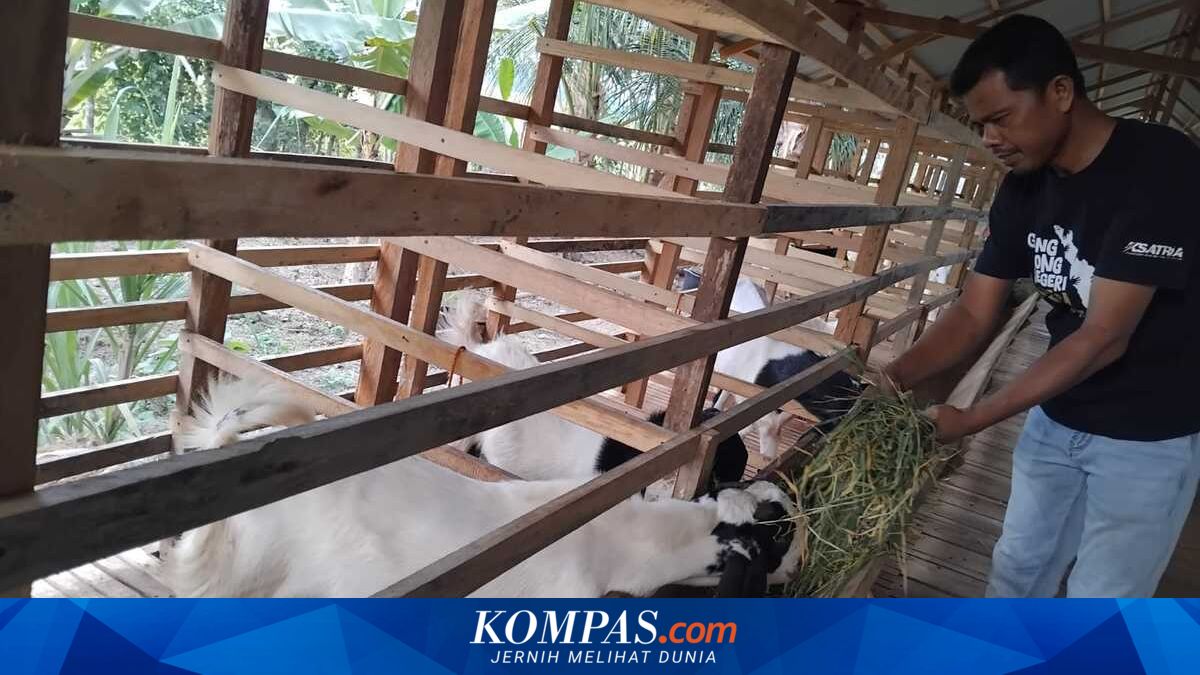
LHOKSUKON, KOMPAS.com – That afternoon, four mothers and three young men were seen busy in a corner of Nibong Baroh Village, Nibong Subdistrict, North Aceh Regency, Aceh Province, on Sunday (29/3/2026). They are part of the Village-Owned Enterprise (Bumdes) Makmur Berkah Jaya Farm, operating in the field of goat farming. On that land spanning more than one hectare, right by the rice fields, they farm. They plant chillies and various plants, with one corner for livestock farming and another for integrated waste processing. They burn waste that cannot be processed further. The smoke produced also repels mosquitoes from the goat pens. There is also a nursery for various plants, from coconut to avocado and longan, at the site. The business was established last year with capital of Rp 100 million from village funds. This money included building pens and purchasing 40 goat seedlings from Java Island: Boer goats, PE or long-eared goats, Saanen, full-blood Boer, Jawa Randu, and Senduro. These goat breeds are then mated with local goats, often called Kacang breed goats. “So, goats with better quality are born. We carry out crossbreeding,” said the Head of Nibong Baroh Village, Nibong Subdistrict, North Aceh Regency, Razali, to Kompas.com. He illustrated that the capital for one goat is Rp 1.5 million. When sold, the minimum price is Rp 2.5 million. “We can maintain the price above that. Especially in the future ahead of Idul Adha, demand for sacrificial goats will be high, and we will sell them too,” he explained. For the market, they are not worried. Moreover, the people of Aceh are known as one of the biggest consumers of goat curry. “We also sell for newborn aqiqah events and to goat curry traders. If the market is very large, it’s just that our capital is still small,” he said. As for the workers, continued Razali, they use a profit-sharing system. This means the main capital is still returned to the village treasury. Meanwhile, profits are split with 70 percent for the workers and 30 percent deposited into the village treasury. “The results are quite substantial in adding to the village’s income,” he explained. Nevertheless, they need support from the government and the regional-owned enterprise (BUMD) PT Pema Global Energi, which is a stone’s throw from the village. “We need support for food chopping machines, lawn mowers, and others. There are still many machines we need, because this is an integrated location, starting from livestock, waste management, and plantations,” he explained. He hopes that more village youth can be employed in the future as the business develops. “So that young people become more productive,” he concluded. Under the cloudy sky starting to drizzle, they were still busy with their respective tasks. From that location, they hope to grow rich and prosper the village.