
When the Trust of Power is Betrayed
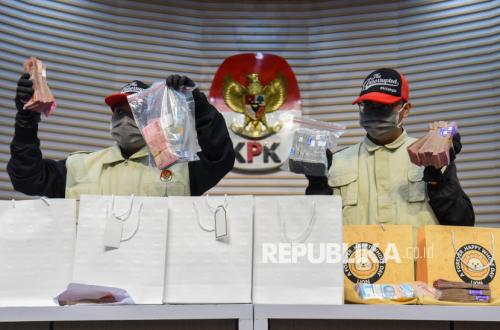
Every time a sting operation targets a regional head, the public is once again confronted with a painful irony. Leaders elected through democratic processes instead stumble into cases of bribery, project rigging, or the buying and selling of positions. Positions that should serve as means to serve the people turn into gateways for personal enrichment or to enrich “supporters” during their candidacies. The narrative that often emerges is that the perpetrators are merely “bad apples.” However, when the same pattern repeats time and again, it becomes difficult for us to turn a blind eye to the deeper reality. There is certainly something amiss in how we prepare and select regional leaders. Corruption among regional heads is fundamentally not just a legal issue, but also a matter of trust. In the Islamic view, power is not a privilege, but a responsibility that will eventually be accounted for. Accountability is not only to the people, but also to Allah SWT. Therefore, every public office is essentially a deposit that must be guarded with honesty and justice. The Qur’an provides a very clear warning about the importance of upholding trust: “Indeed, Allah commands you to render trusts to whom they are due and when you judge between people to judge with justice.” (QS. An-Nisa: 58). This verse speaks not only of justice in law, but also of moral responsibility in exercising power. When a leader uses their position for personal or specific group interests, they have essentially betrayed the trust they bear. The concept of trust in leadership is also affirmed in the hadith of Prophet Muhammad SAW. The Messenger of Allah said, “Every one of you is a shepherd and every one of you is responsible for his flock”—every one of you is a leader and every one of you will be asked to account for those under your leadership (HR. Bukhari and Muslim). This hadith contains a profound message about the nature of leadership. A leader is not merely a holder of power, but a guardian of trust who must protect the interests of the many. When a regional head uses their position to enrich themselves or their group, they not only violate state law but also breach the moral responsibility that, in the view of faith, will be accounted for before God. However, the phenomenon of corruption among regional heads cannot be explained solely as individual moral failure. In many cases, corruption is the result of complex interactions between power, political pressures, and organisational culture within the regional government system. One of the most frequently cited factors is the high political cost in local election contests. Regional head elections require substantial resources: campaign costs, mobilisation of support, and consolidation of political networks. In many cases, these costs far exceed a candidate’s personal financial capacity. As a result, dependency on political sponsors or certain economic networks emerges. When someone is finally elected after going through an expensive political process, pressure often arises to “return the investment.” It is in this context that development projects, business permits, and public budget management become vulnerable spaces for abuse. Corruption then emerges not only as a personal decision, but as part of an informal mechanism in the relationship between power and economic interests. However, this issue does not stop at individual regional heads. The role of political parties is also an important factor often overlooked in serious attention. In Indonesia’s democratic system, political parties are the main gateway for someone to become a regional head candidate. Through recruitment and nomination processes, parties bear significant responsibility in determining the quality of leadership at the regional level. Ideally, political parties function as cadre-building institutions that prepare leader candidates with integrity, capacity, and commitment to public interests. Parties should not only serve as electoral vehicles, but also as political education institutions that shape leadership character. Unfortunately, in modern political practice, the recruitment process often does not fully reflect this function. The nomination of regional heads in some cases is more influenced by popularity, financial strength, or the ability to build political networks rather than a track record of integrity. When financial factors become the dominant criterion in nominations, the risk of high-cost politics increases. This situation creates a vicious cycle that is hard to break. Regional head candidates who must spend large sums to gain political support will face pressure to recoup those costs after taking office. Without a strong oversight system, the power held can turn into a tool for improperly accessing public resources. Therefore, reform within political parties becomes very important. Parties need to strengthen cadre systems based on integrity and competence. The candidate selection process for regional heads must be conducted transparently and consider candidates’ track records, not just financial capability or electability. In addition, oversight systems in regional governance also need to be strengthened. Transparency in procurement of goods and services, restrictions on conflicts of interest, and strengthening of internal oversight institutions can narrow the space for power abuse. Society also plays an important role in maintaining the quality of democracy. Voters should not judge leader candidates solely on campaign promises or popularity, but also on their track record of integrity and commitment to good governance.