
When the Middle East Conflict Halts Global Airspace
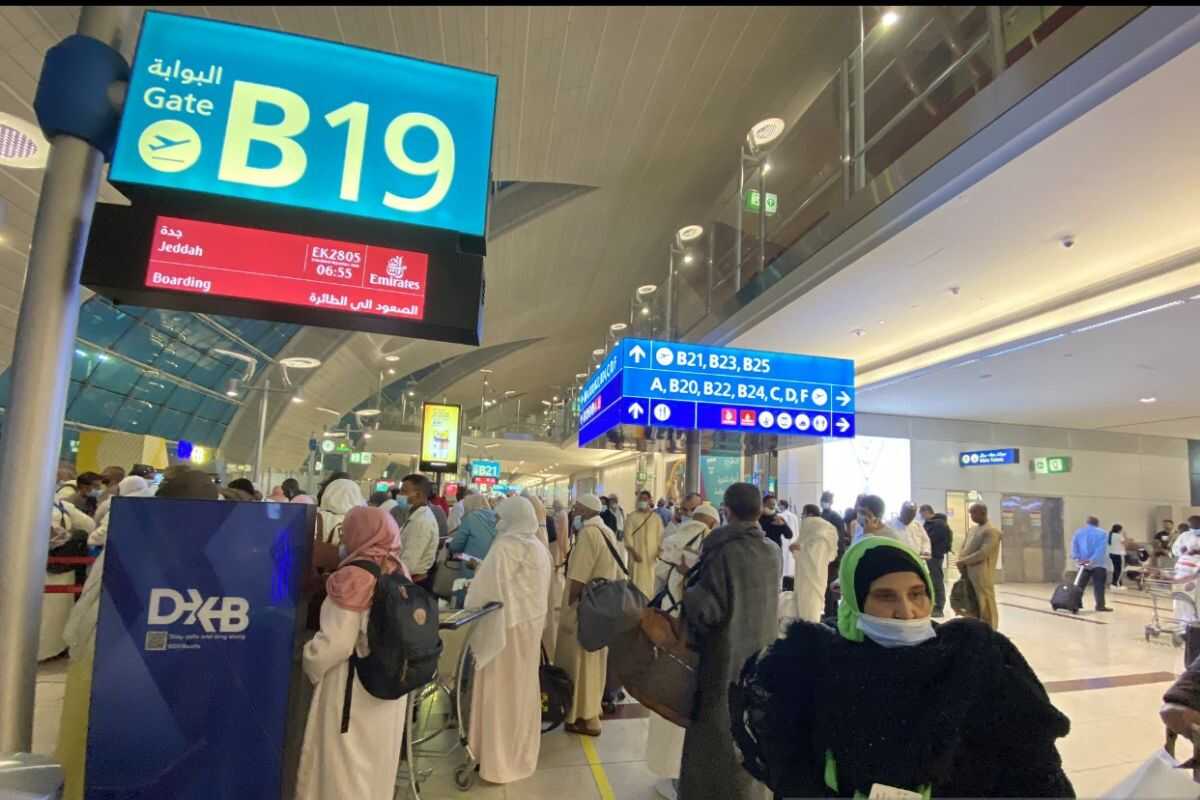
This is the paradox of modern globalisation: a regional conflict can halt world mobility within a matter of hours. Abu Dhabi (ANTARA) - When geopolitical tensions escalate in the Middle East, what changes first is not merely the military or diplomatic dynamics, but also airspace.
Within hours of the escalation of the conflict between Iran with the United States and Israel on 28 February 2026, airspace across much of the Middle East suddenly fell silent, devoid of civilian flights.
Air routes normally crowded with thousands of aircraft each day suddenly fell silent. The regional conflict instantly became a global mobility crisis.
Several Gulf states quickly closed their airspace as a precautionary measure.
The United Arab Emirates, Qatar, Bahrain, Iraq, Oman, and Kuwait were among the countries that restricted or closed airspace operations following missile and drone strikes in the region.
These closures were not merely local policies. The Middle East air corridors are major arteries linking Asia, Europe, and Africa. When this corridor is disrupted, the impact is felt across the world’s aviation network.
In the first few days of the conflict alone, more than 4,000 international flights were cancelled each day. Airlines from various countries — from British Airways, Lufthansa, and Cathay Pacific to Asian carriers — began suspending flights to the Gulf region.
Hundreds of thousands of passengers were stranded at transfer hubs or forced to reroute their journeys. The situation was described as the largest air travel disruption since the COVID-19 pandemic.
At the heart of the crisis stood cities that have long been central nodes of global mobility, including Abu Dhabi, Dubai, and Doha. Over the past two decades, the Gulf region has built a highly efficient hub-and-spoke model.
Geographically positioned at the crossroads between Asia and Europe, airports in the region connect hundreds of cities around the world through a single transfer point.