
When the city rearranges memory
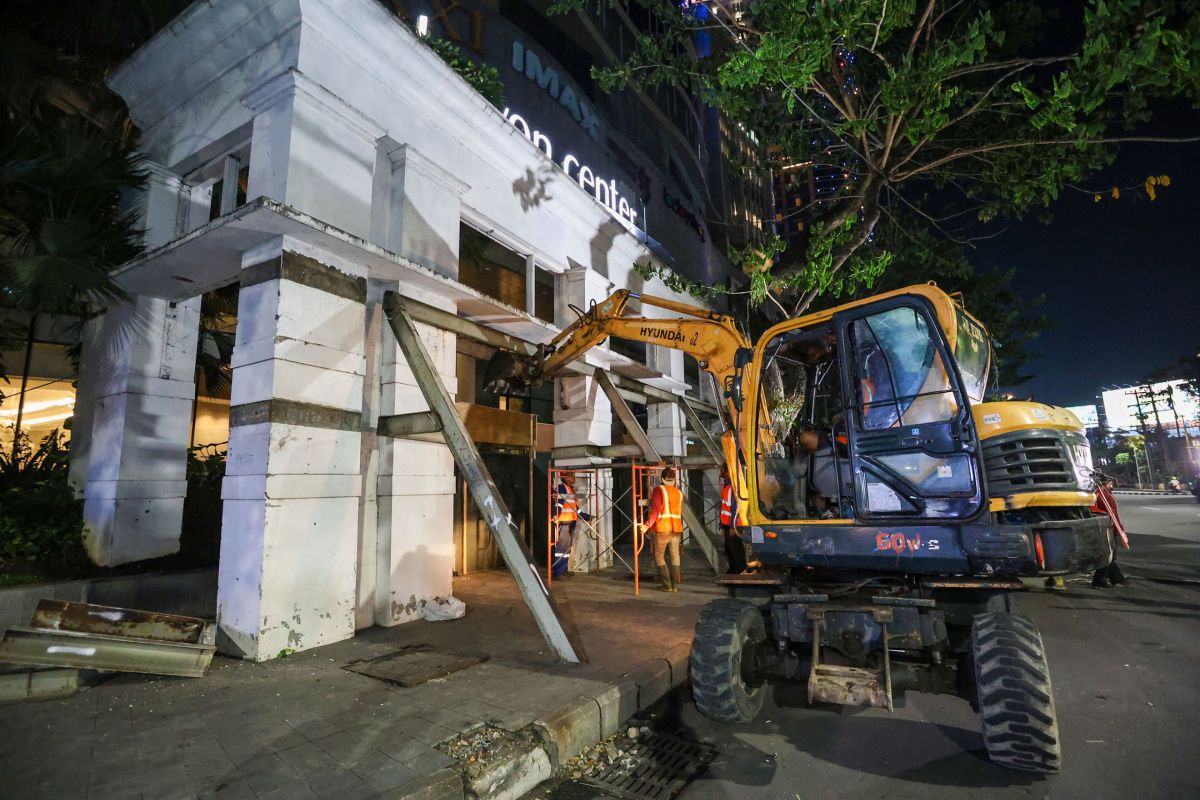
Surabaya (ANTARA) - At the corner of a road that is never truly quiet, the steps of pedestrians were once halted by a row of pillars standing awkwardly on the pavement. There, for years, the name of a shop lived on in a form half-remembered, half-questioned. Now, as that facade begins to be dismantled at night, the city seems to be reopening an old page, about memory, mistakes, and choices for the future. The dismantling of the former Toko Nam facade on Embong Malang Street in Surabaya City, East Java, is not merely a technical task targeted for completion in three to five days. It is a symbolic event. A meeting point between the needs of the modern city and efforts to care for history. The Surabaya City Government has chosen to dismantle the structure, which has long been considered a marker, after confirming it is not part of the original historic building. At the same time, larger questions arise: how should a city treat its collective memory? Pioneer in retail. In its time, the building was not just a shop. It was a sign of the era. Standing since the early 20th century, this shop became one of the pioneers of the modern retail concept in Surabaya, even in the Dutch East Indies. When many shops still relied on on-site transactions, Toko Nam had introduced delivery services to customers, an innovation that feels ordinary today but was revolutionary at the time. Its strategic location in the Tunjungan and Embong Malang areas made it a centre of economic and social activity. Within a decade, its growth was rapid, until it had to move to a larger location.