
When the Bamboo and Carbide Cannon War in Pidie, Aceh, the Government Ignores the Alluring Tourism Potential
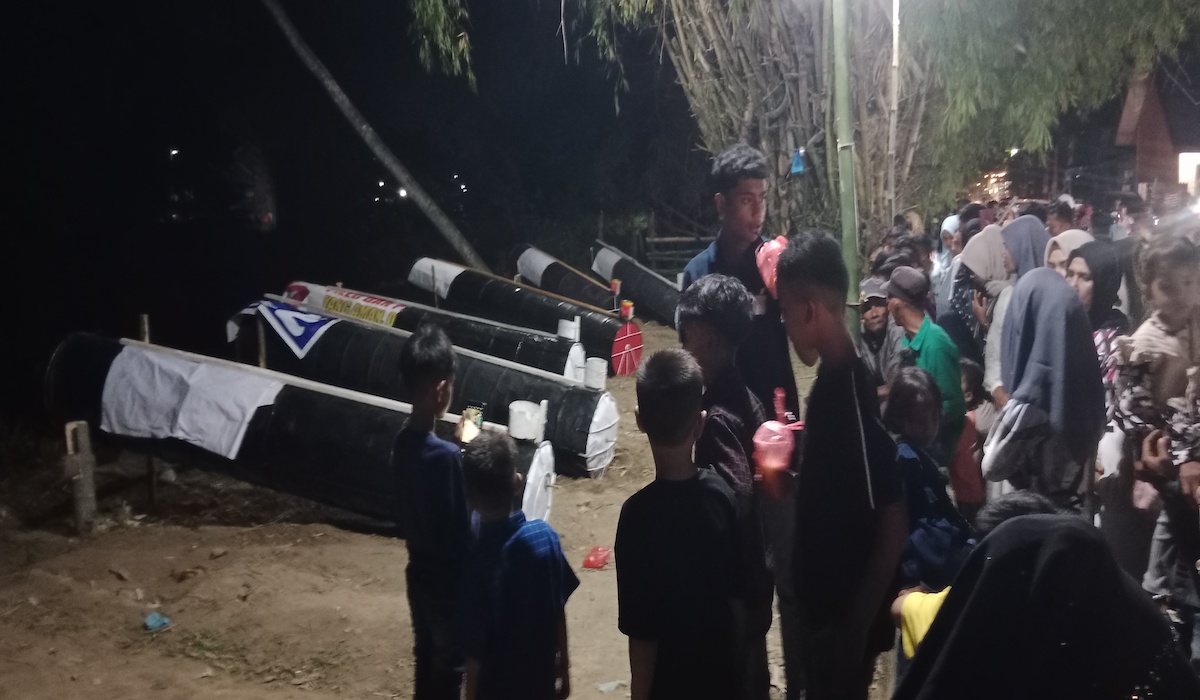
Traffic along the provincial road in Sigli, the capital of Pidie Regency, towards Jabal Ghafur University, began to congest and crawl on Saturday night (21/3) around 8:30 PM WIB. The approximately 7 km stretch along the banks of the Krueng Baro River, from Gampong Barat Village in Pidie Subdistrict to Keubang Village in Indrajaya Subdistrict, was filled with thousands of motorbikes and minibuses carrying tens of thousands of visitors.
Most of them were young men and women, along with family groups bringing children of various ages. These local tourists came from various subdistricts in Pidie and other districts in Aceh, such as Banda Aceh City, Aceh Besar Regency, and Pidie Jaya Regency.
“A friend from Banda Aceh wanted to see the bamboo cannon battle action directly. They stopped by the house and stayed overnight here,” said Muhammad Haiqal, an activist from the Indonesian Islamic Student Association (PII) in Aceh, who is also a youth from Garot Hamlet, Indrajaya Subdistrict.
The arrival of tens of thousands of visitors was solely to watch the bamboo cannon and carbide cannon warfare. This is a unique tradition from bygone eras held annually to celebrate Eid al-Fitr.
According to Media Indonesia’s investigation at the site, the exhibition event was held along the edges of the Krueng Baro River, a fierce and flood-prone waterway. At least 16 villages along the Krueng Baro River participated in this unique mock war competition.
Each village had one health team and lined up bamboo cannons or carbide drums along the riverbank in their respective territories. The cannon muzzles were directed towards opponents across the river, lined with rows of bamboo clumps along the banks.
“The cannon groups of fighters from one village face off against their opponents in the village across the river. On the eastern side of the river, from Gampoeng Barat Village in Pidie Subdistrict to Keubang Village in Indrajaya Subdistrict, there is 7 km. On the western side, also 7 km from Raya Sanggeue Village in Pidie Subdistrict to Dayah Baro Village in Delima Subdistrict. Along that 7 km, bamboo cannons and carbide drums are scattered across the territories of 16 village groups,” said Haiqal, who was also a former bamboo cannon fighter for the Blang Indrajaya Village team.
From field observations, at least 16 village groups or battle squads were involved in the warfare with its thundering booms. These 16 squads included youth groups from Pidie, Indrajaya, and Delima Subdistricts.
“Each group faces a village across the river. Some battle villages from different subdistricts, while others face different villages but within the same subdistrict,” said Haiqal.
Around midnight WIB, the powerful booms of these large weapons, which have no sharp projectiles, thundered back and forth between one cannon and another. Thousands of visitors stood along the roadside or riverbank, enjoying the shaking sounds as if they were in a Middle Eastern conflict zone.
“It was only towards dawn on Sunday (22/3) in the early hours that the mutual attacks between the bamboo and carbide cannon groups ended. The release of various types of fireworks also concluded alongside the approach of the dawn call to prayer,” added Muhammad Habibi, a man of advancing age from Blang Gatot Village.
Not only along the Krueng Baro that crosses Indramayu, Delima, and Pidie Subdistricts in Pidie Regency. The bamboo cannon warfare, fuelled by kerosene mixed with petrol (Pertolite), and carbide drum cannons, was also lively held every second night of Eid in five villages in Reubee Hamlet, Delima Subdistrict.
It is said that in the past, bamboo cannons were used to wake people for suhoor during Ramadan. They were also sounded upon entering beautiful times until precisely the time for dawn prayer.
There is a strict prohibition on sounding them during tarawih prayers and the five daily obligatory prayers in mosques or prayer rooms. It is also reported that they are often sounded to drive away ghosts from places considered haunted.
A cultural expert from Syiah Kuala University (USK) hopes that this bamboo cannon and carbide drum cannon warfare tradition, which has uniqueness and has been a public attraction for hundreds of years, receives government attention. This local wisdom at the youth and children’s level needs a tourism programme touch.
By incorporating the teoet bude trieng (bamboo cannon firing) tradition into a cultural tourism package, its implementation will certainly be more directed and orderly. The government can create rules and orderliness in line with ethics and measurable operational standards, directed, and not disturbing religious proclamations.
“This has extraordinary potential for cultural and religious tourism. But wait first. It must not be vulgar; there must be rules on when, where, and how the qualifications for the cannons before they can be fired. Most importantly, do not overlook the special characteristics of Islamic sharia in Aceh, do not damage the environment, and be able to build solidarity,” said M. Adli Abdullah.
According to Adli Abdullah, if the carbide devices are left to roam without guidance, it is better as they could potentially disturb public comfort. But if polished and standardised in operations, they would certainly become a productive tourism asset and a forum for campaigning silaturrahmi and togetherness.
“The potential is already there to revive the local economy. How about in Pontianak, Kalimantan, which became a tourism event after being handled by the provincial and regency governments there,” added Adli Abdullah, who is also a history expert.