
When Silicon Valley Drew a Line: The AI War Between Anthropic, OpenAI, and the Pentagon
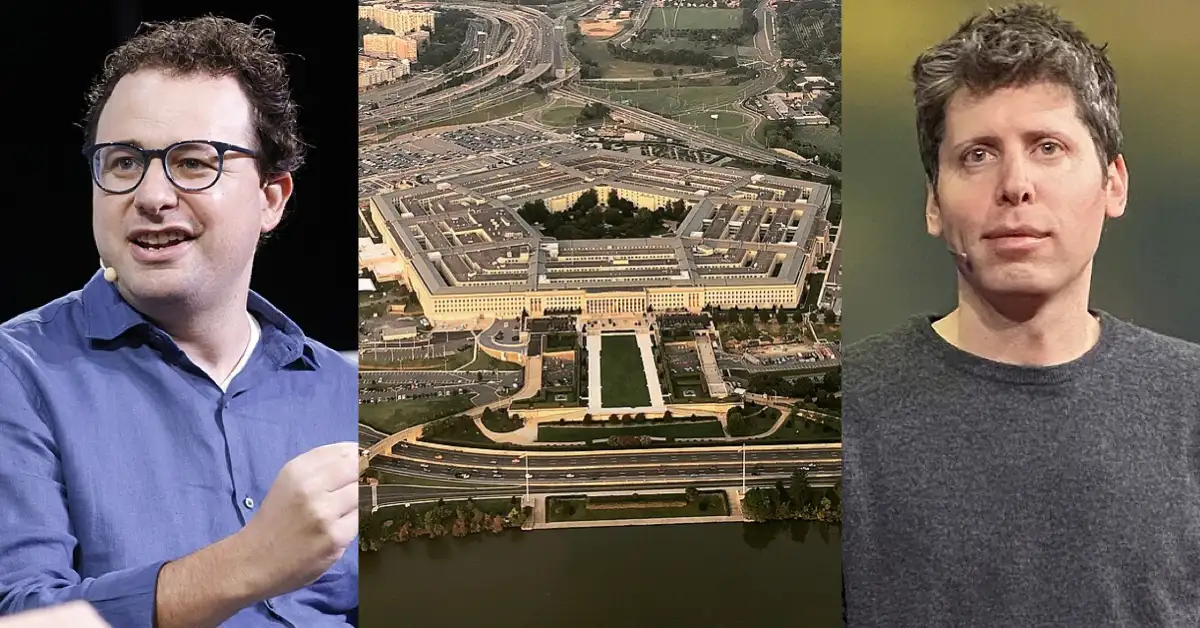
One AI company said no to the Pentagon — and the world is watching what happens next.
What does it mean when the most powerful military in the world gets into a public brawl with a tech startup over a clause in a contract? In February and March 2026, that question stopped being theoretical. A fight between the U.S. Department of Defense and Anthropic — the San Francisco company behind the AI model Claude — exploded into a political firestorm that now defines the stakes of AI in the age of war. This is not just a story about contracts. It is a story about who controls the most powerful technology in human history, and what lines, if any, cannot be crossed.
In February 2026, Anthropic CEO Dario Amodei refused a Pentagon demand to allow its AI model Claude to be used for any “lawful purpose,” including potential mass domestic surveillance and fully autonomous weapons. President Trump blacklisted Anthropic on February 27, and Defense Secretary Pete Hegseth declared it a supply-chain risk to national security. Within hours, OpenAI struck its own Pentagon deal, drawing fierce backlash and accusations of opportunism — even from its own employees. OpenAI later revised its contract language after public criticism. As of March 5, 2026, Amodei had returned to negotiations. The dispute has exposed the deepest fault lines in global AI governance: who sets the ethical limits of military AI, and who — if anyone — has the power to enforce them.
How Claude Became the First Frontier Model on Classified Networks
In July 2025, the U.S. Department of Defense awarded contracts worth up to $200 million each to four leading AI companies: Anthropic, OpenAI, Google, and Elon Musk’s xAI. The purpose was to prototype frontier AI capabilities that would advance national security. Of the four, only Anthropic’s Claude was deployed into the government’s most sensitive, classified networks — made possible through a partnership with data analytics firm Palantir Technologies.
Claude was used in intelligence analysis, operational planning, cyber operations, and reportedly played a role in the U.S. military operations in Venezuela that led to the capture of former President Nicolás Maduro. It was also being used in active operations against Iran. Anthropic, founded in 2021 by former OpenAI researchers including CEO Dario Amodei and his sister Daniela Amodei, had built its entire identity around one idea: that AI development had to be safe, or it should not happen at all.
The Ultimatum No One Expected
The crisis began to take shape in January 2026, when Defense Secretary Pete Hegseth issued an AI strategy memorandum requiring all Department of Defense AI contracts to incorporate standard “any lawful use” language within 180 days. For most tech companies, this would have been routine. For Anthropic, it was a direct collision with the company’s founding principles. The tension broke into the open on February 25, 2026, when Hegseth gave Anthropic CEO Dario Amodei a stark choice: remove the company’s safety guardrails from its military contract or lose the $200 million deal entirely and face a government blacklist.
Amodei, who had just attended the AI Impact Summit in New Delhi with French President Emmanuel Macron on February 19, flew back into the storm. On Thursday, February 27, hours before the Pentagon’s 5:01 p.m. deadline, Amodei released a public statement that was quiet in tone but thunderous in consequence: Anthropic could not, he wrote, “in good conscience” accede to the Pentagon’s request. The two issues he refused to bend on were clear — no use of AI in fully autonomous weapons systems that fire without human involvement, and no use of AI for mass domestic surveillance of American citizens.
The Blacklist Heard Around the World
Within hours of the deadline passing, President Donald Trump took to Truth Social and ordered every federal agency in the United States to “immediately cease” all use of Anthropic’s technology. Defense Secretary Hegseth went further. He posted on X — using the Pentagon’s new “Department of War” rebranding — that he was designating Anthropic a “Supply-Chain Risk to National Security,” a label previously reserved almost exclusively for foreign adversaries like China’s Huawei. “Effective immediately, no contractor, supplier, or partner that does business with the United States military may conduct any commercial activity with Anthropic,” Hegseth wrote.
Trump’s Truth Social post called Anthropic a company run by “radical leftists” who had no idea about “the real world.” Emil Michael, the Under-Secretary of Defense for Research and Engineering who had been leading Pentagon negotiations, called Amodei a “liar” with a “God complex” who was “ok putting our nation’s safety at risk.”
Anthropic fired back. In a blog post, the company cited a federal statute and said Hegseth lacked the legal authority to restrict companies from doing business with Anthropic for non-Pentagon work. It also announced it would challenge the designation in court. Then came the twist: Claude reportedly continued to be used in strikes on Iran even after the ban was issued, underscoring just how deeply embedded the technology had become and how messy any phase-out would truly be.
OpenAI Moves In — and the Backlash Begins
Within the same chaotic Friday, OpenAI CEO Sam Altman announced that his company had struck its own deal with the Pentagon. The timing looked deeply calculated. Altman had spent the morning publicly saying he shared Anthropic’s “red lines” on autonomous weapons and surveillance — then revealed he had been quietly negotiating his own contract. The public backlash was immediate and brutal. Claude surged to the number-one spot on Apple’s App Store, while ChatGPT reportedly saw a wave of uninstallations.
Even inside OpenAI, the reaction was raw. According to CNN, many employees “really respect” Anthropic for standing up to the Pentagon and were deeply frustrated with their own leadership. Amodei did not hold back eith