
When Screens Replace Hugs
Child protection in the digital era is not merely about restricting access, but about building balance. Technology cannot be avoided, but it must be directed to become a tool that supports growth and development, rather than the opposite.
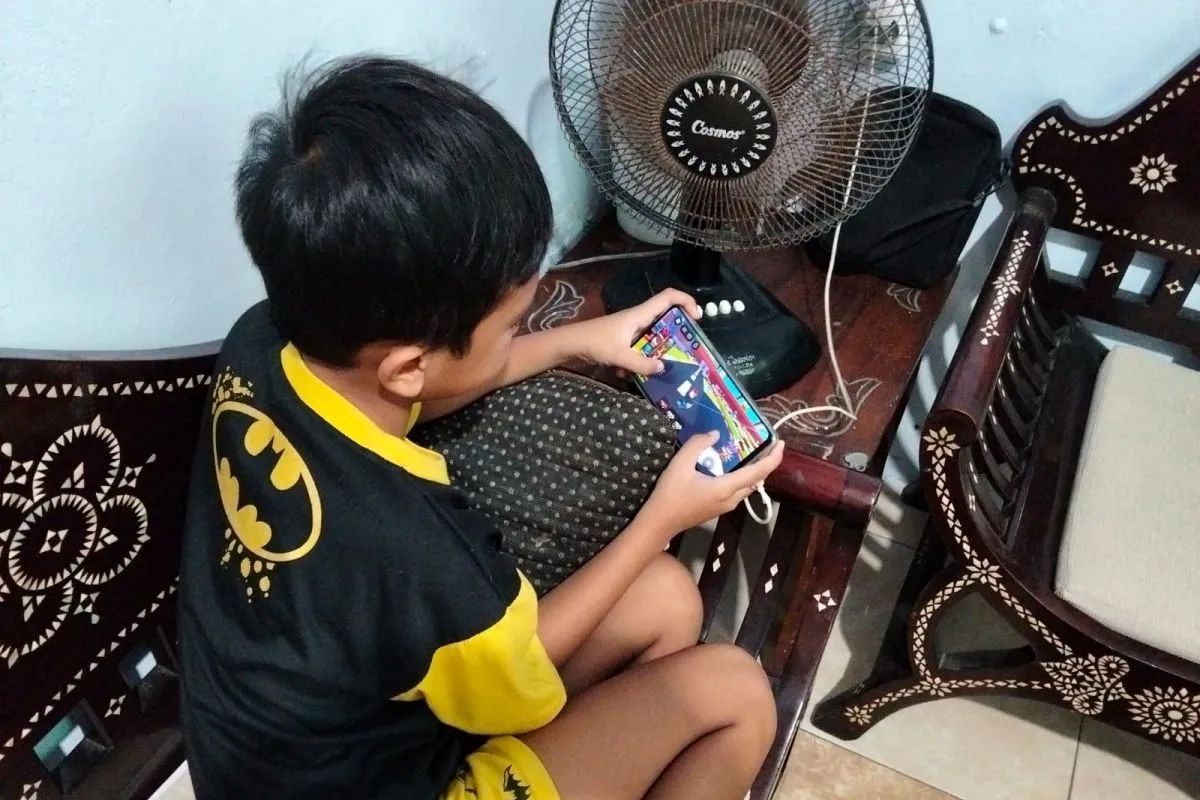
Mataram (ANTARA) - On an afternoon in Lombok, a child sits quietly on the porch of the house. Their hands are busy scrolling the phone screen, their eyes fixed without pause. Around them, the sounds of peers playing fade away.
Scenes like this are no longer unfamiliar in West Nusa Tenggara (NTB). This has become a portrait of the changing way the new generation grows up, now more familiar with screens than real social spaces.
The development of digital technology indeed opens up great opportunities for children to learn, express themselves, and explore the wider world. However, on the other hand, it also brings no small threats.
Social media and online games have become the two main gateways that are most easily accessed, while also the most difficult to monitor. It is here that child protection becomes an urgent issue that can no longer be delayed.
Data and facts emerging in various reports show the same trend. The use of social media by children in NTB is no longer under optimal parental control.
Digital platforms often become spaces for bullying, the spread of hate speech, and the exploration of content that is not yet appropriate for their age. In psychologically unstable conditions, children become the most vulnerable group to be influenced.
Furthermore, online games present different challenges. Not only regarding addiction, but also the potential exposure to consumptive behaviour and practices resembling gambling through in-app purchase systems.
In the long term, this is not just an entertainment issue, but the formation of behavioural patterns.
Amid this situation, the government’s policy through Government Regulation Number 17 of 2025 on the Protection of Electronic System Governance in Child Protection (PP Tunas), which becomes effective on 28 March 2026, is an important step.
The age restriction for access up to 16 years for high-risk platforms demonstrates the state’s seriousness in protecting children in the digital space.
However, regulation alone is not enough. This issue is far more complex than mere administrative rules.