
When Residents Fear Thugs More Than the Law in Jakarta
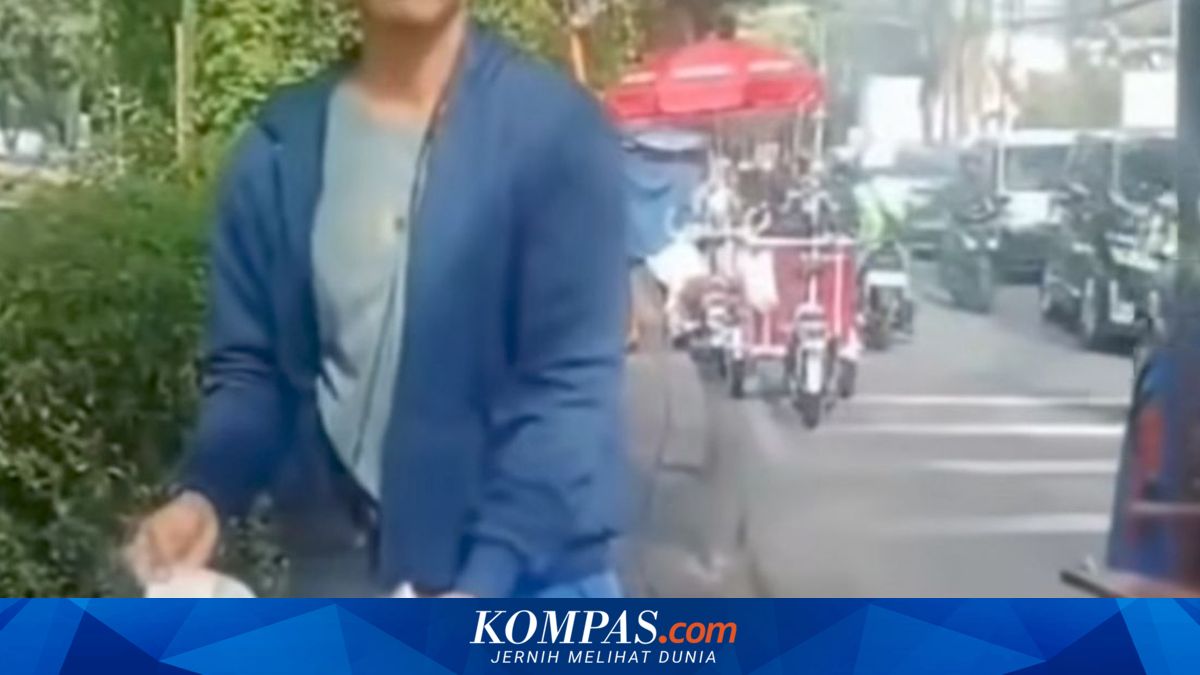
JAKARTA, KOMPAS.com - “Smash it. It’s fine to smash it.”
That sentence sounds simple. But in the context of a viral video in Tanah Abang, Central Jakarta, in April 2026, it carries much deeper meaning.
A bakso vendor, in a flat tone, permits a man, suspected to be a thug, to smash his bowls one by one.
The vendor remains silent not because he is willing, but because he knows his position. In front of him is not just a man damaging goods, but a figure demanding money suspected to be “security fees”.
The vendor even tries to calm the situation. He repeatedly mentions the payment date. As if to ensure that the issue is not about refusal, but only about timing.
“On the first. It will be given on the first.” At this point, what is visible is not conflict, but resignation.
Three perpetrators were arrested, carrying sharp weapons, and urine tests showed they tested positive for methamphetamine consumption.
At the same location, another vendor admitted being demanded up to Rp 300,000 with threats of stabbing.
A similar pattern emerged in the Banjir Kanal Timur area, East Jakarta, in December 2025. A vendor who had just opened his stall was demanded money by thugs.
When he refused, the situation turned to violence in the form of thrown objects, beatings, and threats using a knife.
In these cases, one thing is clear: violence is not a spontaneous reaction, but a tool to pressure, to ensure compliance, and to maintain unwritten “rules”.
Throughout 2025, Metro Jaya Police recorded 250 premanisme cases with 348 suspects. In the Berantas Jaya Operation held for 15 days in May 2025, 3,599 people were secured.
However, from that number, only 348 were processed legally. The rest, more than 3,200 people, were rehabilitated.