
When Research and Industry Begin to Align
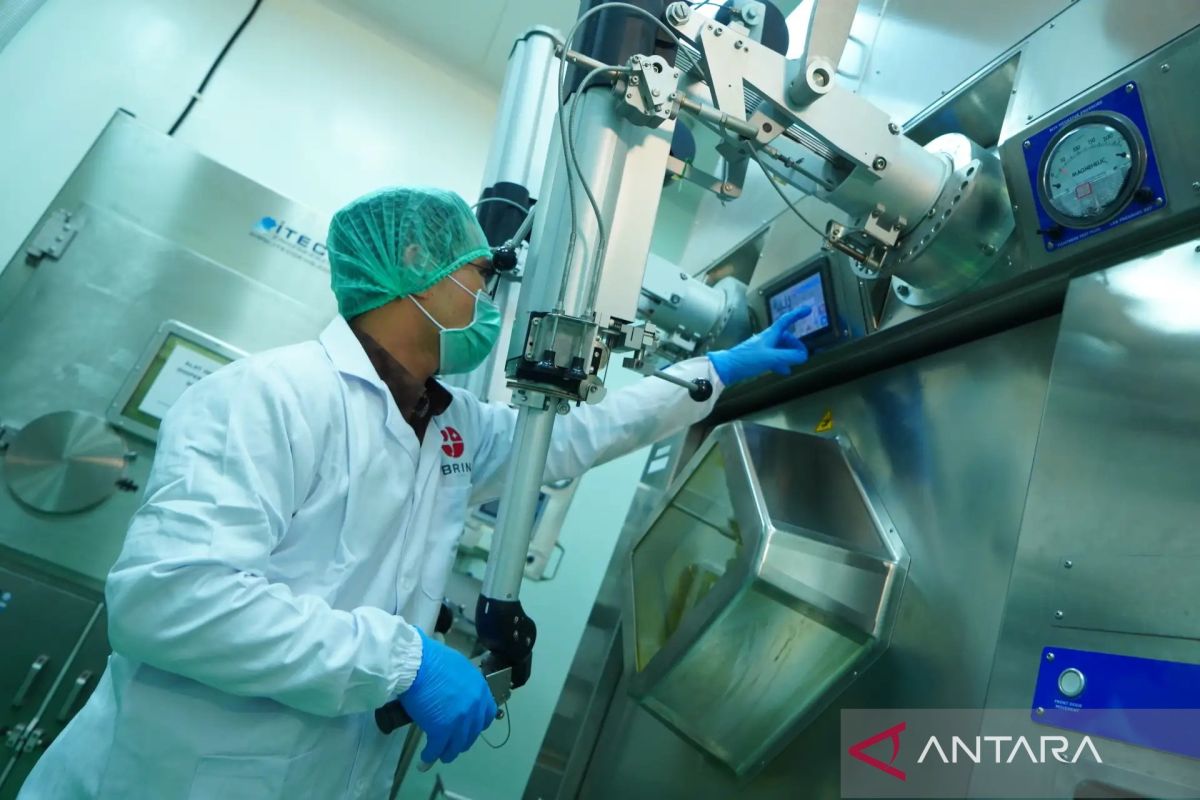
When innovation truly arrives in the midst of society, manifesting as products that are used, services that are experienced, and technologies that ease life, that is where research finds its most complete meaning.
Jakarta (ANTARA) - There are many stories about innovations in this country that end too quickly, not because the ideas are weak, but because it is difficult to find a way out of the laboratory space.
Research results are like seeds that grow healthily in a pot, but are never transplanted to the real soil.
Everyone can understand that the issue with research in Indonesia is not merely about the ability to create, but the courage to connect it with real needs.
The National Research and Innovation Agency (BRIN) is not standing idle in the face of that reality. In recent times, for example, through the BRIN Goes to Industry programme, the agency brought together 74 industry players in one dialogue space.
It is not merely a ceremonial forum, but an experiment to force two worlds (research and business) to listen to each other more honestly.
Among those present were various entities, from PT Berdikari Persero, PT Enzym Bioteknologi Internus, to PT Eagle High Plantations Tbk, each bringing needs, interests, and opportunities.
BRIN Head Arif Satria conveyed something that is actually simple, but has often been overlooked: research must be oriented towards impact.
Not just producing reports or publications, but truly addressing market needs.
In his statement, he stressed the importance of accelerating the downstreaming of innovation through strengthening engagement with industry. The word “engagement” is important here, as it signifies a change in approach from what was previously mostly one-way to a reciprocal relationship.
For years, the relationship between researchers and industry has run like two parallel lines. Researchers work within academic logic, pursuing new findings and scientific publications.
Meanwhile, industry moves within market logic, seeking efficiency, speed, and profitability. Both are equally important, but rarely meet at a productive point.
As a result, many innovations that are actually potential are never truly utilised, while industry continues to rely on technology developed abroad.