
When Prabowo Challenges Market Logic
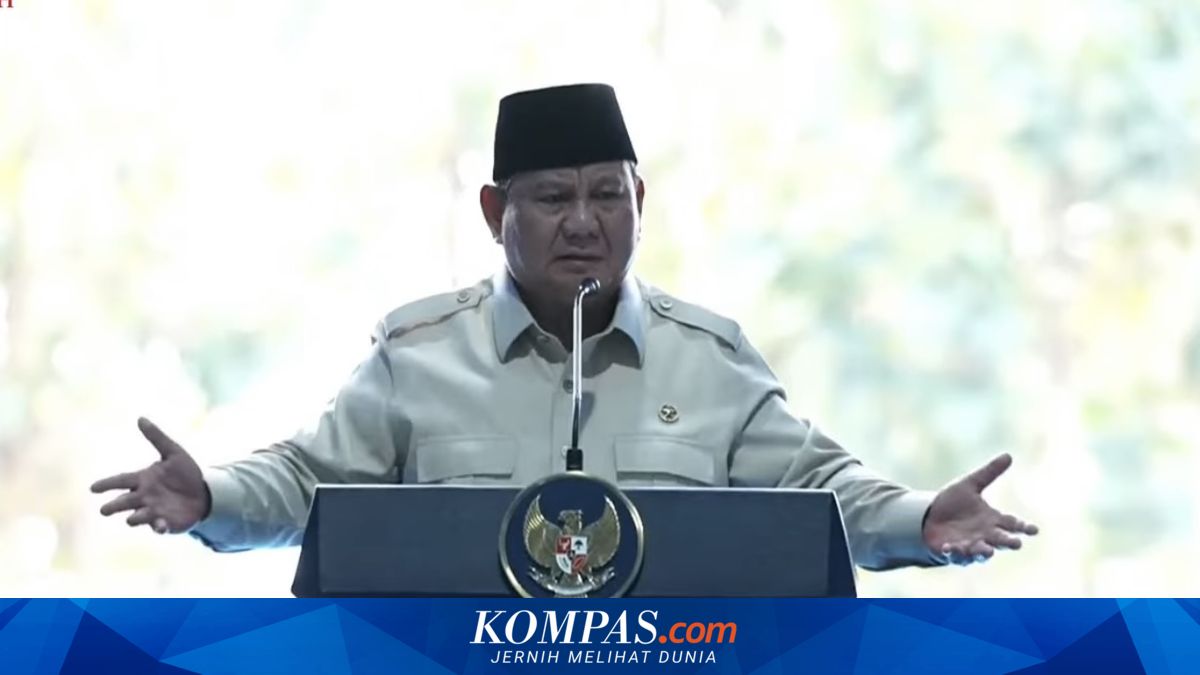
This article is an opinion piece; all content and opinions reflect the author’s personal views and do not represent the editorial stance.
Amidst market anxieties over the weakening Rupiah, President Prabowo Subianto has opted for an unconventional rhetorical approach.
He did not speak in the technocratic language of the Central Bank. There were no terms like capital outflow, external pressures, or global volatility.
Instead, what came out of his mouth was a simple sentence: ‘People in villages don’t use dollars.’
The statement immediately sparked reactions. Some considered it reassuring. Others called it an oversimplification of economic problems.
However, if examined more deeply, the statement is actually more than just a spontaneous comment on exchange rates.
Behind it lies a much larger political perspective: about how a country should understand its own strength.
Prabowo seems to be trying to shift the focus of national economic discourse.
For too long, the health of the nation has almost always been measured by market figures: the Rupiah exchange rate, stock indices, investor sentiment, and reports from international rating agencies.
In such logic, market panic can quickly turn into national panic.
As if to say that the foundation of a nation lies not first and foremost in the stock market ticker, but in the ability of its people to continue living, eating, and working.
This perspective has deep roots in classical political philosophy.
In Politics, Aristotle states that the purpose of the state is not merely to accumulate wealth, but to guarantee a good life for its citizens.
Economics, in that sense, must be subservient to human needs, not the other way around.
A similar tone can be felt in Prabowo’s speeches. When he emphasizes that Indonesia is safe because it has food and energy, Prabowo is building a definition of sovereignty that is very material: a nation is considered strong if it is able to meet the basic needs of its own people.
This view is reminiscent of Soekarno’s self-reliance concept.
In many of his speeches, Soekarno repeatedly warned of the dangers of economic dependence on global powers.
For him, a post-colonial nation would remain weak if its food supply depended on imports and its industry was controlled by foreign capital.