
When Peace Cracks, Indonesia's Energy Resilience is at Stake
Peace in the Middle East is once again revealing its most fragile face: announced in the morning, threatened with collapse by evening. As the world had just welcomed a temporary ceasefire between the United States and Iran, along with plans to reopen the Strait of Hormuz, a new wave of escalation quickly swept through the region. Israel launched large-scale airstrikes on Lebanon, hitting more than 60 strategic points and reigniting threats to close the world’s most vital energy route. Within hours, market optimism turned into global anxiety.
For Indonesia, these developments are not merely foreign news passing on television screens. They serve as a loud alarm for fiscal stability, domestic inflation, and the direction of national energy resilience. This is because every tension around the Strait of Hormuz immediately resonates worldwide, including in the fiscal space of the state budget and the households of the Indonesian people.
THE STRAIT OF HORMUZ AND THE WORLD’S ENERGY PULSE
The Strait of Hormuz is not just an ordinary sea route. It is one of the world’s most important energy chokepoints, through which about one-fifth of global oil trade and a large portion of international LNG pass every day. When this route is disrupted, it is not only tanker ships that are held up, but also the stability of global energy prices. Even today, the reopening of this route still faces serious obstacles and is not fully normalised.
More worryingly, the announced ceasefire remains highly conditional. Recent reports indicate that the conflict could potentially widen after Israel’s major attack on Lebanon caused significant casualties and provoked strong responses from Iran and regional proxy groups. In other words, the world is standing on uncertainty that could turn into an energy crisis at any time.
DIRECT IMPLICATIONS FOR INDONESIA
For Indonesia, the most immediate effect is pressure on the state budget. A rise in global crude oil prices would directly increase the need for energy subsidies and compensation. In a fiscal condition that must maintain growth, social spending, and development, a surge in global energy prices could significantly erode policy space.
The second impact is pressure on the rupiah exchange rate. The need for foreign exchange to import oil and gas increases when energy prices soar, potentially weakening the rupiah and adding to imported inflation.
The third impact, which is often felt more quickly by the public, is the rise in logistics costs and prices of basic necessities. When ship insurance premiums increase and global distribution is disrupted, the effects will spill over to imported food prices, fertiliser, industrial raw materials, and domestic transportation costs. At this point, geopolitical conflict thousands of kilometres away turns into an issue of people’s purchasing power.
WFH AS A TEMPORARY SAFETY VALVE
In the short term, the government needs to prepare quick-response instruments that do not solely rely on subsidies. One option being implemented is adaptive work from home (WFH) as a temporary energy consumption control policy.
This policy is not just about work flexibility, but also a tactical instrument to suppress fuel consumption in the transportation sector, especially in metropolitan areas. When mobility decreases, daily energy consumption can also be quickly reduced. However, this step must be understood as a temporary buffer, not a structural solution.
MOMENTUM TO REARRANGE ENERGY SOVEREIGNTY
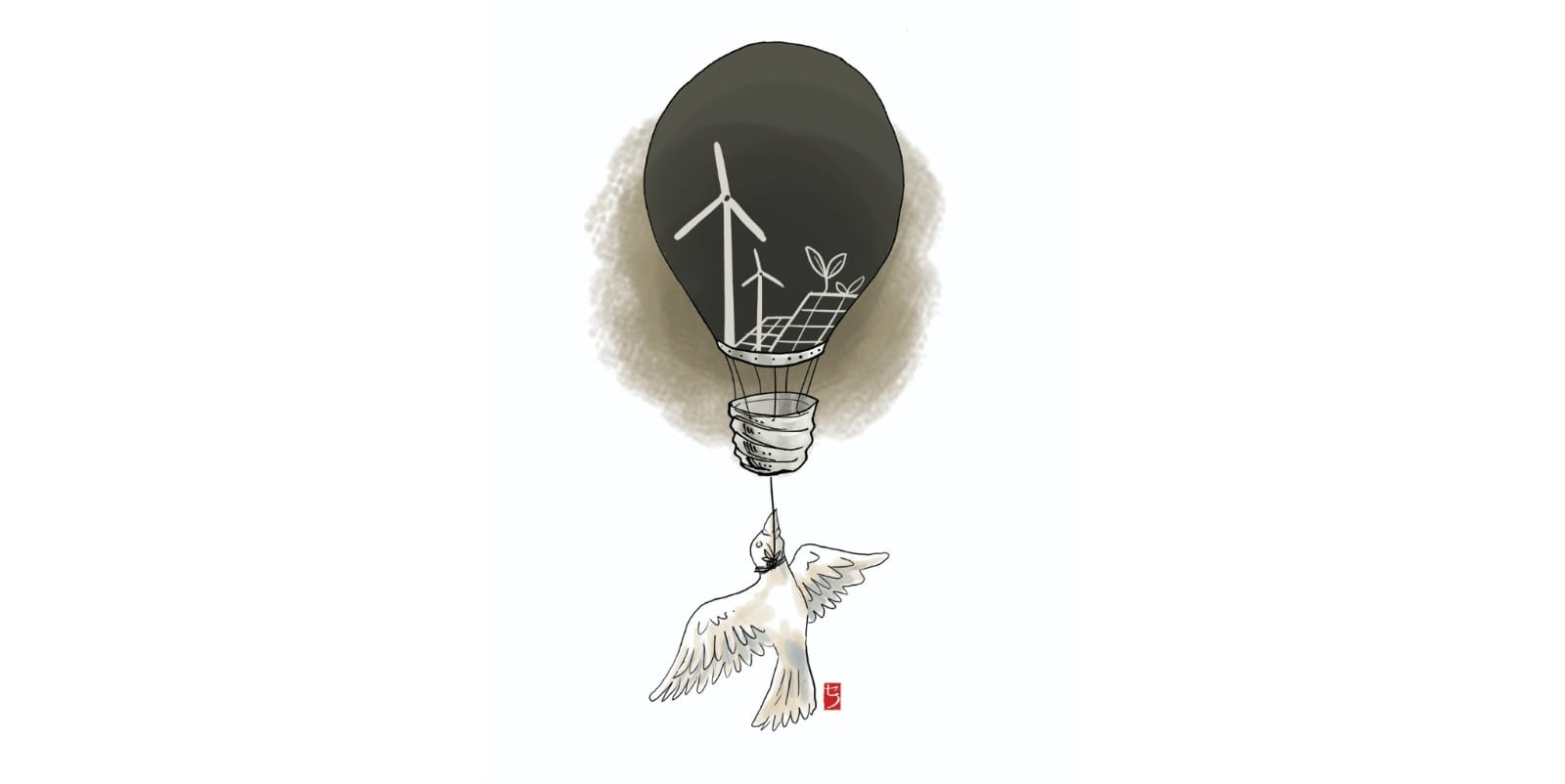
This crisis should be read as a momentum to accelerate the major agenda of national energy sovereignty. Indonesia must not continue in a reactive position, waiting for oil prices to rise and then patching fiscal pressures with subsidies. What is needed is the acceleration of strategic agendas: biodiesel towards B40 and B50, strengthening geothermal, downstreaming domestic gas, building the battery industry, and accelerating electric vehicles.
It is precisely amid this global uncertainty that a nation is tested: whether it merely survives the crisis, or is able to turn the crisis into a turning point for transformation.
CLOSING: WHEN A NATION’S STRATEGY IS TESTED
The cracking peace in the Middle East provides an important lesson that global energy stability is never truly certain. The Strait of Hormuz that has not yet recovered, the ceasefire threatened with cancellation, and the escalation of the Lebanon conflict show that the world is entering a more dangerous geopolitical phase.
In such a situation, what is at stake for Indonesia is not only oil prices, but also national economic resilience, state budget stability, and the future of people’s purchasing power. Because when peace cracks, what is first tested is not only the conflict zone, but the strategies of nations that depend on global energy.